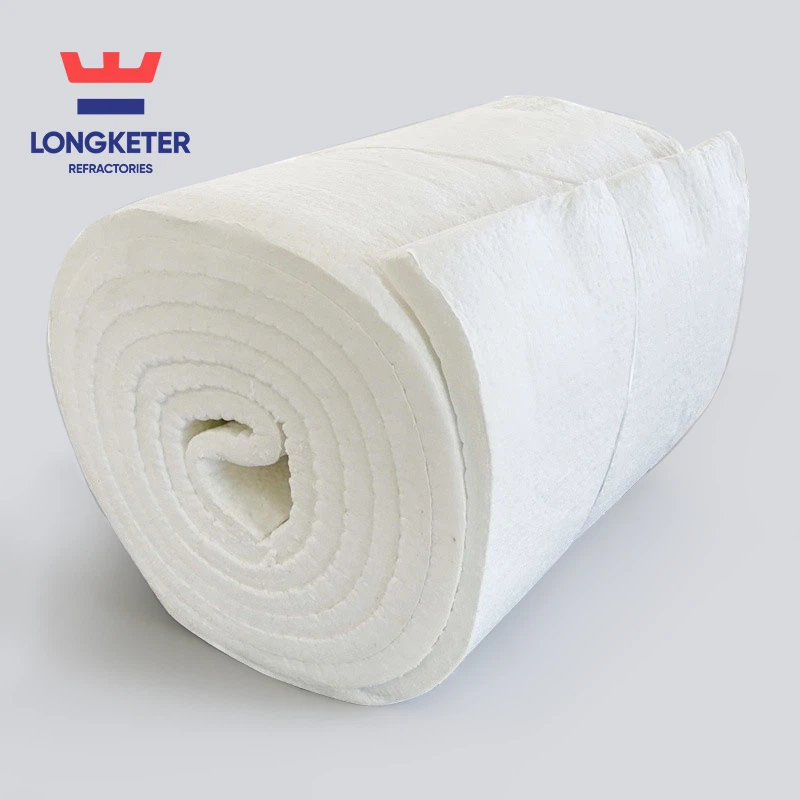
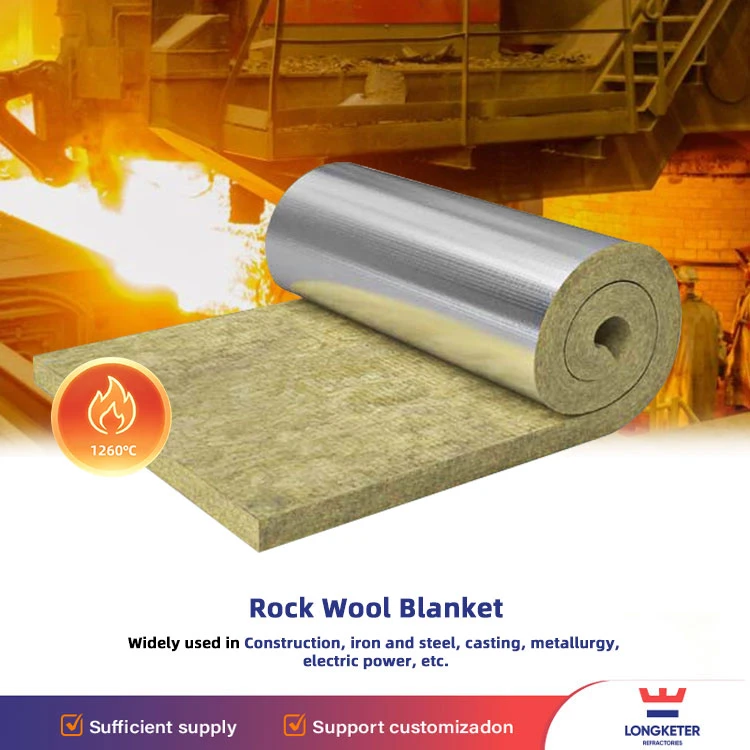
Manufacturing and thermal engineering teams across steel, metallurgy and power sectors are upgrading their heat protection infrastructure with rock wool blanket, a basalt-derived refractory insulation material rated to withstand continuous heat up to 1260°C. As industrial energy efficiency regulations tighten globally in 2026, facility managers report 25% average cuts in thermal loss after switching outdated fiber insulation to foil faced rock wool blanket for high temp industrial pipeline wrapping, furnace lining and boiler tank coverage.
For decades, site engineers struggled with short-lived insulation that sagged, burned or absorbed moisture under cyclic high heat. This year's upgraded rock wool blanket formulations solve those pain points, while manufacturers like Longketer Refractories offer full customization and large-volume stable supply to meet year-round industrial project demands.
What Makes 1260°C Fire Resistant Rock Wool Blanket for Metallurgy Furnaces Stand Out From Generic Insulation
Any industrial insulation material destined for casting, smelting or furnace environments must pass strict fire and thermal stability testing-and this specialized rock wool blanket line exceeds international ASTM C592 mineral wool standards.
Raw material selection is the foundation of its performance. Unlike cheap glass fiber insulation that degrades above 500°C, the blanket is spun from molten basalt volcanic rock heated beyond 1400°C before fiber formation. The interlocked mineral fiber matrix creates millions of stagnant air pockets that block heat transfer without heavy weight or rigid sizing limits.
The 1260°C fire resistant rock wool blanket for metallurgy furnaces carries a zero flame spread index, meaning it will not ignite or propagate fire even during unexpected furnace temperature spikes. On-site metallurgy plant operators shared a real-world case study from a Shandong steel mill: after retrofitting furnace exhaust ducts with this blanket, surface external pipe temperatures dropped from 190°C to under 42°C, drastically cutting workplace burn hazards and lowering factory cooling overhead.
Many low-grade rock wool alternatives use recycled stone scraps with uneven fiber density. That inconsistency leads to thin insulation gaps that leak heat and fail safety audits. Longketer's production process controls fiber uniformity to ±3kg/m³ density tolerance, a critical detail industrial buyers prioritize when sourcing long-term refractory materials.
Foil Faced Rock Wool Blanket for High Temp Industrial Pipeline: Key Functional Advantages
The aluminum foil laminated variant delivers three layered benefits bare rock wool rolls cannot match:
1.Vapor barrier protection: The foil layer blocks humid factory air from penetrating mineral wool fibers, eliminating moisture saturation that ruins thermal performance over 1–2 years of service. Power station maintenance crews confirm foil-faced versions extend blanket service life by nearly double in humid coastal manufacturing zones.
2.Reflective heat shielding: Aluminum foil bounces radiant heat back toward hot pipes and furnaces, adding an extra thermal buffer for equipment operating above 800°C.
3.Easy installation finish: The smooth foil surface simplifies wrapping, taping and sealing during pipeline insulation projects, cutting labor time by 18% per square meter compared to uncoated rock wool blanket rolls.
This specific foil faced rock wool blanket for high temp industrial pipeline is stocked in standard roll widths of 1m, with customizable thicknesses ranging from 25mm to 150mm to match small steam pipes all the way to large blast furnace manifold systems.
Industrial Application Scenarios Where Custom Size Rock Wool Blanket Bulk Supply for Steel Plants Delivers Maximum ROI
Rock wool blanket is not limited to one single industry segment-its flexible roll form factor adapts to irregular, curved and large flat industrial surfaces across five core heavy manufacturing verticals:
1.Iron & Steel Smelting: Blast furnace side wall insulation, hot rolling mill pipeline wrapping, ladle heat retention lining
2.Metallurgy & Casting: Melting furnace outer insulation, casting mold heat shielding, flue gas duct wrapping
3.Power Generation Plants: Boiler tank insulation, steam turbine pipe covering, chimney thermal lining
4.General Construction Heavy Industry: Industrial kiln insulation, factory high-temperature partition walls
5.Chemical Processing: High-heat reaction vessel outer wrapping, thermal oil pipeline protection
Large-scale steel construction projects rarely run on fixed standard dimensions, which is why custom size rock wool blanket bulk supply for steel plants has become a top requested service in 2026 industrial procurement. Procurement managers at medium-sized foundries frequently cite two major financial benefits of bulk customized orders: reduced material waste by 30% during installation, and volume pricing discounts that cut per-square-meter insulation costs by 12–19% vs small batch standard rolls.
A recent tender report from a northern China integrated steel group revealed they ordered 12,000 square meters of customized foil-faced rock wool blanket for their new continuous casting line. The tailor-cut rolls eliminated onsite trimming waste, shortening their insulation installation timeline by 7 working days and accelerating the full production launch schedule. This real tender case reinforces why flexible customization support is a non-negotiable feature for industrial insulation buyers today.
Critical Technical Specifications Buyers Must Verify Before Ordering Rock Wool Blanket
To avoid costly project failures, purchasing and engineering teams need to cross-check four non-negotiable technical parameters when sourcing rock wool blanket:
1.Maximum continuous service temperature: Standard industrial grades reach 650°C, while the heavy refractory line supports sustained 1260°C operation for metallurgy and steel furnace environments. Mis-matching temperature ratings is the most common insulation failure root cause reported by industrial maintenance teams.
2.Density range: Usable industrial densities fall between 60kg/m³ to 120kg/m³. Lower density rolls (40–50kg/m³) suit light construction heat retention, while high-density 100–120kg/m³ rock wool blanket delivers compression resistance for heavy vibrating equipment like power plant turbines.
3.Facing options: Bare rock wool, single-sided aluminum foil, wire mesh stitched reinforcement for high-vibration pipeline systems.
Chemical resistance: Pure basalt rock wool is chemically inert against acidic flue gases, moisture and mild industrial corrosives-an advantage over organic fiber insulation that degrades in chemical factory environments.
4.Every batch of Longketer-manufactured rock wool blanket ships with full third-party fire resistance and thermal conductivity test reports, a transparency step that builds trust for industrial buyers researching suppliers online.
How Sufficient Bulk Supply & Customization Support Resolve 2026 Industrial Insulation Supply Chain Pain Points
Global refractory material supply chains still face intermittent raw material and shipping delays in 2026, leaving many factory operators scrambling for last-minute insulation materials during planned maintenance shutdowns. Two key service features separate reliable rock wool blanket manufacturers from unstable vendors: consistent bulk stock availability and flexible customization workflows.
Stable Sufficient Supply Prevents Project Downtime
Longketer maintains a finished rock wool blanket inventory of over 50,000 square meters across standard foil-faced and bare roll specifications, enabling fast order fulfillment for urgent steel plant, power station and metallurgy overhaul projects. Smaller insulation factories often operate on made-to-order only production cycles, leading to 25–40 day lead times that delay planned factory shutdowns and cost manufacturers thousands in idle production revenue.
Procurement teams prioritizing on-time delivery consistently rank rock wool blanket suppliers with permanent bulk stock as their primary sourcing partners for long-term annual framework contracts.
Full Customization Covers Unique Industrial Insulation Demands
Beyond custom width, length and thickness sizing, the brand's customization program includes tailored foil thickness options, wire mesh stitching reinforcement, and private labeling for industrial insulation distributors. Small specialized foundries often require narrow 0.5m wide rock wool blanket rolls for compact furnace piping, while large integrated steel mills order extra-wide 1.2m rolls to speed up large-area wall lining work.
All custom orders receive dedicated technical engineer support to confirm thermal performance matching the client's operating temperature, vibration and environmental conditions before production begins-this pre-production consultation reduces post-delivery product mismatch issues by over 80% according to internal customer service data.
Sustainability & Long-Term Cost Savings of Premium Rock Wool Blanket Insulation
Industrial facility owners increasingly balance upfront material costs with long-term energy expenditure reductions, and rock wool blanket delivers compelling sustainability economics.
Mineral rock wool is made from naturally abundant basalt stone, a recyclable raw material with zero organic volatile compounds (VOCs). Unlike foam insulation that releases toxic fumes at high heat, rock wool blanket emits no hazardous smoke during furnace overheating events, improving factory workplace safety compliance with global industrial environmental standards.
Thermal conductivity testing shows properly installed rock wool blanket cuts heat loss by up to 32% on uninsulated hot pipelines. For a mid-sized power plant operating year-round, this translates to annual fuel gas savings worth tens of thousands of US dollars, offsetting insulation material investment within 12–18 months of installation.
Many regional industrial energy efficiency subsidies now offer rebates for facilities upgrading old insulation to high-performance rock wool blanket formulations, an additional financial incentive engineering teams factor into their infrastructure upgrade planning in 2026.
Conclusion
As heavy industry continues prioritizing worker safety, energy conservation and supply chain reliability in 2026, rock wool blanket remains the versatile, high-temperature refractory insulation solution for steel, metallurgy, power and casting operations. Whether buyers require standard foil-faced rolls for routine pipeline maintenance, 1260°C fire resistant rock wool blanket for metallurgy furnaces, or custom size rock wool blanket bulk supply for steel plant large-scale retrofits, selecting a manufacturer with stable stock, full customization support and third-party verified thermal performance data eliminates costly project risks.