Clay firebricks remain a practical refractory solution for many high-temperature industrial furnaces, particularly where stable thermal performance, resistance to repeated heating, and reliable furnace lining are required. From coke ovens and glass furnaces to cement rotary kilns, lime kilns, incinerators, and reheating furnaces, the selection and installation of clay firebricks can directly influence lining service life and maintenance requirements.
As industrial furnace operators continue to focus on energy efficiency, maintenance planning, and longer campaign cycles, refractory selection is increasingly being considered as part of the overall furnace operating strategy rather than simply as a replacement-material decision.
Where Clay Firebricks Are Used
Clay firebricks are commonly associated with furnace environments where fireclay-based refractory materials provide an appropriate balance between temperature resistance, structural stability, and cost.
Typical applications include:
Coke ovens
Glass furnaces
Cement rotary kilns
Lime kilns
Industrial incinerators
Reheating furnaces
Furnace walls and arches
Heating chambers and selected combustion areas
Other industrial thermal equipment
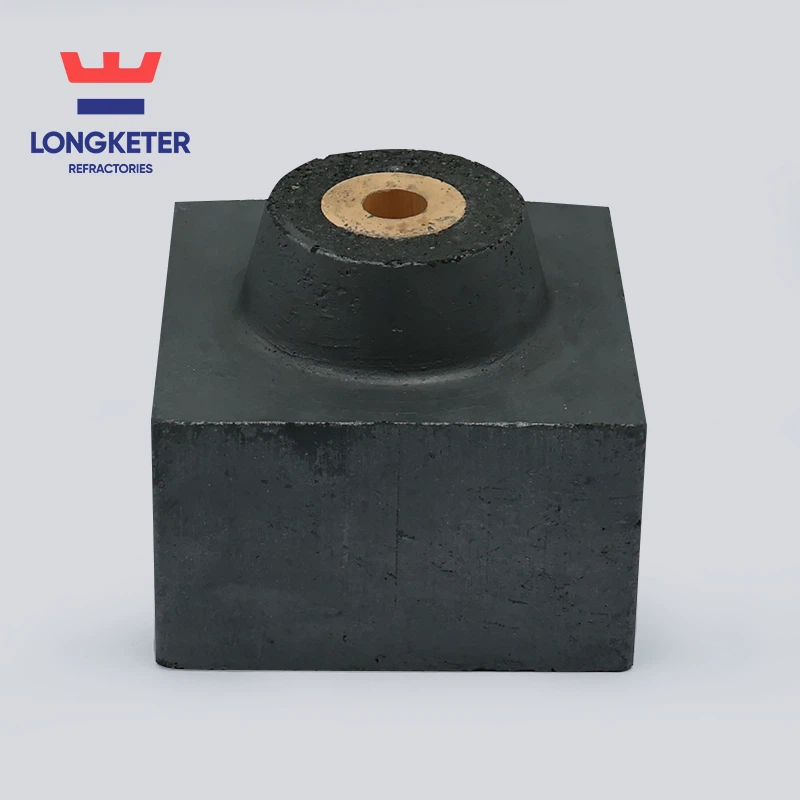
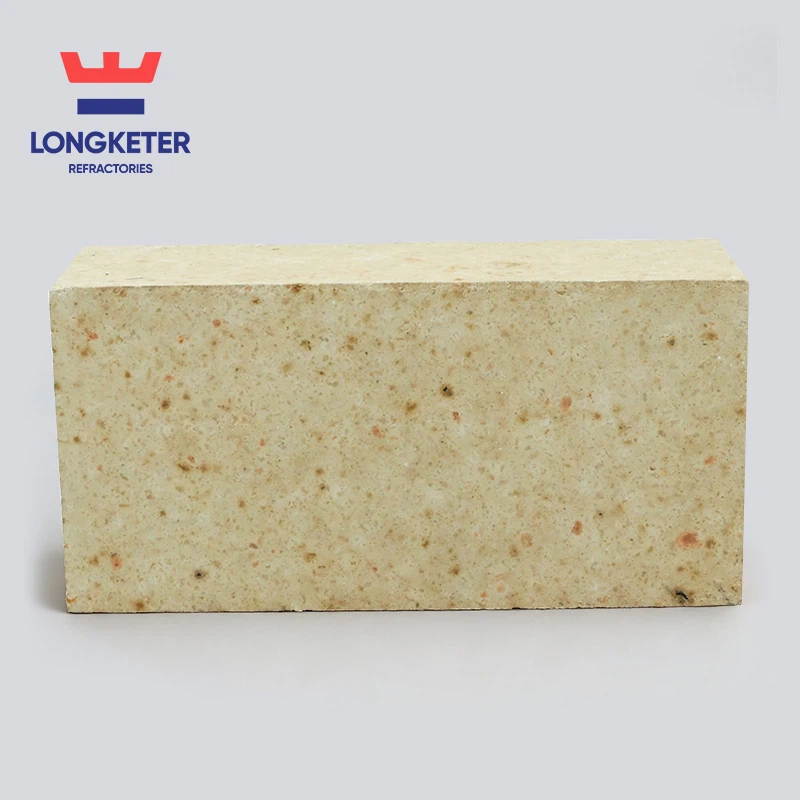
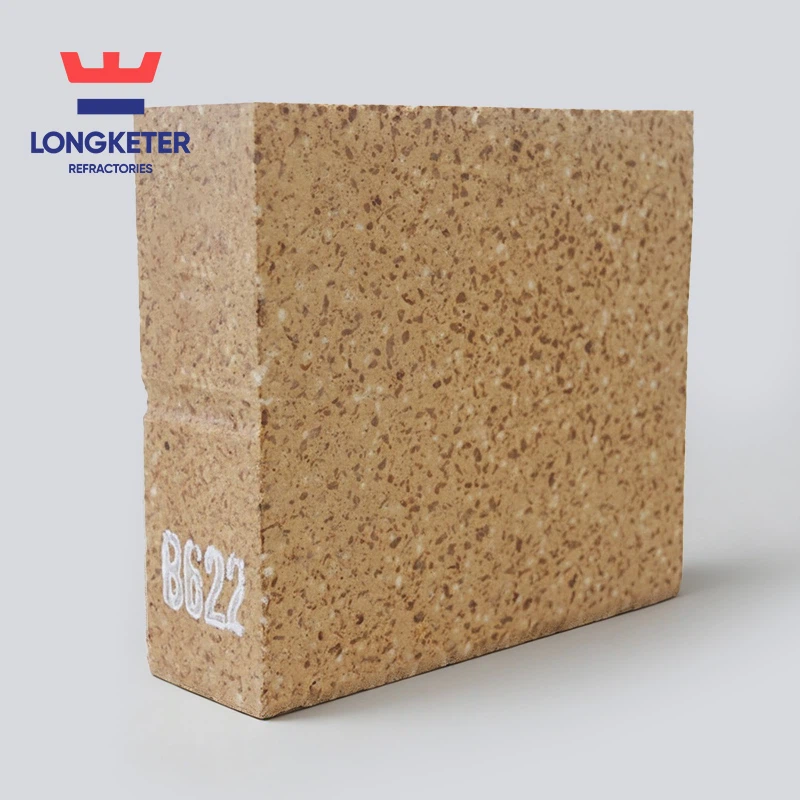
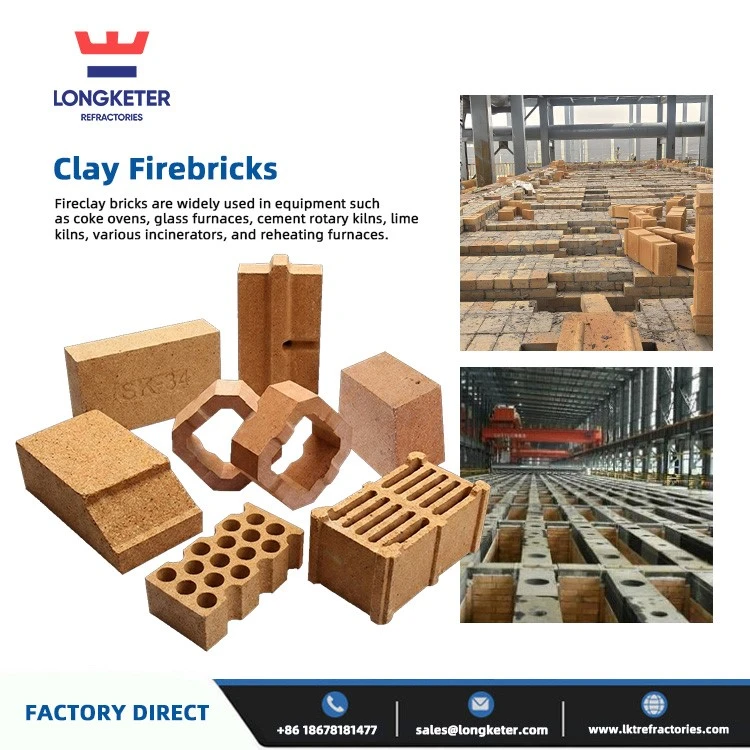
The image accompanying this article shows several forms of fireclay brick, including conventional rectangular bricks and specially shaped products. It also illustrates industrial furnace construction where large quantities of refractory bricks are installed to form the working lining.
This variety is important because refractory requirements are rarely identical throughout an entire furnace. A straight wall, curved section, burner area, arch, channel, or transition zone may require different brick geometries even when the same general refractory family is used.
Why Firebrick Shape Matters in Furnace Construction
One of the less visible factors affecting furnace lining performance is brick geometry.
Standard rectangular bricks are suitable for many straight-wall applications, while shaped or perforated bricks can be manufactured for specific structural requirements. The examples shown in the product image demonstrate how different shapes can be used according to the design of the furnace lining.
In practical installation, accurate dimensions help reduce unnecessary gaps between individual bricks. A well-designed brick layout can also simplify installation and make repairs more manageable when individual sections of a furnace need attention.
For industrial buyers, this means that purchasing refractory bricks should not be based only on a material name. Dimensions, tolerances, shape, application temperature, lining design, and installation method should all be considered together.
Clay Firebricks for Industrial Furnaces
When selecting clay firebricks for industrial furnaces, operators typically need to consider the actual working environment rather than relying on temperature rating alone.
Several factors can affect refractory performance.
Operating Temperature
The working temperature of the furnace is one of the first parameters to establish. A refractory product needs to be selected according to the actual thermal conditions of the application.
Continuous operating temperature and peak temperature should both be considered. Furnace areas exposed to repeated temperature changes may also experience different stresses from sections that remain relatively stable.
Thermal Cycling
Industrial furnaces are not always operated under perfectly steady conditions.
Startup, shutdown, production changes, and maintenance cycles can create repeated heating and cooling. Over time, these changes can contribute to cracking or deterioration if the refractory system is not properly matched to the operating conditions.
For this reason, thermal stability should be evaluated together with installation quality and furnace operating procedures.
Chemical Exposure
The furnace atmosphere and process materials also matter.
Different applications can expose refractory linings to dust, molten materials, alkalis, vapors, combustion products, or other corrosive substances. The compatibility between the refractory composition and the operating environment should therefore be evaluated before a product is selected.
A brick that performs adequately in one furnace may not necessarily provide the same service performance in another furnace with a different atmosphere or process chemistry.
Fireclay Brick Selection: What Industrial Buyers Should Check
For purchasing teams and furnace engineers, several technical details are worth confirming before placing an order.
First, confirm the application.
The supplier should understand whether the bricks will be installed in a coke oven, kiln, reheating furnace, incinerator, glass furnace, or another thermal unit.
Second, confirm the required dimensions.
Standard shapes can simplify procurement, while special shapes may be necessary for arches, corners, transitions, or other complex sections.
Third, review the technical specification.
Depending on the application, buyers may request information such as chemical composition, apparent porosity, bulk density, refractoriness, cold crushing strength, and other relevant physical properties.
Fourth, consider installation conditions.
Even a properly manufactured refractory brick can perform poorly when unsuitable mortar, excessive joint thickness, incorrect expansion allowance, or poor installation practices are involved.
Finally, discuss the actual operating conditions with the manufacturer.
Providing furnace drawings, brick dimensions, operating temperatures, process information, and previous failure points can help the supplier recommend a more suitable configuration.
Standard and Special-Shaped Refractory Bricks
Modern industrial furnace projects often involve more than one brick shape.
Straight walls may use standard rectangular bricks, while curved areas can require wedge-shaped products. Other furnace components may require custom geometries designed around openings, channels, burner areas, or structural transitions.
The product examples shown in the supplied image illustrate this principle clearly. Instead of treating all refractory bricks as interchangeable blocks, furnace construction uses different geometries to follow the physical design of the lining.
For large projects, matching the brick dimensions to the furnace drawing can also help reduce cutting and on-site modification. This can make installation more consistent and reduce material waste.
Installation and Maintenance Still Matter
Refractory performance is not determined by the brick alone.
During installation, the condition of the furnace shell, alignment of brickwork, joint design, mortar selection, expansion allowances, and drying or preheating procedures can all influence the final result.
A common mistake in refractory maintenance is to focus only on the visibly damaged brick. The surrounding area should also be inspected. Repeated localized damage may indicate a wider issue involving thermal distribution, mechanical movement, chemical attack, airflow, or lining design.
For operators, documenting where and how refractory damage occurs can provide useful information for future maintenance cycles. If the same area repeatedly requires repair, simply replacing the damaged bricks with identical products may not address the underlying operating condition.
Longketer Refractories Supports Industrial Furnace Applications
Longketer Refractories supplies fireclay-based refractory products for industrial furnace applications and supports customers with different brick shapes and application requirements.
The product range shown in the supplied image includes conventional firebricks as well as shaped and perforated designs intended for different furnace construction requirements.
For overseas industrial buyers, product selection can be discussed according to the furnace type, working environment, required dimensions, and project requirements. Customized shapes can also be evaluated when standard brick geometries do not match the furnace design.
This application-focused approach is particularly useful for projects involving large quantities of refractory materials, where dimensional consistency and compatibility with the furnace drawing are important considerations.
A More Practical Approach to Refractory Procurement
The demand for longer refractory service intervals does not necessarily mean that every furnace requires a more expensive refractory grade. In many cases, performance depends on selecting a material that is appropriate for the specific operating environment and then installing and operating it correctly.
For purchasing teams, a useful specification package should therefore include more than a product name. Furnace type, operating temperature, atmosphere, installation location, dimensions, required quantity, and relevant technical requirements provide a much clearer basis for supplier evaluation.
This approach also makes communication between refractory manufacturers, furnace engineers, maintenance teams, and procurement departments more efficient.
Conclusion
Clay firebricks continue to have an important role in industrial furnace construction because they can be adapted to a broad range of high-temperature applications and supplied in different shapes for specific lining requirements.
For coke ovens, glass furnaces, cement and lime kilns, incinerators, reheating furnaces, and related thermal equipment, the most suitable refractory solution depends on the complete operating environment-not simply the name of the brick.
As furnace operators place greater emphasis on predictable maintenance, material efficiency, and reliable production, careful refractory selection and accurate installation remain essential parts of furnace management.
Longketer Refractories works with industrial customers to supply refractory brick solutions based on furnace application, dimensions, and project requirements.