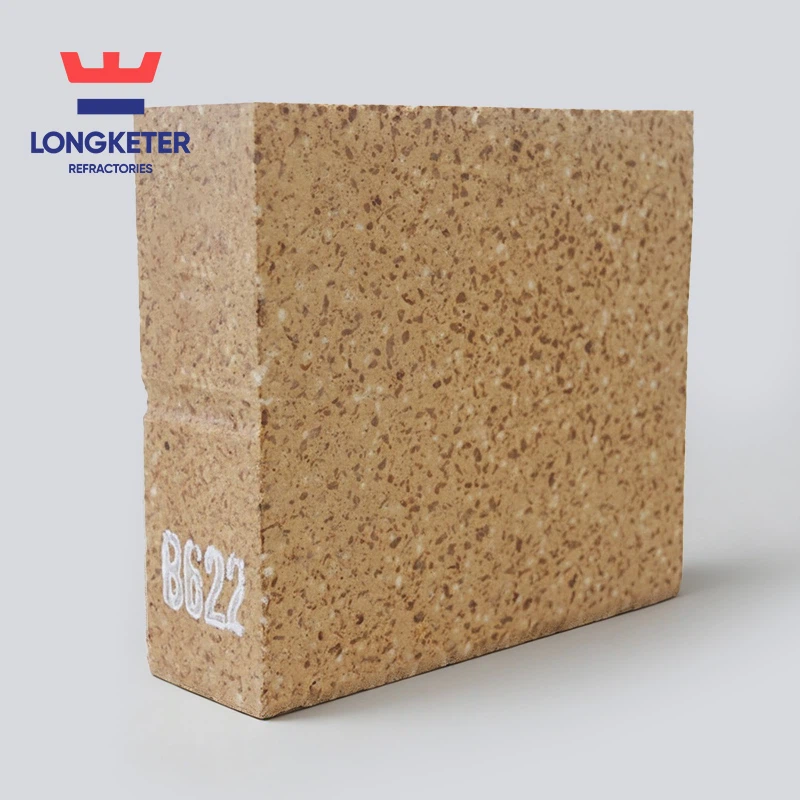
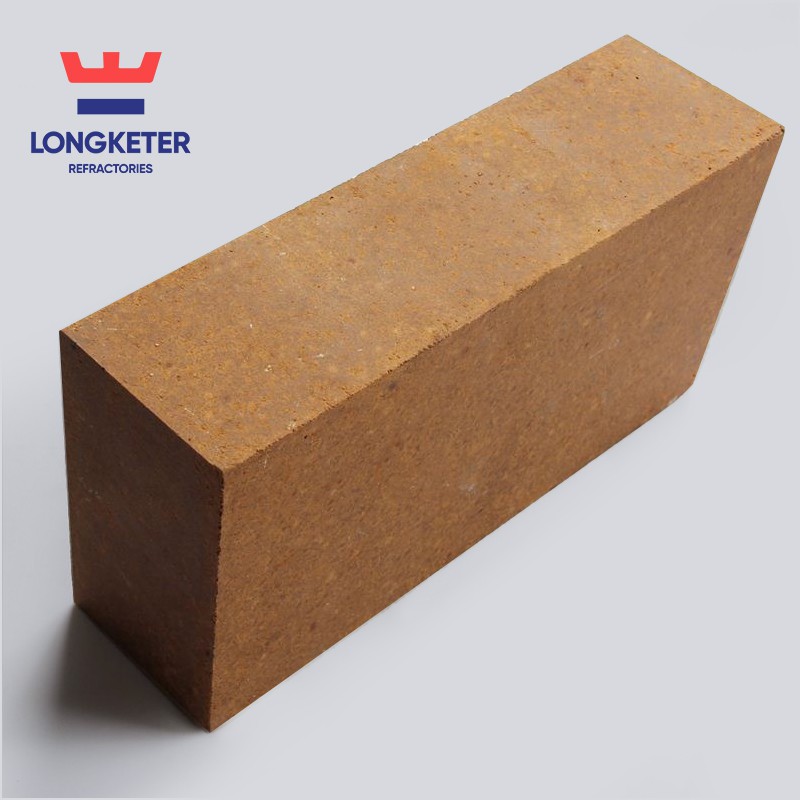

Magnesia bricks are divided into fired magnesia bricks and unfired magnesia bricks. Burned magnesia bricks are divided into silicate bonded magnesia bricks, direct bonded magnesia bricks and rebonded magnesia bricks. Unfired magnesia bricks are divided into chemical bonded magnesia bricks and asphalt bonded magnesia bricks.
Introduction
The raw material of magnesia bricks is mainly magnesite, and its basic component is MgCO3. After being calcined at high temperature and then crushed to a certain particle size, it becomes sintered magnesia. Magnesia is usually used as furnace repair material and ramming material. Magnesia with few impurities (ω (CaO) <2.5%, ω (SiO2) <3.5%) is used as a raw material for making magnesia bricks.
Magnesia bricks are divided into two types: sintered magnesia bricks and chemically bonded magnesia bricks according to their different production processes. Sintered magnesia bricks are made of dead-fired magnesia with appropriate particle size ratio, adding brine (MgCl2 aqueous solution) and sulfurous acid pulp waste liquid as binding agents, pressurizing and molding, and firing at a high temperature of 1550~1650°C. Chemically bonded magnesia bricks do not go through the firing process. After mixing the sintered magnesia according to the particle size ratio, add an appropriate amount of mineralizer and binding agent, press and shape, and then dry the finished product. Chemically bonded magnesia bricks have lower strength and performance than sintered magnesia bricks, but they are cheaper, less than half the price of sintered magnesia bricks. It is used in parts with less demanding performance requirements, such as heating furnaces and soaking furnace bottoms.
Magnesia bricks are alkaline refractory materials that have strong resistance to alkaline slag, but cannot resist the erosion of acidic slag. At a high temperature of 1600°C, they can react when in contact with silica bricks, clay bricks and even high alumina bricks. The refractoriness of magnesia bricks is above 2000℃, but its load softening point is only 1500~1550℃. Moreover, the temperature interval from softening to 40% deformation is very small, only 30~50℃. The thermal stability of magnesia bricks is also poor, which is an important reason for the damage of magnesia bricks.
In heating furnaces and soaking furnaces, magnesia bricks are mainly used to pave the furnace bottom surface layer and the lower part of the soaking furnace wall. It can resist the erosion of iron oxide scale.
Physical and chemical properties
The refractoriness of magnesia bricks can reach more than 2000°C, and its load softening temperature varies greatly with the melting point of the cementing phase and the amount of liquid phase produced at high temperatures. Generally, the load softening starting temperature of magnesia bricks is between 1520 and 1600°C, while high-purity magnesia bricks can reach 1800°C. The load softening starting temperature of magnesia bricks is not much different from the collapse temperature. The linear expansion rate of magnesia bricks at 20~1000℃ is generally 1.2%~1.4%, and is approximately linear. When a liquid phase appears in the brick at high temperatures, sudden shrinkage occurs. The thermal conductivity of magnesia bricks is high, second only to carbon bricks and silicon carbide bricks among refractory products, and it decreases as the temperature increases. The thermal shock resistance of magnesia bricks is poor. Improving the purity of magnesia bricks can appropriately improve the thermal shock resistance. Magnesia bricks have very poor resistance to acidic slag. They cannot be in direct contact with silica bricks when used. Neutral bricks are generally used to separate them. The conductivity of magnesia bricks at normal temperature is very low, but it cannot be ignored at high temperatures (such as 1500°C). If it is used at the bottom of an electric furnace, attention should be paid.
Production process
Magnesia raw materials are crushed into granular materials and powders. After mixing according to a certain ratio, a binding agent is added to knead the clay into mud, and then the fired magnesia bricks are made into fired magnesia bricks through processes such as shaping, drying, and firing. The firing temperature of ordinary magnesia bricks is generally 1500~1650℃, while the firing temperature of high-purity magnesia bricks is as high as 1700~1900℃. The production process of chemically bonded magnesia bricks is basically the same, except that it is combined with chemical binders without high-temperature firing, and only requires appropriate low-temperature heat treatment to make unburned magnesia bricks.
Note: Magnesia bricks have poor hydration resistance and are easily hydrated when exposed to water, causing cracks and reducing their strength. Therefore, pay attention to moisture, rain and snow during storage and transportation.
Hot Tags: Refractory Magnesia Bricks, China Refractory Magnesia Bricks manufacturers, suppliers, factory, MAG CALCIUM BRICKS, MAG CHROM BRICK, MAG SPINEL BRICKS, Magnesia Calcium Brick, Magnesia iron Spinel Brick, Refractory Magnesia Brick