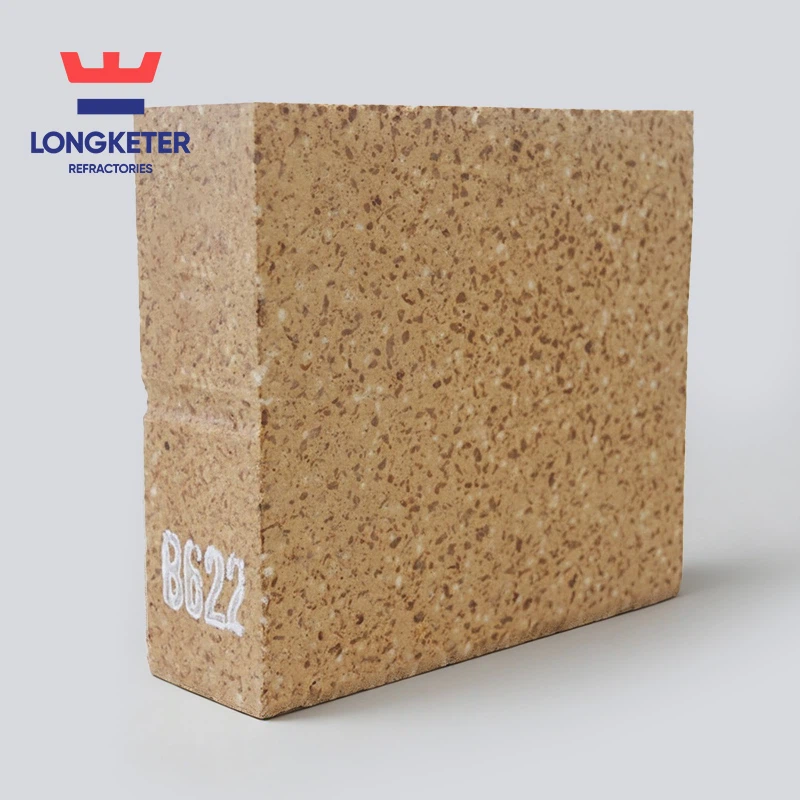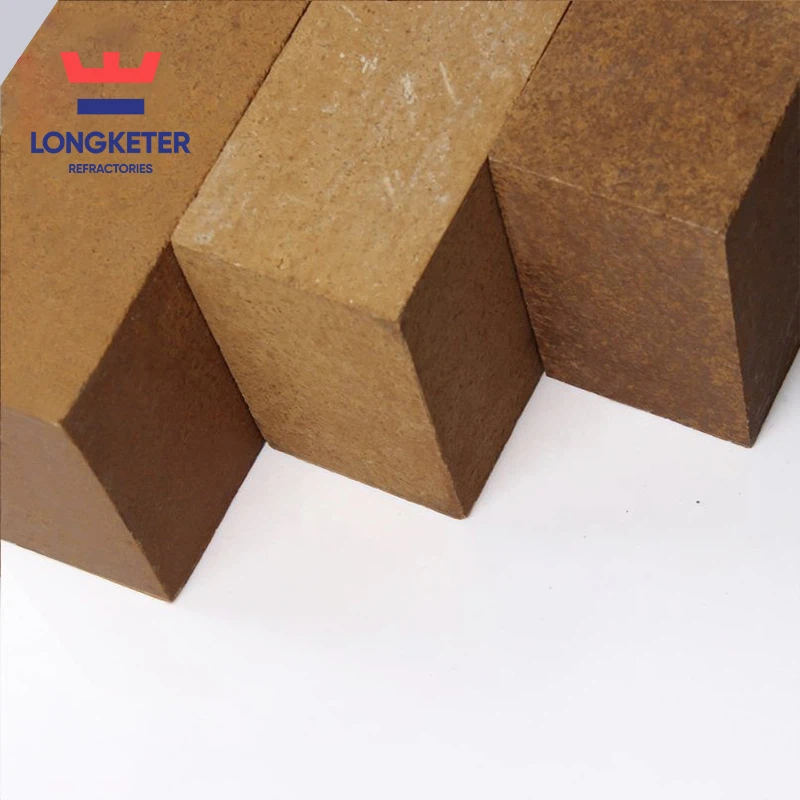


characteristic:
Contains MgO80%~87%, CaO6%~9%, CaO/SiO2 ratio is between 2.2~3.0. Its obvious structural characteristics are that periclase is in direct contact with dicalcium silicate and tricalcium silicate, and the eutectic (4CaO·Al2O3·Fe2O3 is filled in the crystal gap of dicalcium silicate and tricalcium silicate in a thin vein shape. Low porosity. The starting temperature of softening under load is generally higher than 1700 ℃, and the resistance to alkali slag is good. Firing at high temperature of 1550~1600℃.
Applicable fields:
It is used in the wind eye of steel-making side-blown converter, open-hearth furnace top and oxygen-blown converter, etc.
Magnesia-calcium bricks are alkaline composite refractory products with MgO and Ca0 as the main chemical components, including dolomite bricks and magnesia dolomite bricks. Magnesia calcium brick has excellent performance, especially the ability to purify molten steel, which is not available in other types of refractory materials.
Magnesia calcium brick application
Magnesia-calcium bricks are widely used in refining equipment such as AOD furnace, VOD furnace and LF furnace, and have achieved good results. With the continuous expansion of stainless steel and various clean steel production capacity, the demand for various magnesia-calcium bricks will also continue to increase.
High temperature resistance of magnesia calcium brick
The high temperature resistance of magnesia-calcium bricks means that magnesia-calcium bricks do not melt, soften and deform under high temperature working conditions, and maintain good high temperature stability and mechanical strength.
Magnesia-calcium bricks are used in refining equipment such as AOD furnaces, VOD furnaces and LF furnaces, where the working temperature is high and the temperature changes frequently. For example, the temperature in the oxidation period of the AOD furnace is above 1700 °C, sometimes up to about 1750 °C, and the temperature in the wind eye area is even higher. Such a harsh high temperature working environment requires magnesia-calcium bricks to have excellent high temperature resistance in order to meet production needs.
The main minerals of magnesia-calcium brick, MgO and Cao, are high-temperature minerals. The melting point of MgO is 2800 °C, and the melting point of CaO is 2570 °C. Mg0 and CaO do not form binary composite minerals at high temperature. The lowest smelting point of these two materials is 2370°C. MgO and CaO also have good high temperature stability. Therefore, MgO and CaO endow magnesia-calcium bricks with excellent high temperature resistance.


Hot Tags: magnesia dolomite bricks, China magnesia dolomite bricks manufacturers, suppliers, factory, Magnesia Calcium Brick, Magnesia Carbon Brick, Magnesia Refractory Bricks, Magnesia spinel brick, Magnesium Bricks, Refractory Magnesia Calcium Brick