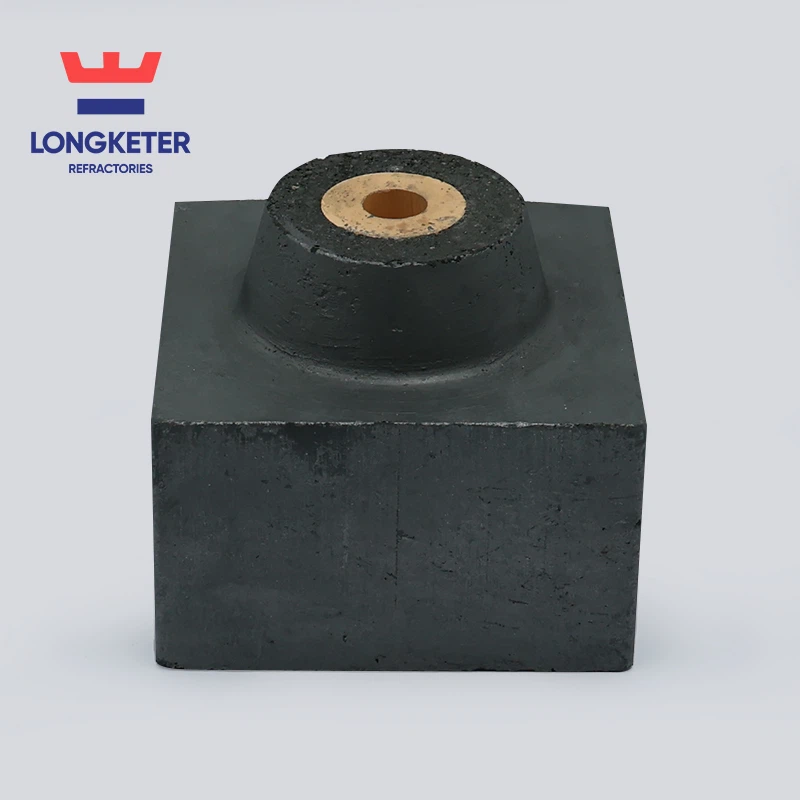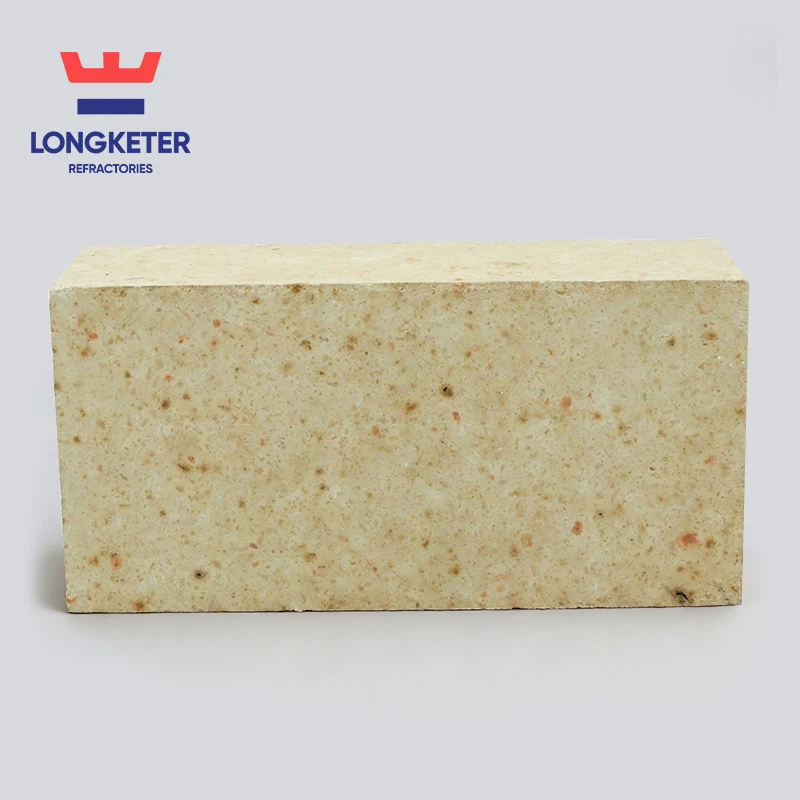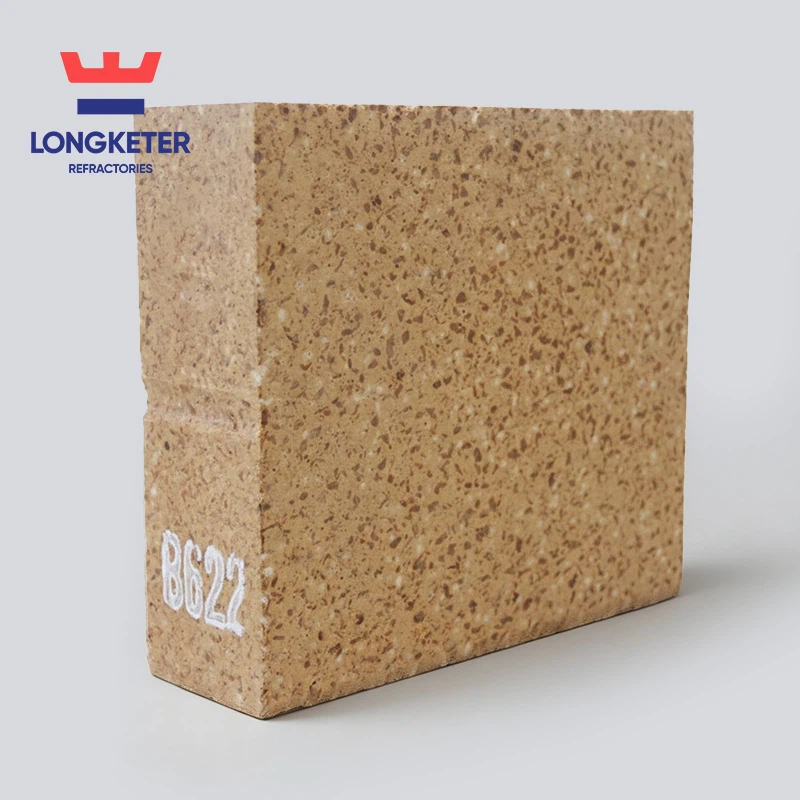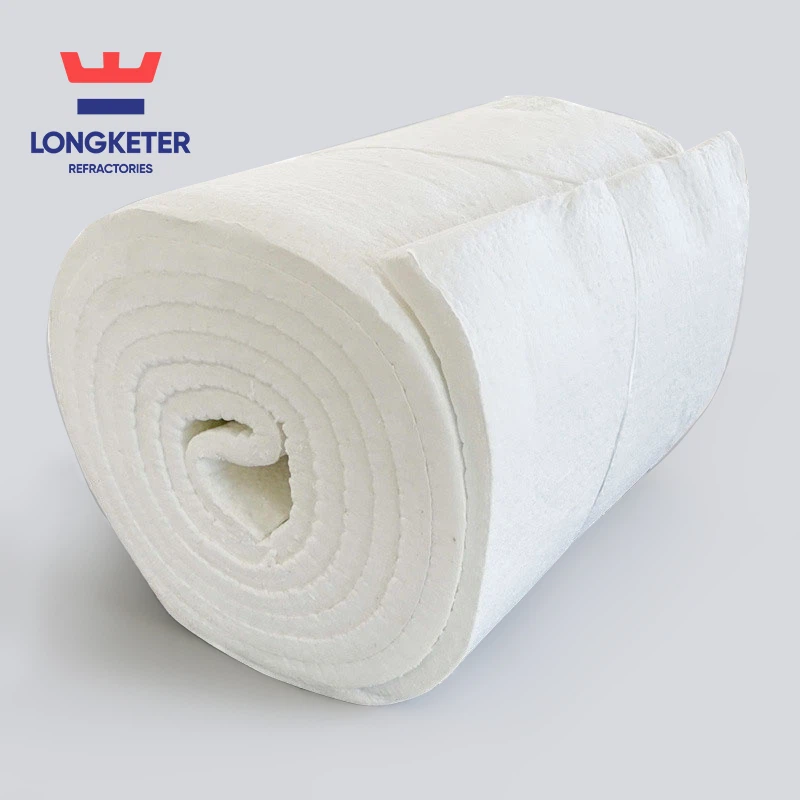
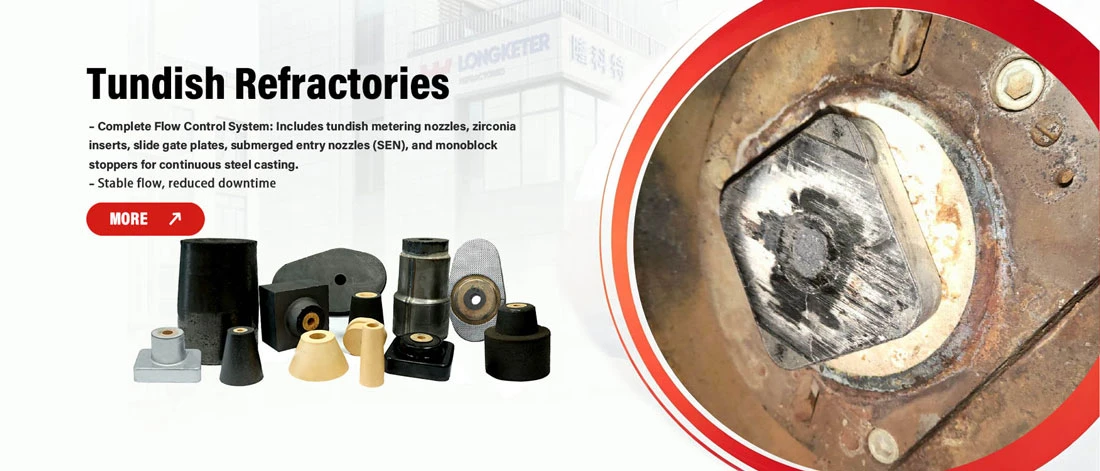
Steel mills chasing longer casting sequences and fewer unplanned stops cannot overlook the role of tundish refractories. These functional refractory parts form the complete flow control heart of the tundish, governing molten steel delivery from tundish to mold in continuous casting lines. Longketer's integrated tundish refractories package covers tundish metering nozzles, zirconia inserts, slide gate plates, submerged entry nozzles (SEN), and monoblock stoppers, built to stabilize steel flow and cut operational downtime for steel producers worldwide.
Many plant managers know the pain point: one prematurely eroded stopper or clogged SEN can force an emergency stop, waste heats, and spoil batches of clean steel. Even minor fluctuations in molten steel flow speed will trigger mold level swings, bringing surface cracks and internal looseness to finished billets. That is why reliable tundish refractories are not just spare consumables, but a core part of quality control for clean steel production.
How a Complete Tundish Flow Control Refractory System Works
Every piece inside this set has a clear, linked job, and they must match in material grade and dimensional tolerance to deliver consistent performance.
Zirconia Metering Nozzles and Inserts for Stable Flow Rate
Zirconia metering nozzles sit at the bottom of the tundish, setting the baseline flow rate for molten steel. The zirconia inserts resist high-temperature corrosion and slag attack, keeping the bore diameter stable through long casting runs. If the nozzle bore wears unevenly, flow speed drifts, and operators struggle to hold steady mold levels. For mills casting calcium-treated steel or high-carbon steel, zirconia inserts become even more critical. Ordinary alumina refractories react quickly with calcium-containing inclusions, creating low-melting phases that eat away the nozzle opening. Our zirconia formulations slow this chemical attack, extending the usable sequence length between tundish changes.
Slide Gate Plates for On-Demand Flow Adjustment
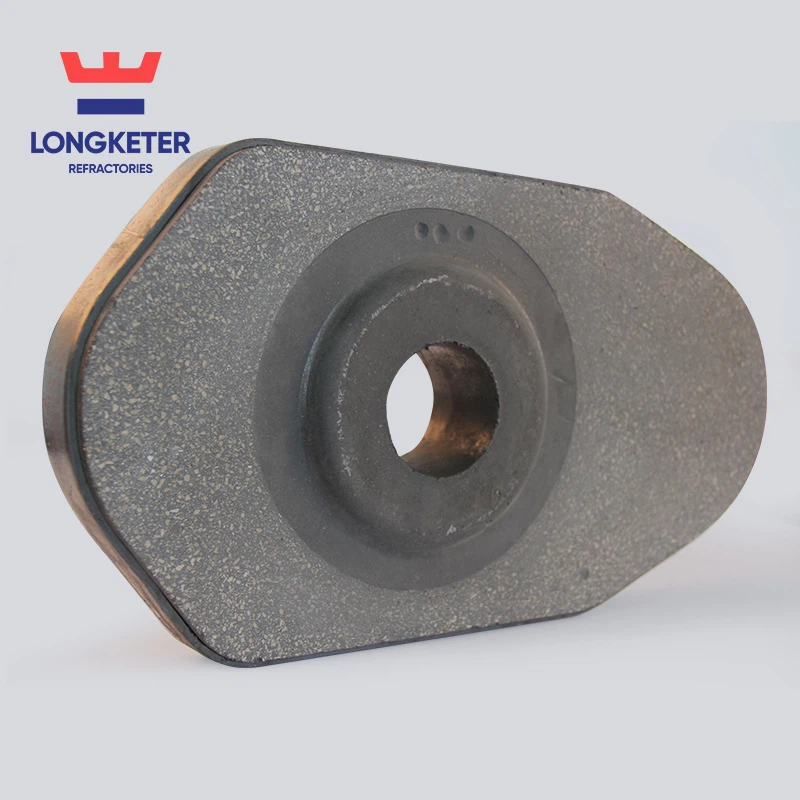
Slide gate plates work as the adjustable throttling mechanism. Paired with upper and lower nozzles, they let crews raise, reduce or fully shut off steel flow through hydraulic movement. This gives operators flexibility to respond to ladle temperature shifts, strand speed changes, or emergency shutdowns. Field feedback from our steel mill partners shows that poorly matched slide gate plates often suffer thermal spalling after just a few heats. Cracks or peeling on the plate sealing surface create steel leakage risks, one of the most feared hazards on continuous casting platforms. High-grade slide gate refractories with optimized alumina-carbon or magnesia-carbon mixes hold tight sealing contact through repeated thermal cycling.
Submerged Entry Nozzles (SEN) and Monoblock Stoppers for Clean Steel
Submerged entry nozzles deliver molten steel deep inside the mold, shielding the stream from air reoxidation and guiding inclusion flotation. Monoblock stoppers, meanwhile, offer precise point control, often paired with argon purging to reduce nozzle clogging during clean steel casting. Clogging remains a top headache for teams producing low-alloy steel and ultra-low-carbon steel. When alumina deposits build up on the SEN inner wall, flow becomes uneven. Proper material selection and internal surface coating on these tundish refractories can slow deposit formation and extend the casting campaign.
What Benefits Do High-Performance Tundish Refractories Bring to Steel Plants
The biggest measurable gain is reduced downtime. A robust tundish flow control system lets mills run longer continuous casting sequences, cutting the frequency of tundish swapping and platform maintenance. Less downtime directly lifts caster utilization and tonnage output.
Stable flow also lifts steel quality. Consistent mold level reduces casting defects, lowering scrap rates and rework volume. For steelmakers supplying automotive, pipeline and structural steel grades, stable tundish flow control helps them meet strict customer acceptance standards.
Cost control is another major advantage. While premium tundish refractories carry a higher upfront unit price, longer service life and fewer breakouts slash total refractory consumption and lost production costs. Many of our clients report that switching to matched full sets instead of mixing spare parts from different suppliers delivers the clearest ROI.
H2: Key Selection Tips for Steel Mill Procurement Teams
Not all tundish refractories fit every casting condition. The right choice depends on steel grade, casting temperature, sequence length and whether the plant uses stopper control or slide gate control.
First, match the material formulation to your steel grade. Zirconia-heavy components suit calcium-treated steel; alumina-carbon SEN and stoppers work well for common carbon steel. Magnesia-carbon grades are preferred for highly corrosive slag environments.
Second, avoid mismatched component sets. A long-lasting slide gate plate paired with a low-grade zirconia nozzle will create a bottleneck. The whole flow control system only lasts as long as its weakest refractory piece. This is why integrated packages are gaining traction among medium and large steelworks.
Third, check dimensional consistency. Tight tolerances on stopper nose geometry, nozzle bore and slide gate sealing faces are non-negotiable. Minor misalignment can cause uneven wear and early failure, even if the raw material quality is good.
Longketer's Field-Proven Tundish Refractory Solution
Longketer manufactures this full line of tundish refractories with isostatic pressing and high-temperature firing processes. Each batch undergoes thermal shock resistance, hot modulus of rupture and slag corrosion testing before shipment. Our engineering team also supports custom sizing and material modification for special casting lines, including multi-strand casters and high-speed slab casters.
One recent case with a domestic carbon steel mill shows clear results. The mill previously ran separate sourced refractory parts and hit frequent flow instability, limiting average sequence length to 12 heats. After switching to our complete tundish flow control refractory set, they stabilized flow performance and pushed average sequences to 18 heats, cutting tundish change frequency by nearly one third.
We keep stock of standard sizes for fast delivery, while custom development cycles are available for unique tundish layouts and special steel grades. Our technical team can join site trials to track wear patterns, adjust material mixes and optimize the refractory package for each mill's specific operating parameters.
Conclusion
Tundish refractories are the quiet foundation of reliable continuous casting. When the full flow control system - metering nozzles, zirconia inserts, slide gate plates, SEN and monoblock stoppers - works in harmony, steel mills gain stable molten steel flow, fewer unplanned stops and better steel cleanliness. If your caster struggles with short sequences, frequent nozzle clogging or unpredictable mold level fluctuations, reviewing your tundish refractory package is a logical starting point. The right matched set can turn refractory consumables from a recurring pain point into a reliable lever for higher production efficiency.