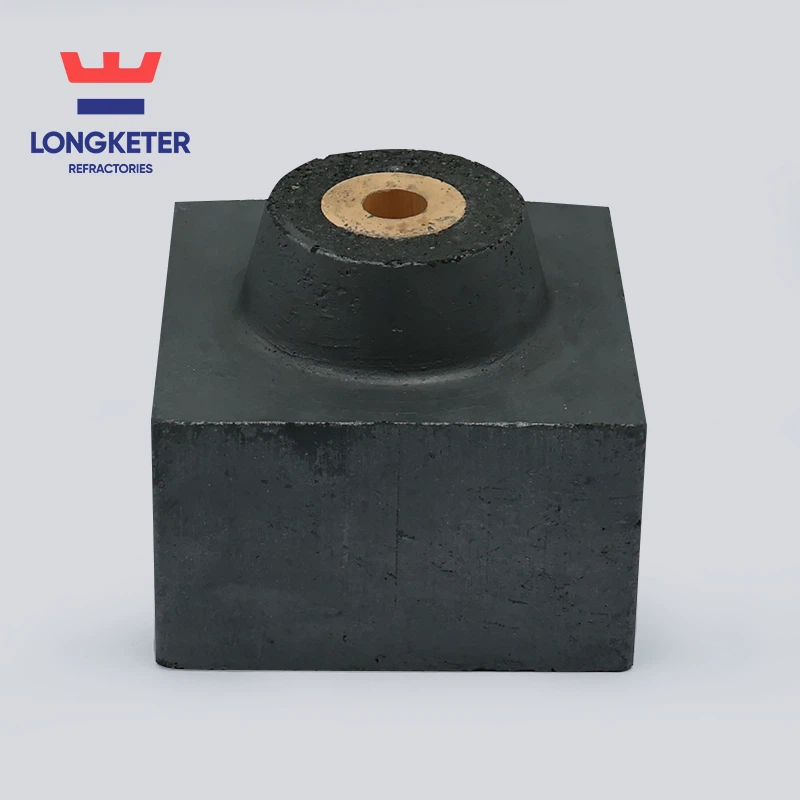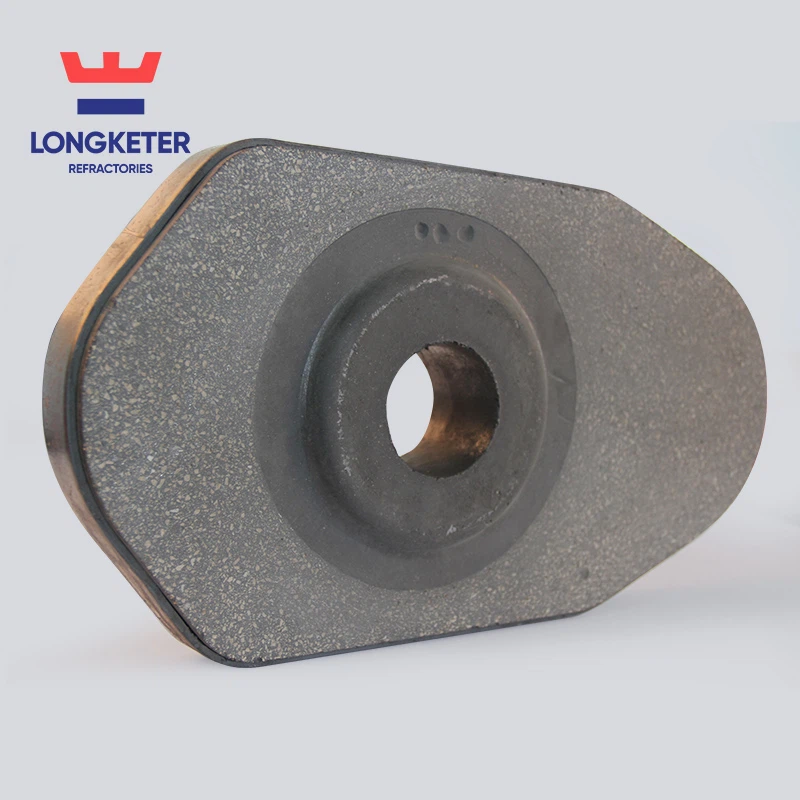
The nozzle of sliding gate set is mainly installed at the bottom of the ladle, and its service conditions have been greatly improved compared with the monolithic stopper , and the refractory part of it is not immersed in molten steel for a long time. But for the sliding gate set, the slide gate plate part is a key component, and its quality directly affects the service life of the sliding gate set.
The upper nozzle and the lower nozzle of the sliding gate set only play the role of flowing steel, but the material of the upper nozzle is required to be resistant to high temperature, corrosion and erosion of molten steel, and it is synchronized with the life of the ladle seat brick. The lower nozzle is generally only for one-time use, and its requirements are relatively lower than that of the upper nozzle.
During working of the upper and lower slide gate plates, fastening pressure is imposed on them, and they are requested to slide. During the pouring process, it is necessary to ensure that there is no leakage of molten steel between the slides. Therefore, it is necessary to finish the sliding surface of the upper and lower plates to ensure extremely high parallelism and smoothness. It is also required to have high thermomechanical properties.
During pouring, the sliding surfaces of the upper and lower plates and the bore for flow steel bear the erosion and erosion of high temperature molten steel. Therefore, the slide gate plates are required to have the properties of high temperature resistance, corrosion resistance, peeling resistance, thermal shock resistance and wear resistance.
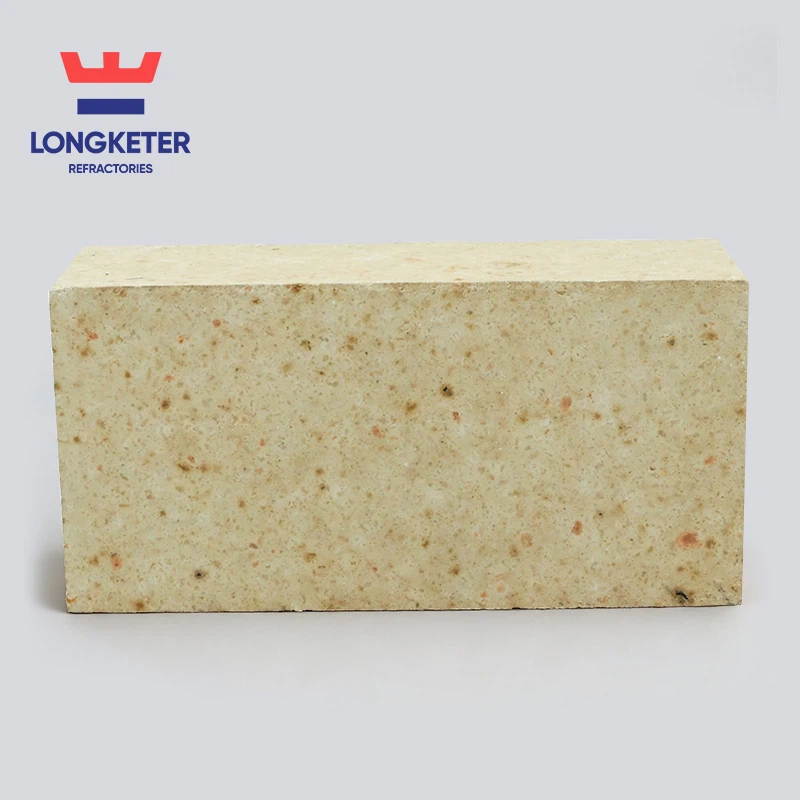
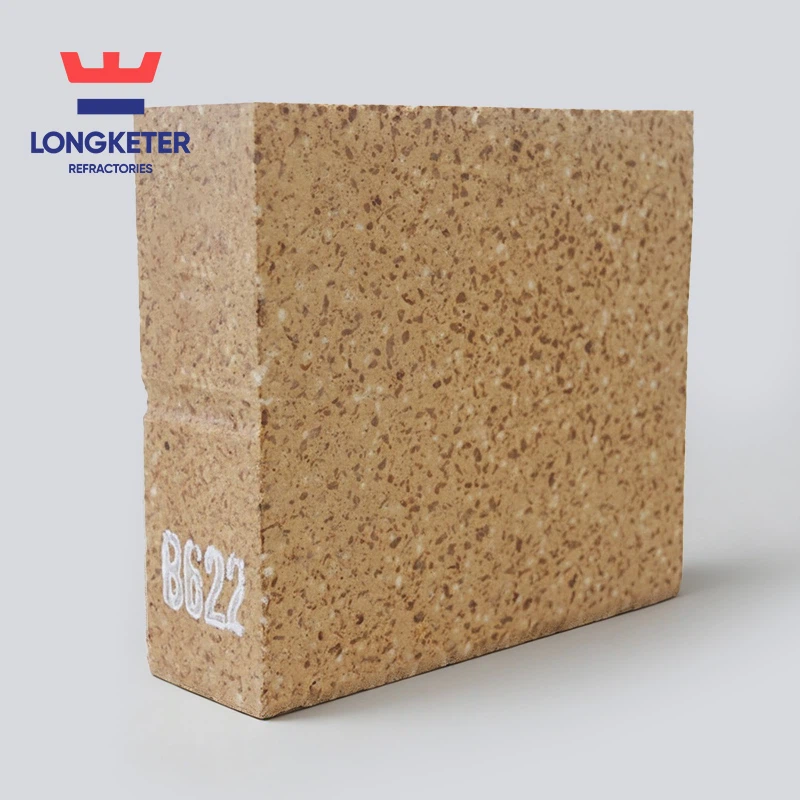
At present, the selection of slide gate plates mainly includes: high alumina, magnesia, aluminum silicon carbide, alumina-magnesia, aluminum carbon and aluminum zirconia carbon type.
Some of the above materials can be made into fired or unfired slide gate blocks.
For high-quality refractory slide gates, due to the high price, composite types can be used, which is more practical and economical.