Mag Calcium Bricks for High-Temperature Steelmaking
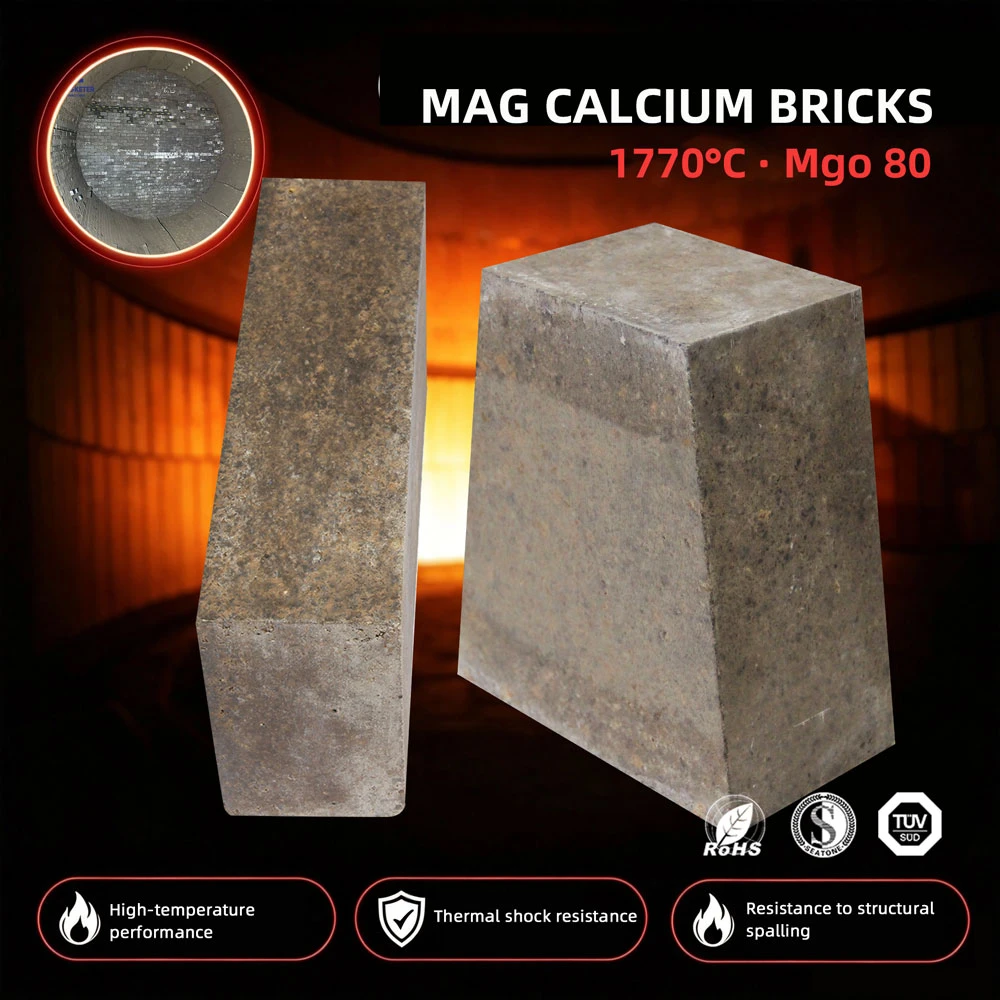
Mag calcium bricks are basic refractory materials designed for demanding high-temperature environments where thermal shock, structural spalling, and chemical attack can shorten lining life. The MgO 80 grade shown here is rated at 1770°C and is intended for refractory applications that require dependable performance under repeated thermal and mechanical stress.
In steelmaking, refractory failure rarely comes from temperature alone. A working lining may be exposed to molten metal, aggressive slag, rapid temperature changes, mechanical impact, and repeated heating and cooling during a single production campaign. The challenge is therefore to select a refractory material that can tolerate several forms of wear at once.
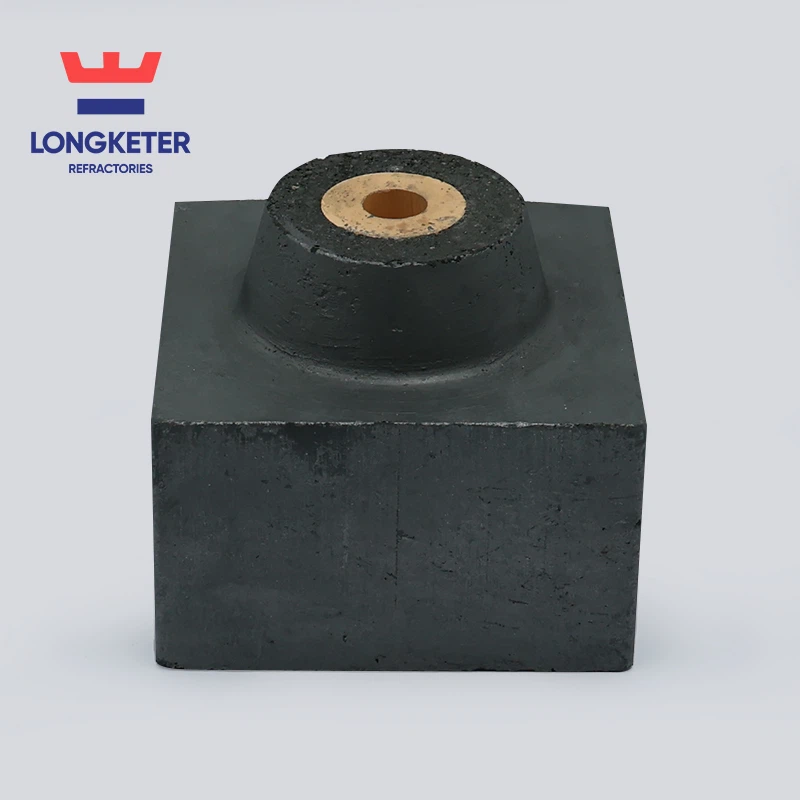
The product shown in the supplied image is a mag calcium brick with an MgO 80 designation. Its application value comes from the combination of a magnesia-based composition and calcium-containing refractory structure, providing a balance of high-temperature performance, thermal shock resistance, and resistance to structural spalling.
For steel producers, furnace engineers, and refractory buyers, understanding where this material fits-and where it does not-is more useful than simply looking at its maximum service temperature.
Understanding Mag Calcium Refractory Materials
Magnesia-calcium refractories are part of the basic refractory family. Their principal refractory components are based on magnesium oxide and calcium oxide, with the final performance determined by raw material quality, formulation, processing technology, porosity, microstructure, and service conditions.
Magnesia provides a high-refractoriness matrix suitable for many basic steelmaking environments. Calcium oxide brings additional characteristics that can be useful in specific refining and slag-contact applications.
The result is a refractory system that can be engineered for harsh furnace conditions.
However, MgO content alone does not determine whether a brick is suitable for a particular furnace. Two products with similar chemical labels may behave differently because of differences in density, grain structure, bonding, impurities, thermal treatment, and manufacturing control.
This is particularly important when selecting mag calcium bricks for steelmaking, where slag chemistry and thermal cycling can vary considerably from one plant to another.
Why Thermal Shock Resistance Matters
One of the most practical advantages highlighted in the product image is thermal shock resistance.
Refractory linings are constantly responding to temperature changes. During normal operation, the hot face may remain at an extremely high temperature while the cooler side of the brick is exposed to a very different thermal condition. During shutdowns, startups, tapping, or process interruptions, the temperature gradient can change rapidly.
These temperature differences generate thermal stresses inside the refractory.
If the material cannot accommodate those stresses, cracks may form. Once cracking begins, slag and molten material may penetrate the refractory, accelerating further deterioration.
A refractory with suitable thermal shock resistance can help limit this type of damage and maintain a more stable lining structure over repeated thermal cycles.
For plant operators, this has a practical implication: thermal shock performance should be considered together with chemical corrosion resistance rather than evaluated in isolation.
Thermal Cycling Can Change Refractory Wear
Consider a furnace that experiences frequent production interruptions. Even if its peak operating temperature remains within the nominal capability of the refractory, repeated thermal cycling may create more damage than steady-state operation.
This is why operating history matters.
When reviewing a failed lining, engineers should look at:
Areas where cracks first appeared
Changes in brick dimensions or joints
Slag penetration depth
Surface erosion patterns
Spalling or corner damage
Temperature fluctuations during the campaign
Changes in furnace operating practice
Such information can help determine whether the next campaign needs a different refractory grade, installation method, or lining configuration.
Resistance to Structural Spalling
The supplied product image also emphasizes resistance to structural spalling.
Spalling occurs when sections of refractory break away from the working surface. It can be caused by thermal stress, mechanical impact, chemical reactions, internal structural changes, or a combination of these factors.
Once a section of lining spalls, the exposed surface may experience even more severe operating conditions. Wear can therefore accelerate rather than progress at a constant rate.
For large refractory bricks, structural integrity is especially important. The material must remain stable not only at high temperature but also during handling, installation, heating, and prolonged service.
A well-manufactured brick should have consistent dimensions and an appropriately controlled internal structure. Manufacturing consistency matters because localized defects can become starting points for cracking or spalling.
This is one reason industrial buyers should look beyond a product photograph and request technical documentation, inspection data, and application recommendations before selecting a refractory supplier.
MgO 80 and the 1770°C Rating
The product shown in the image is marked MgO 80 and 1770°C.
These figures are useful starting points, but they should not be interpreted as a simple guarantee that the brick can operate continuously at 1770°C under every condition.
Maximum temperature ratings depend on the testing method, material formulation, atmosphere, load, exposure time, and actual furnace environment.
In real steelmaking operations, refractory wear can occur well before the nominal temperature limit because of chemical attack or mechanical deterioration.
For this reason, buyers should review several properties together:
Chemical Composition
MgO content, CaO content, carbon or other additives where applicable, and impurity levels can all influence refractory behavior.
Physical Properties
Bulk density, apparent porosity, cold crushing strength, and other relevant indicators help describe the brick's physical structure.
High-Temperature Behavior
Refractoriness under load, thermal shock behavior, permanent linear change, and other high-temperature properties may be relevant depending on the application.
Corrosion Resistance
The compatibility between the refractory and the plant's actual slag composition should be considered carefully.
A good purchasing decision is therefore based on the complete technical specification rather than one number printed on a product image.
Where Mag Calcium Bricks Can Be Considered
The suitability of magnesia-calcium refractory materials depends heavily on the furnace design and process conditions.
They can be considered for selected basic refractory applications in high-temperature metallurgical equipment, particularly where resistance to thermal stress and chemical interaction with basic materials is important.
Potential application areas may include:
Steelmaking furnaces
Secondary refining equipment
Slag-contact zones
High-temperature furnace linings
Metallurgical vessels
Selected areas requiring basic refractory materials
The exact application should be determined through technical evaluation.
For example, the requirements for a slag-contact zone can be substantially different from those for a mechanically protected section of a furnace. Likewise, a refractory exposed to frequent thermal cycling may require different characteristics from one operating under relatively stable conditions.
There is no universal refractory grade for every furnace.
How to Select the Right Refractory Grade
A common purchasing mistake is to compare refractory products only by price and MgO content.
The better approach is to start with the operating environment.
Before ordering MgO 80 magnesia calcium bricks, technical and purchasing teams should collect several pieces of information.
1. Identify the Furnace Zone
Determine exactly where the bricks will be installed. Working lining, slag line, sidewall, bottom, and transition areas can have very different wear mechanisms.
2. Review Temperature Conditions
Record normal operating temperature as well as startup, shutdown, and peak-temperature conditions.
3. Analyze Slag Characteristics
Basicity, FeO content, silica, additives, and other slag characteristics can affect refractory corrosion.
4. Check Mechanical Conditions
Charging impact, stirring, material movement, tapping, and other mechanical forces should be considered.
5. Examine Previous Refractory Failures
Previous campaign data is often extremely valuable. If the old lining failed because of thermal cracking, selecting another product with the same weakness will not solve the underlying problem.
6. Confirm Dimensions and Tolerances
Accurate brick dimensions help ensure proper installation and reduce unnecessary gaps between individual refractory pieces.
This application-first method generally provides a more useful basis for refractory selection than simply choosing the highest specification available.
Manufacturing Quality Is Part of Refractory Performance
Raw materials determine the foundation of a refractory product, but manufacturing determines how consistently that foundation is translated into the finished brick.
For shaped refractories, production control can include raw material preparation, batching, mixing, pressing, heat treatment or firing where applicable, machining, dimensional inspection, and final quality checks.
Small differences in density or microstructure can influence how a brick responds to thermal stress and chemical penetration.
For international steelmaking customers, batch consistency is particularly important. A refractory supplier should be able to provide clear technical specifications and maintain stable production standards across different orders.
Documentation also matters.
A professional technical datasheet should allow the buyer to understand the product's chemical and physical characteristics, recommended application range, dimensions, and relevant testing information.
That level of transparency supports better purchasing decisions and strengthens long-term supplier relationships.
Reducing Total Refractory Cost
The cheapest refractory brick is not necessarily the lowest-cost solution.
In an operating steel plant, refractory expenditure includes more than the purchase price. Replacement labor, installation time, furnace downtime, production losses, and emergency maintenance can all become part of the actual cost.
Suppose two refractory grades have different initial prices. If the more expensive option delivers a longer and more predictable campaign under the same operating conditions, its total cost per production cycle may be lower.
This is why refractory buyers increasingly need to evaluate performance per campaign, not simply price per brick.
The objective is straightforward: obtain a refractory solution that delivers the required service life without paying for properties that the application does not actually need.
Longketer's Focus on Industrial Refractory Applications
Longketer Refractories provides refractory products for demanding industrial and metallurgical applications, with product selection focused on the conditions in which the material will operate.
The MgO 80 magnesia-calcium brick shown in this product image is presented with a 1770°C rating and highlights three practical characteristics: high-temperature performance, thermal shock resistance, and resistance to structural spalling.
For steelmaking customers, these characteristics need to be evaluated together with furnace design, slag composition, operating temperature, lining location, and expected campaign duration.
A technical discussion before production can also help determine appropriate brick dimensions and specifications for a specific installation.
The goal is not simply to supply a refractory brick that meets a laboratory specification. It is to provide a material that makes sense for the customer's actual operating conditions.
Building a More Reliable Furnace Lining
Refractory performance is ultimately a system issue.
Material selection, installation quality, furnace operation, slag management, thermal control, and maintenance all influence lining life. Even a high-quality refractory can suffer premature damage when it is exposed to conditions outside its intended application range.
That is why post-campaign inspection is so valuable.
A worn brick can tell engineers where the process is placing the greatest stress on the lining. Surface erosion, cracking, penetration, and spalling patterns provide clues that can be used when planning the next maintenance cycle.
Over time, this feedback creates a more informed refractory strategy.
Instead of repeatedly replacing the same material and hoping for better results, steel plants can adjust refractory grades and lining designs according to actual operating evidence.
Conclusion
Mag calcium bricks provide a practical basic refractory option for high-temperature metallurgical environments where thermal shock and structural stability are important considerations. The MgO 80 grade shown in the supplied image, with a stated 1770°C rating, is designed around the demanding conditions associated with industrial furnace service.
For refractory buyers, the most important consideration is not a single temperature figure. Furnace location, slag chemistry, thermal cycling, mechanical wear, brick dimensions, manufacturing consistency, and previous lining performance should all be evaluated together.
When refractory selection is based on real operating conditions rather than specifications alone, steel producers can make more informed decisions about lining reliability, maintenance intervals, and long-term refractory costs.