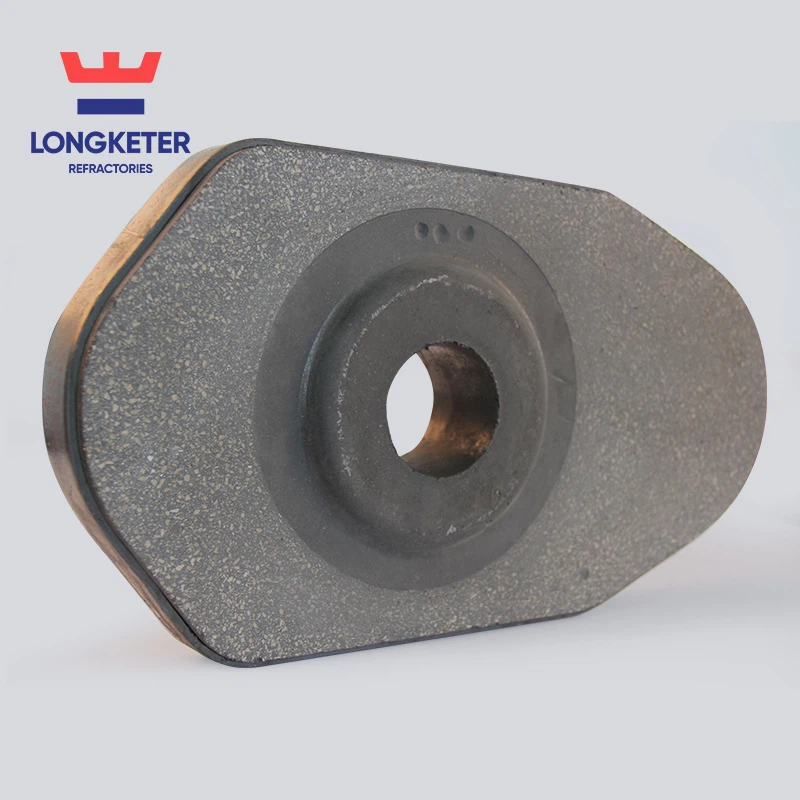
High-purity raw materials are becoming increasingly important as refractory manufacturers seek consistent performance, controlled formulation, and dependable supply. Flint Clay is one of the established mineral raw materials used in the production of high-alumina bricks, fireclay refractories, and various monolithic refractory materials. Its refractory characteristics, alumina content, and relatively stable behavior during firing make it a practical choice for demanding industrial applications.
Flint Clay Supports High-Performance Refractory Manufacturing
In steel, casting, ceramics, and other high-temperature industries, the performance of a refractory product starts with the quality of its raw materials. While finished refractory shapes receive most of the attention, the mineral aggregates used in their formulation have a direct influence on thermal stability, mechanical strength, dimensional behavior, and service life.
Flint Clay is commonly selected as an aggregate or mineral component in refractory formulations where resistance to elevated temperatures and structural stability are required. It can be processed into different particle sizes according to the requirements of brick manufacturing, castables, and other refractory products.
For manufacturers, the objective is not simply to obtain a material with high alumina content. Consistency matters just as much. Chemical composition, particle sizing, moisture control, impurities, and processing characteristics all need to be considered before the material enters a production line.
This is particularly important for customers purchasing refractory raw materials for repeated industrial production. A stable feedstock helps manufacturers maintain more consistent batches and reduce unexpected variations during forming and firing.
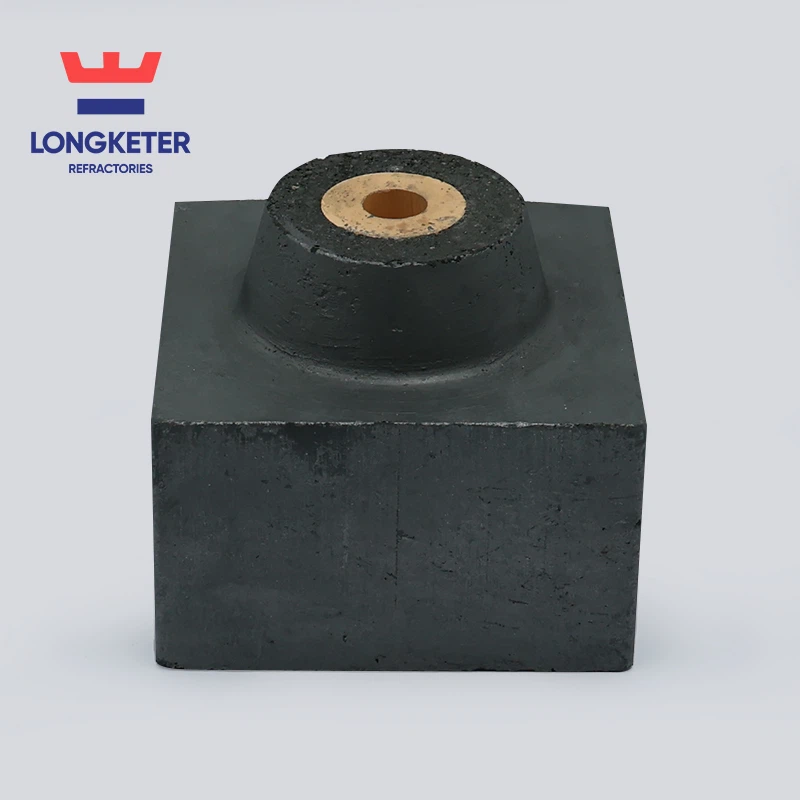
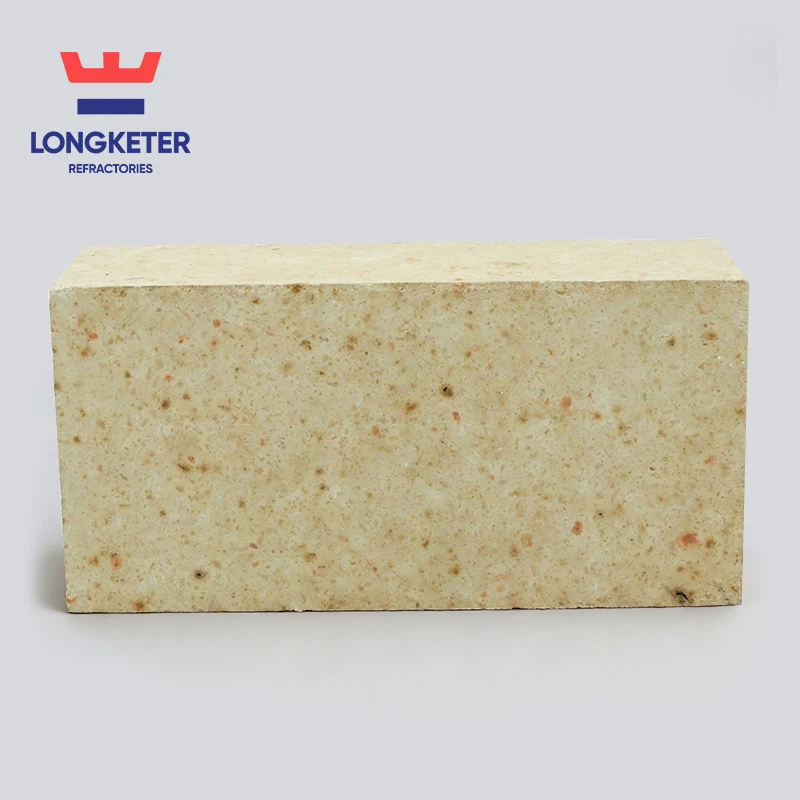
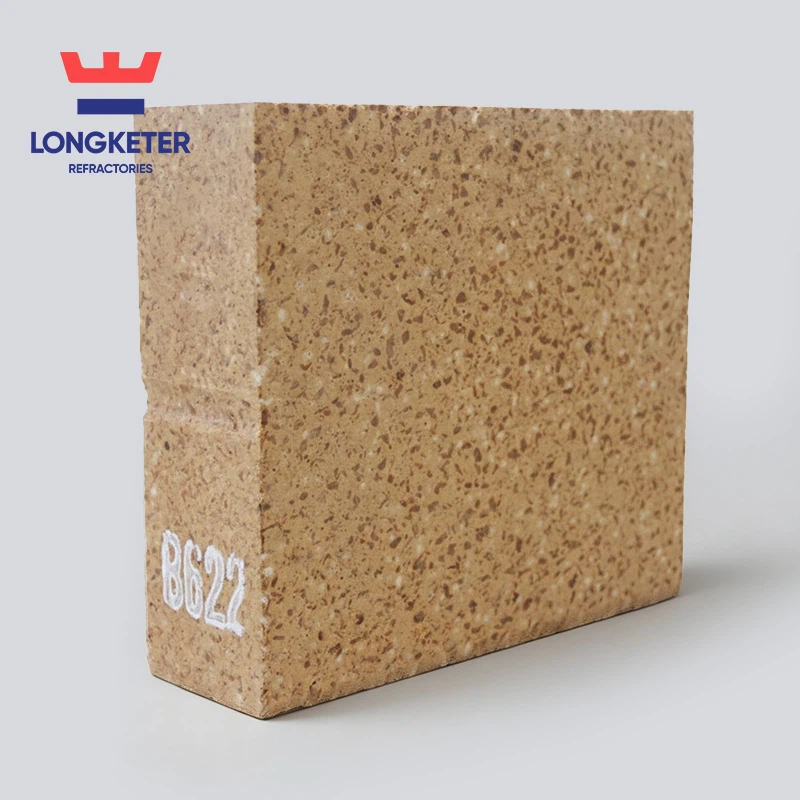
Image Alt Text: Flint Clay refractory aggregate for high-alumina bricks and castable production
What Makes Flint Clay Useful in Refractory Applications?
Flint Clay is a dense, hard clay material associated with refractory-grade applications. Compared with ordinary clay used for general ceramic production, refractory-grade material is selected according to characteristics that are more relevant to high-temperature service.
One important consideration is its alumina and silica balance. Depending on the grade and source, the material can contribute to the overall chemistry required for fireclay and high-alumina refractory formulations.
Its physical structure is also important. After appropriate processing and firing, refractory aggregates need to maintain their integrity under high temperatures rather than rapidly deforming or losing their useful structure.
This makes material selection a technical process rather than a simple purchasing decision.
Refractory manufacturers typically evaluate several factors:
Chemical composition
Al₂O₃ content
SiO₂ content
Fe₂O₃ and other impurities
Moisture
Particle-size distribution
Bulk density
Refractoriness
Firing behavior
Supply consistency
The appropriate specification depends on the final refractory product and its intended operating environment.
Applications in High-Alumina Refractory Bricks
One of the major uses of Flint Clay is as a raw material or aggregate in refractory brick production.
High-alumina bricks are widely used in industrial furnaces and thermal equipment because they can provide strong resistance to high temperatures and demanding operating conditions. The final properties of a brick depend on its complete formulation, including the type and proportion of aggregates, bonding system, forming method, firing temperature, and quality control.
Within this system, Flint Clay can contribute to the refractory matrix and help manufacturers develop formulations with the required physical and thermal characteristics.
For brick producers, particle-size control is particularly important. Coarse aggregate, intermediate fractions, and fine particles each perform different functions within a refractory batch. A properly designed grading curve can improve packing behavior and influence the density and strength of the finished product.
This is why industrial buyers often specify not only the chemical grade but also the required size range.
Why Particle Size Matters
Raw material consistency becomes more noticeable when a refractory manufacturer moves from laboratory testing to continuous industrial production.
If the particle distribution changes significantly from one shipment to another, the batch may require adjustment. Water demand, mixing behavior, forming pressure, packing density, and firing characteristics can all be affected.
For this reason, Flint Clay for high-alumina refractory bricks should be supplied according to clearly defined technical specifications rather than a general product name alone.
A professional purchasing process normally establishes the chemical and physical requirements before an order is finalized.
Use in Unshaped Refractory Materials
The application of Flint Clay is not limited to shaped refractory products.
It can also be incorporated into certain unshaped refractory materials, including castables and related refractory mixes. These materials are increasingly used where complex furnace geometries or on-site installation make conventional brickwork less practical.
In a castable formulation, aggregate selection influences the structure of the finished refractory lining. The aggregate must work together with the matrix, binder, additives, and fine powders to produce a mixture that can be installed and cured correctly.
The final performance depends on the complete formulation. Therefore, it would be inaccurate to attribute the properties of a castable solely to one raw material.
Instead, Flint Clay should be viewed as one component within a carefully engineered refractory system.
This distinction is important for industrial buyers. A raw material supplier should provide reliable specifications so that the refractory producer can evaluate the material within its own formulation and production process.
Importance for Steel and Casting Industries
Steelmaking and metal casting place severe demands on refractory linings.
Furnaces, ladles, runners, heating equipment, and other thermal units may operate under repeated heating and cooling cycles. Refractories can also encounter molten metal, slag, mechanical wear, and chemical attack.
Under these conditions, raw-material quality becomes an important part of refractory design.
For example, a manufacturer producing high-temperature refractory bricks for steel-related equipment may require a carefully controlled mineral composition to achieve the desired balance between thermal stability, mechanical strength, corrosion resistance, and dimensional stability.
Flint Clay can be considered where its characteristics match the formulation requirements.
The same principle applies to foundry and casting applications. The refractory system needs to maintain its integrity while exposed to high temperatures and, depending on the application, contact with molten metal.
Material selection should therefore be based on the actual operating conditions rather than simply choosing the highest nominal specification available.
Quality Control Starts Before Production
For refractory raw materials, quality control should begin before the material reaches the mixing stage.
A reliable inspection process can include sampling and laboratory analysis of incoming material. Depending on the product specification, testing may cover chemical composition, moisture, particle size, bulk density, and other relevant parameters.
This approach provides manufacturers with a clearer understanding of the material entering their production process.
For international buyers, documentation is equally important. A consistent technical data sheet should clearly identify the material grade and major specifications. When required, customers may also request a certificate of analysis or batch-related quality documentation.
These details help buyers compare materials from different suppliers and make purchasing decisions based on measurable specifications rather than general descriptions.
Consistency Is Often More Valuable Than a Single Strong Test Result
A refractory manufacturer may accept a material with excellent laboratory performance, but if the quality varies significantly between shipments, production control becomes difficult.
In practical manufacturing, predictable raw materials are valuable because production parameters can be established around them.
That is why reliable supply should be considered together with chemical quality.
A supplier capable of maintaining stable product specifications, packaging standards, shipment procedures, and communication can provide greater value over the course of a long-term supply relationship.
Choosing the Right Flint Clay Grade
There is no single Flint Clay specification suitable for every refractory application.
The appropriate grade depends on the target product.
A manufacturer producing high-alumina bricks may prioritize alumina content, impurity levels, particle sizing, and firing behavior. A castable producer may place greater emphasis on grading, mixing characteristics, and compatibility with the complete formulation.
Before purchasing, buyers should therefore define several basic requirements:
1. Target application
Identify whether the material will be used for bricks, castables, refractory mixes, or another product.
2. Chemical requirements
Specify the acceptable ranges for Al₂O₃, SiO₂, Fe₂O₃, and other relevant components.
3. Particle size
Determine the required granular or powdered specification according to the production process.
4. Physical properties
Where applicable, define bulk density, moisture, or other relevant parameters.
5. Packaging
International shipments may require customized packaging based on storage conditions, transportation distance, and handling equipment.
6. Supply volume
Regular production requires a supply plan that can support both trial orders and larger-scale procurement.
These steps can reduce misunderstandings between raw-material suppliers and refractory manufacturers.
Flint Clay and Long-Term Refractory Performance
It is tempting to evaluate a refractory raw material only by looking at its chemical composition. In practice, the relationship between raw material quality and finished-product performance is more complex.
The final refractory depends on formulation, processing, forming pressure, firing conditions, installation quality, and operating environment.
Nevertheless, stable raw materials provide a stronger foundation for controlling the manufacturing process.
For refractory producers, this means that Flint Clay should be evaluated not only as a mineral but also as a production input. A material that arrives with consistent specifications from batch to batch is easier to formulate, test, and process.
This can be especially valuable for manufacturers supplying refractory products to steel mills, foundries, cement plants, ceramic producers, and other industries where furnace downtime can be costly.
Reliable Supply for Industrial Refractory Producers
Longketer Refractories focuses on supplying refractory raw materials and related products for industrial applications.
The company provides Flint Clay for applications including high-alumina refractory bricks, fireclay-based products, and unshaped refractory materials. Product specifications can be discussed according to the customer's application, required grade, particle size, and purchasing requirements.
For international customers, clear communication is an important part of raw-material procurement. Before shipment, technical requirements should be confirmed so that the supplied material matches the buyer's production process.
This approach is particularly useful for customers looking for Flint Clay aggregate for refractory castables or raw materials for high-temperature brick production.
Looking Beyond Price in Raw Material Purchasing
Price remains an important factor in refractory procurement, but it is rarely the only factor that determines the real cost of a material.
A lower-priced raw material may become less economical if inconsistent quality creates production adjustments, increased rejection rates, or difficulties in maintaining finished-product specifications.
Conversely, a stable raw material can help manufacturers simplify batch control and maintain predictable production.
For this reason, industrial buyers should compare suppliers using several criteria: technical specifications, consistency, quality documentation, packaging, delivery capability, communication, and total procurement cost.
A supplier that understands the application can also help customers determine which specifications actually matter for their particular refractory formulation.
Conclusion
Flint Clay remains a practical raw material for the production of refractory products used in high-temperature industries. Its application in high-alumina bricks, fireclay refractories, castables, and other refractory formulations demonstrates the continuing importance of carefully selected mineral aggregates.
For manufacturers, the key is not simply selecting a material by name. Chemical composition, particle size, physical characteristics, processing behavior, and supply consistency should all be considered together.
As industrial refractory production becomes increasingly focused on stable quality and process control, dependable raw-material supply will remain an important part of maintaining finished-product performance.
For buyers evaluating Flint Clay for refractory production, working with a supplier that can provide clearly defined specifications and consistent batches is a practical step toward more predictable manufacturing.
Longketer Refractories welcomes inquiries from refractory manufacturers and industrial buyers seeking Flint Clay and other refractory raw materials for specific applications.