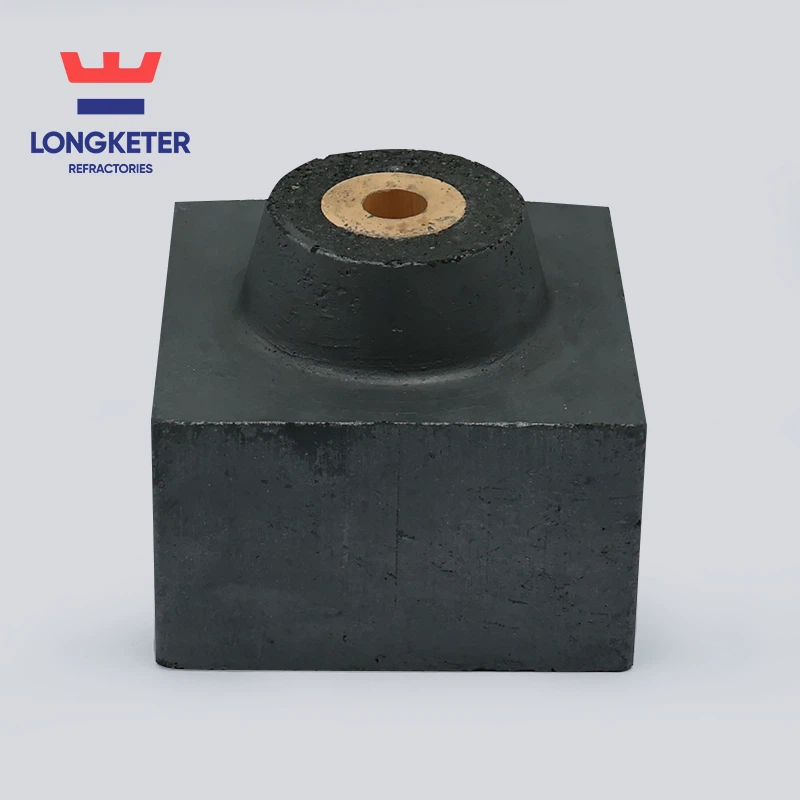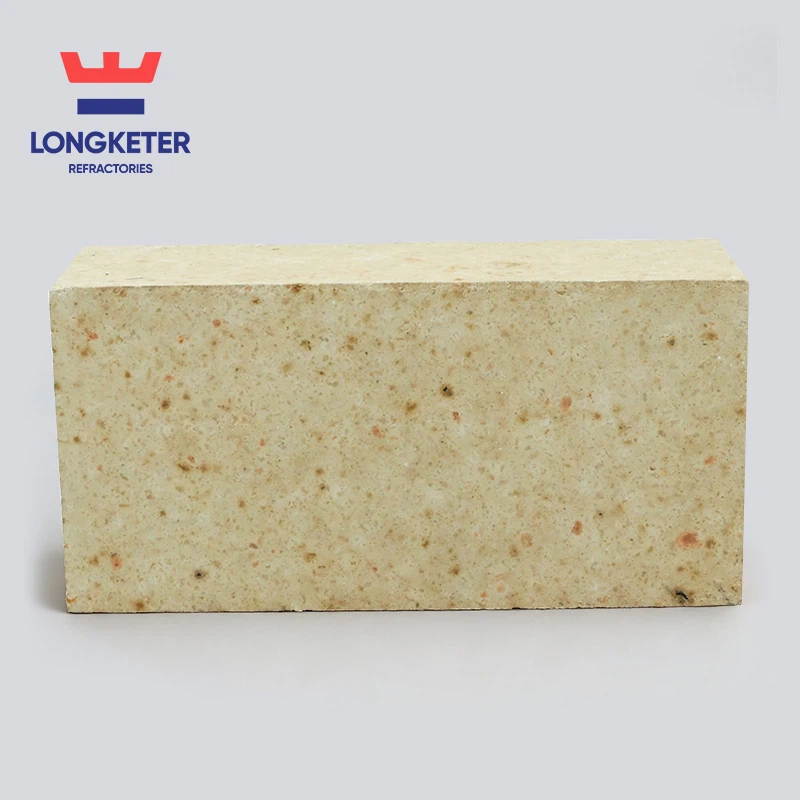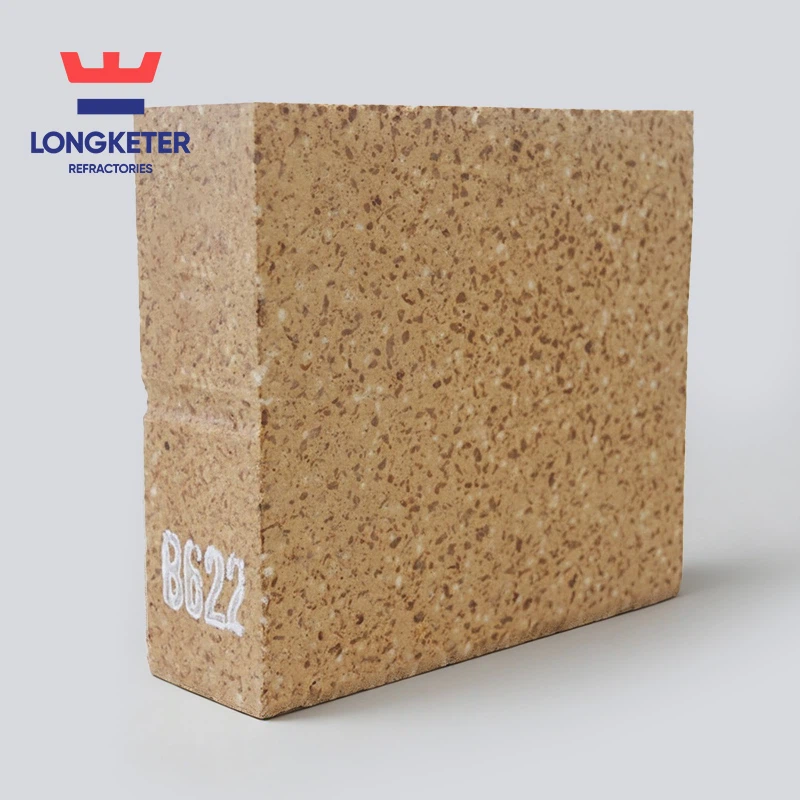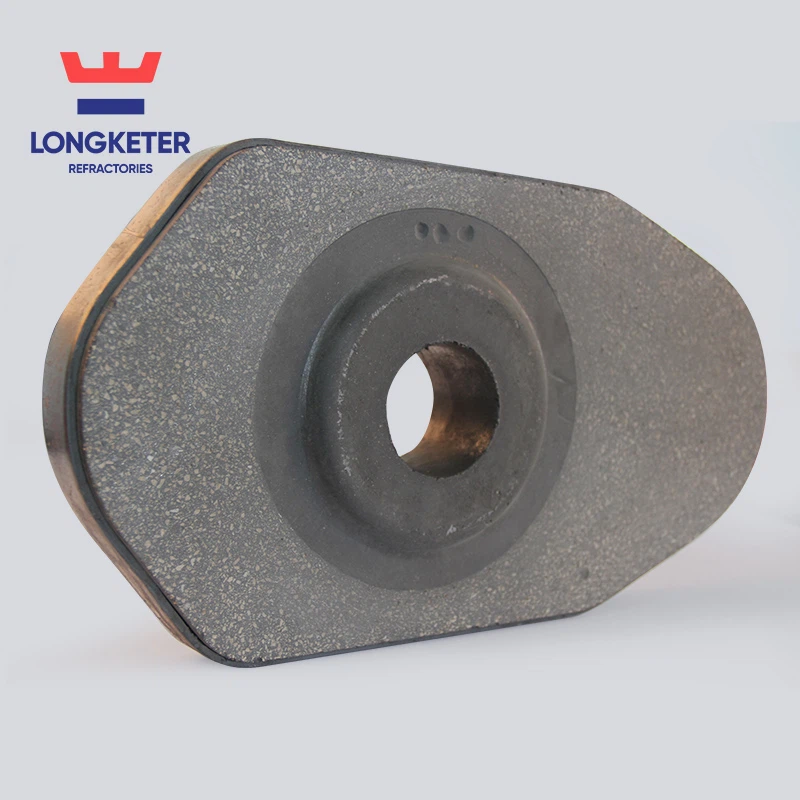
Refractory slide gate plates generally include type of Alumina-carbon type, alumina-carbon-zirconia type, magnesia-carbon type, alumina-magnesia spinel-carbon type, zirconia type etc.
1.Alumina-carbon slide gate plate
Using tabular alumina and synthetic mullite as the main raw materials, carbon components and antioxidants (such as metal aluminum, metal silicon, SiC, B, C, Mg-B, etc.) are added to the matrix part, and coal tar pitch or phenolic Resin is added as binding agent. Mixed material is kneaded and then formed under high pressure; fired in a reducing atmosphere to form a carbon-bonded refractory. The sliding plate of this material has good corrosion resistance because of its compact structure, fine pores, and contains a certain amount of residual carbon, so it’s with great corrosion resistance to molten steel and slag. Meanwhile because of its compact structure, thermal crushing resistance is lower,it can not be used continuously for many times. Secondly, in the process of use, because the carbon is easily oxidized, the structure is loose and the corrosion resistance is reduced.
2.Alumina-carbon-zirconia slide gate plate
Aluminum carbon zirconium sliding plate is developed on the basis of firing aluminum carbon sliding plate. This kind of sliding plate adopts A12O3-SiO2-ZrO2 series raw materials with low expansion rate, and is made into a refractory material with baddeleyite, mullite, corundum, etc. as the main crystal phase and characterized by carbon bonding. Firstly, zirconium mullite is introduced as aggregate, and zirconium oxide in zirconium mullite undergoes crystal transformation at about 1000 ℃, accompanied by the characteristics of volume shrinkage, and microcracks are generated in the grains, which greatly improves the thermal crushing resistance of the material. Secondly, ZrO2 has excellent corrosion resistance, and its corrosion resistance is significantly higher than that of aluminum carbon sliding plates.Alumina-carbon-zirconia material plates have become the mainstream in the use of slide plates in large iron and steel enterprises today.
3.Magnesium carbon slide plates
On the basis of periclase sliding plate: the developed Mg0-C sliding plate overcomes the disadvantage of poor thermal shock resistance of periclase sliding plate. Under the conditions of high casting temperature, long time casting and high content of oxygen & calcium in molten steel, the magnesium-carbon sliding plate has also obtained satisfactory results.
4.Spinel carbonaceous sliding plate
Spinel carbonaceous sliding plate is made of magnesia-aluminum spinel raw material, result to magnesia-aluminum spinel as the main crystal phase.It’s a refractory material characterized by the composite combination of ceramic and carbon. The thermal expansion coefficient and elastic modulus of magnesia-aluminum spinel material are smaller than those of magnesia, and the thermal shock resistance is stronger than that of magnesia.Meanwhile, a slow chemical reaction occurs between the spinel material and the calcium in the molten steel, resulting in the formation of low-melting point substances, which affects its service life. Through the improvement of raw materials in the manufacturing process, and the improvement & control to the particle size distribution and firing temperature of green compact, the erosion resistance of the magnesium spinel slide plate has been greatly improved, and the service life has also been significantly increased.
5.Zirconia sliding gate plate
Zirconia material has good corrosion resistance and spalling resistance. The magnesia partially stabilized zirconia slide plate can be used under harsher casting conditions with a lifespan of up to 10 times. The hot-pressed zirconia sliding plate has the characteristics of high thermal strength, low apparent porosity and small pore size. When being applied on the tundish, it has more corrosion resistance to molten steel and slag.