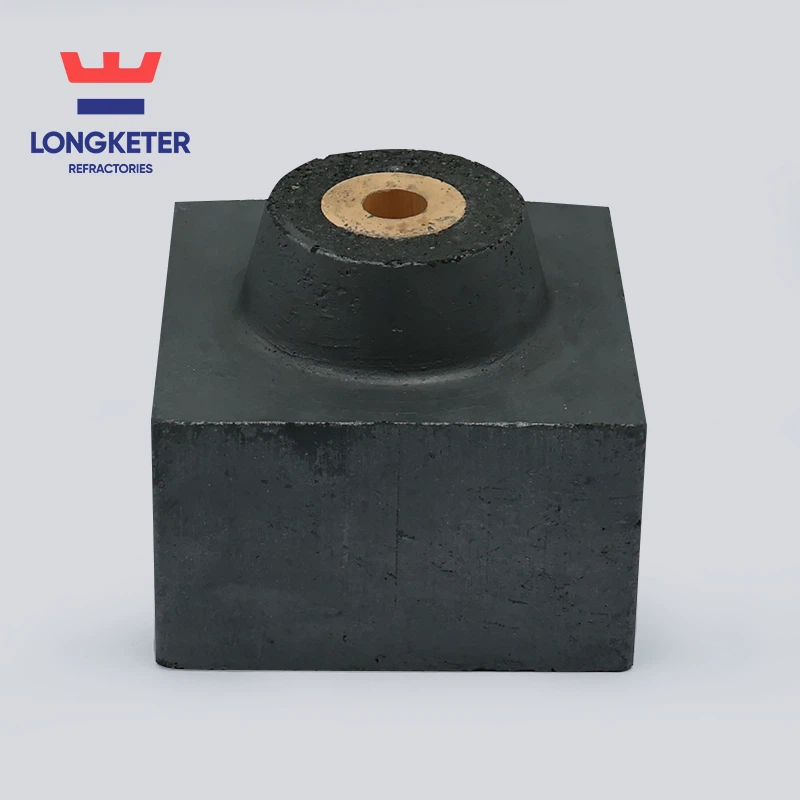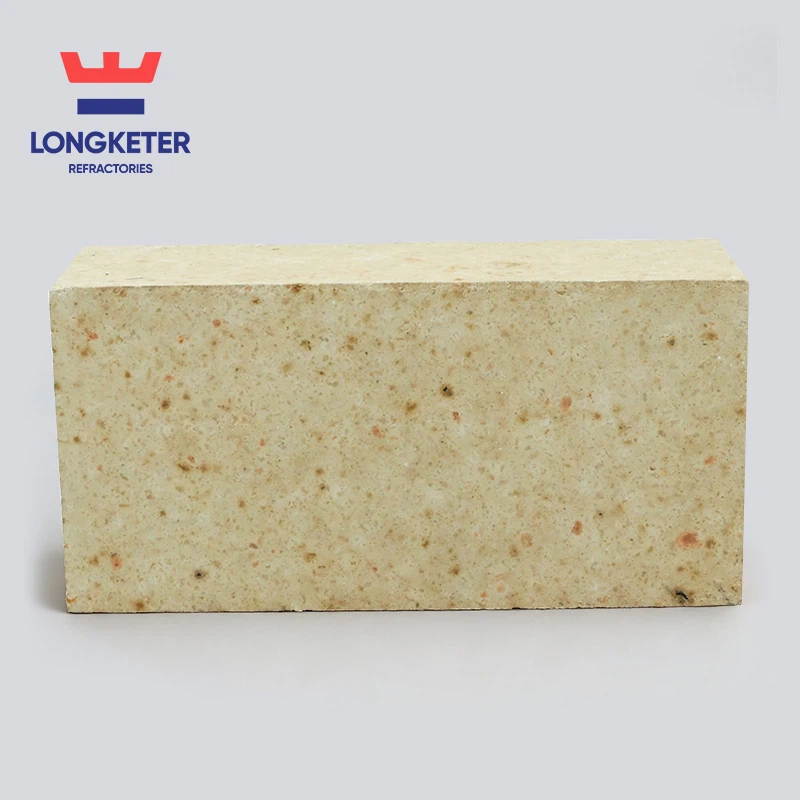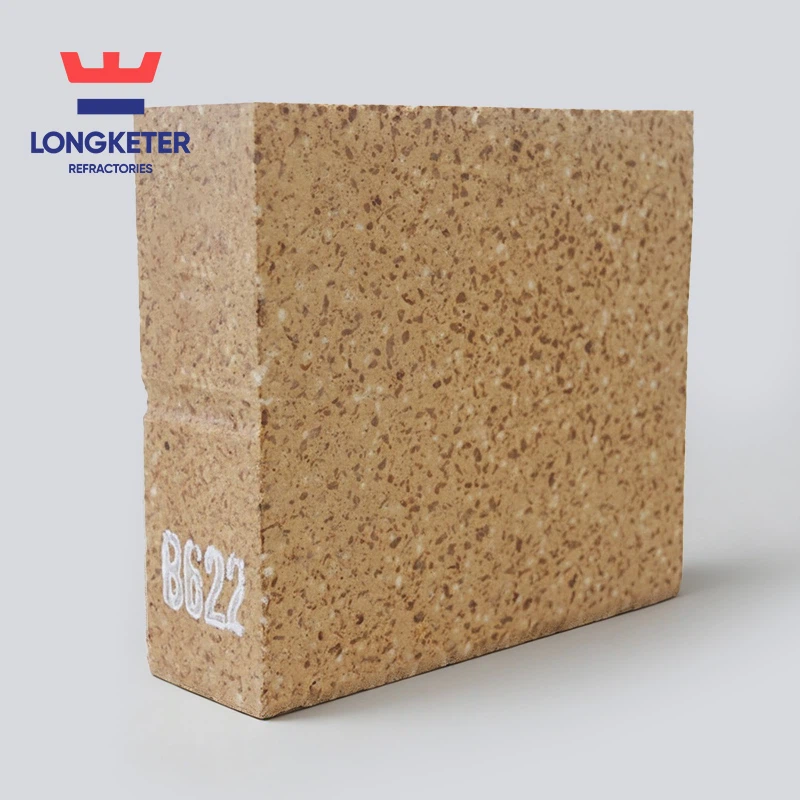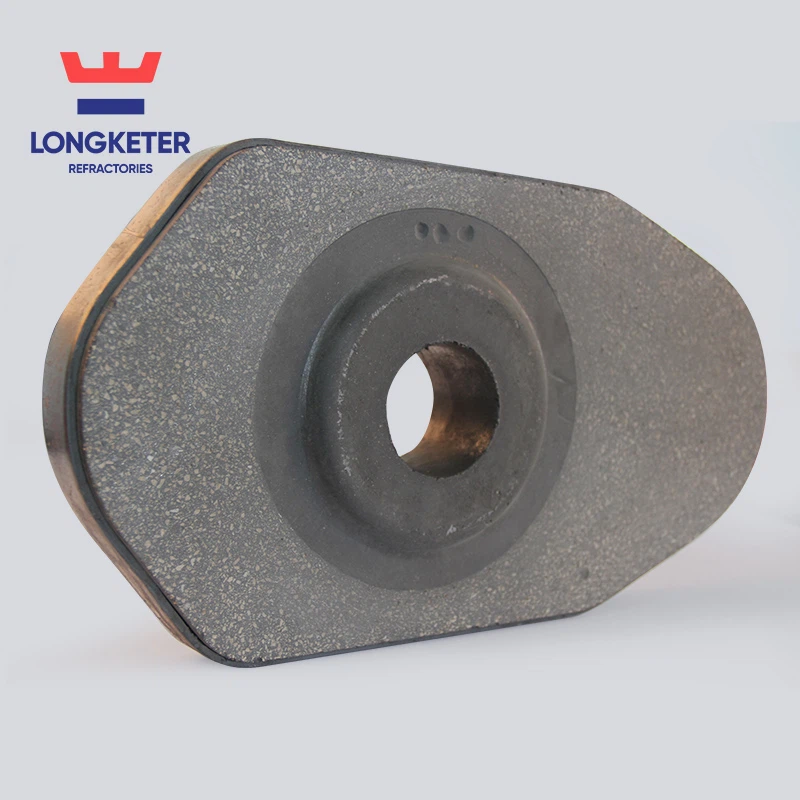
Sintered AZS bricks are products made of zircon and alumina as the main raw materials and pre-synthesized materials as aggregates. Since the green material is a barren material, it is not effective to increase the density of the product only by increasing the molding pressure, and the increase in the number of presses for large-scale products will also lead to spalling and uneven density. It is necessary to adjust the critical particle size composition, add a composite binder and a small amount of TIO2 , MgO sintering aid and enhanced sintering measures to achieve the purpose of dense sintering.
Its production principle is based on the solid phase reaction between ZrSi04-A1203: 3A1203+2ZrSI04-3A1203.2Si02+2Zr02
This reaction is an irreversible reaction, also known as "in situ reaction". Due to the large volume effect produced in the reaction sintering process, resulting in deformation and cracks in the green body, only pre-synthesized zircon mullite aggregates, together with sintered or fused corundum raw materials, can produce mullite, baddeley and corundum three-phase materials, will outperform two-phase materials in terms of strength and thermal shock resistance. The microstructure of sintered AZS bricks is mainly characterized by the uniform distribution of fine baddeleyite particles between the main crystal phase mullite and corundum.
Electrofusion rebonded AZS bricks are made of fused cast AZS clinker, leftovers or recycled residual bricks (to remove adhered glass), and a small amount of kaolin or molybdenum oxide is added as a binder. When heated to a high temperature, the fused AZS aggregate seeps out of the glass phase and forms mullite with the binder, which promotes the sintering of the product. The peritectic reaction of glass phase and crystalline phase in the fused AZS aggregate will also form mullite. At this time, mullite and ZrO2 are wrapped and wrapped, which is helpful for the sintering of fused and cast AZS particles with different particle sizes. Utilizing this "self-sintering" of fused cast AZS aggregates is the basic principle for producing rebonded AZS bricks.
The microstructural changes of high-temperature firing and electric fusion rebonded AZS bricks are mainly:
①The glass phase of the coarse grain seeps to the particle surface and reacts with A12O3, forming a mullite shell to seal the seepage channel so that the peritectic reaction proceeds inside the particle;
②The glass phase of molten cast AZS powder reacts with active A12O3, and the matrix becomes mullite. The microstructure of recombined AZS bricks has the structural characteristics of the dense combination of mullite and corundum baddeley zircon eutectic.