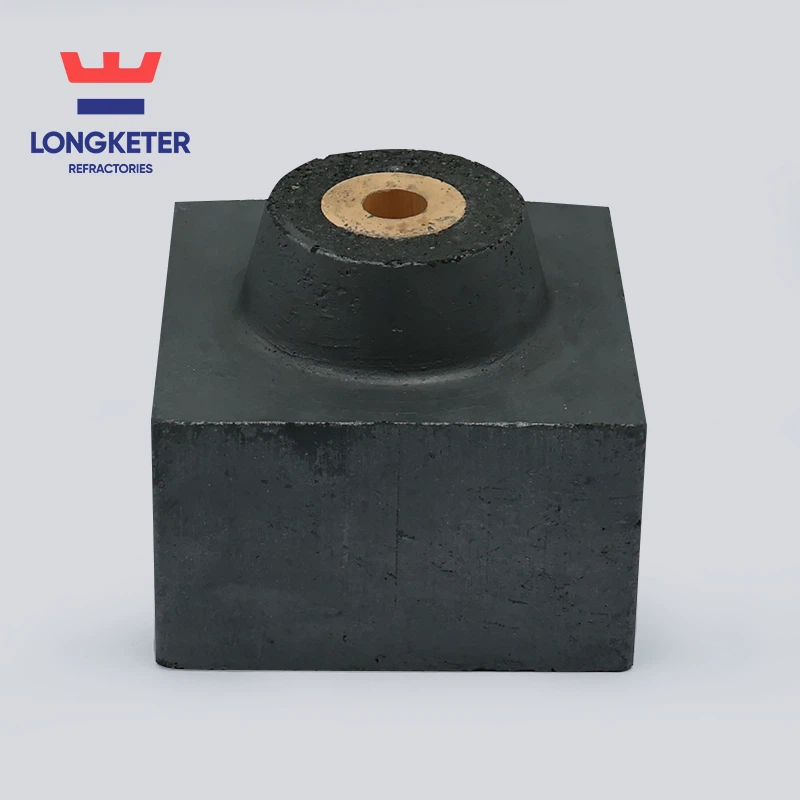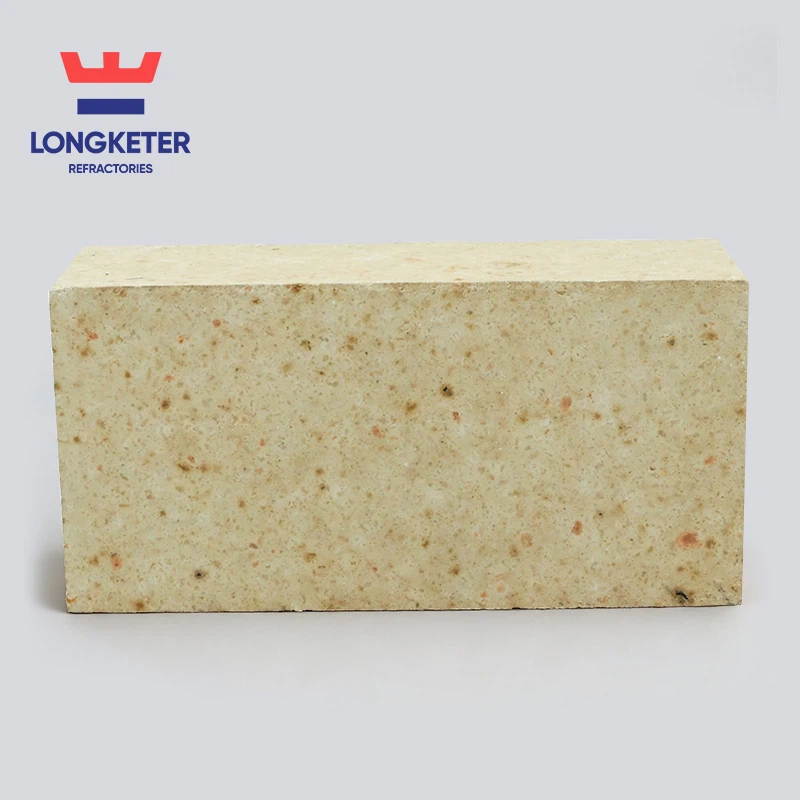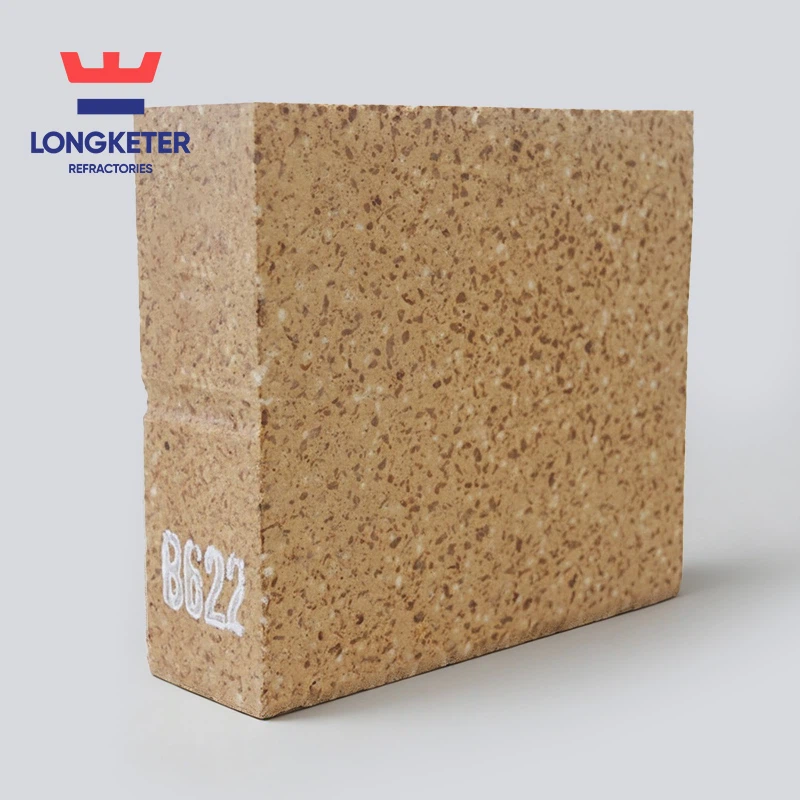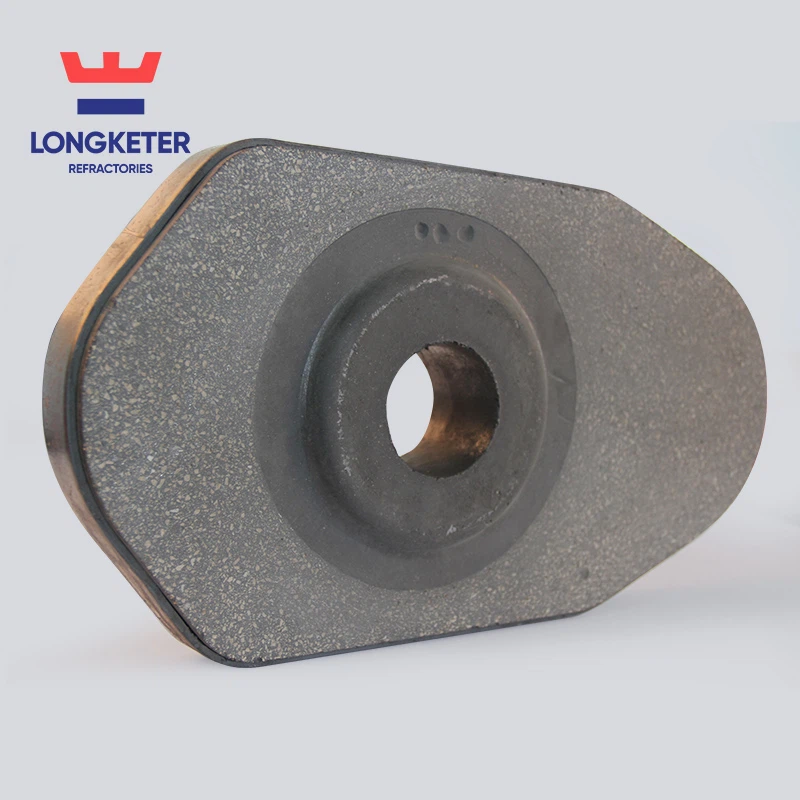
Fused zirconia corundum bricks are commonly known as white iron bricks or fused cast zirconia corundum bricks. It is the most important refractory material to ensure the normal operation of glass melting furnaces. At present, glass melting furnaces in domestic and abroad can increase the melting rate, prolong the kiln life, and reduce fuel consumption mainly because of the use of this refractory material.
Fused zirconia corundum bricks can also be called corundum-deleyite products, and its main chemical composition is 50% to 70% Al2O3, 20% to 40% ZrO2, and the rest is SiO2. The main mineral composition is baddeleyite (ZrO2), corundum (α-Al2O3) and glass phase. Baddeleyite crystallizes to form the backbone of the brick body. ZrO2 has a high melting point (2715°C), good chemical stability, and strong resistance to acidic and alkaline media, especially glass liquid.
With the increase of ZrO2 content, the performance of fused zirconia corundum bricks is also improved. Generally, zirconium corundum bricks are divided into several grades according to the amount of ZrO2, such as three grades containing ZrO2 33%, 36% and 41%. The grades including 30%, 40X, and 50% are not uniform yet. At present, products containing 33% zirconium are mostly used, with a density of 3.65-3.7g/cm3 and a maximum service temperature of about 1700°C.
Fused zirconia corundum bricks are used in industrial furnaces such as glass melting furnaces. The parts used in glass melting furnaces are the upper pool wall, small furnace wall, small furnace stack, tongue wall and parapet.
Pay attention to the following problems during use:
(1) Irregular thermal expansion. The expansion curve of the fused zirconia corundum brick has an abnormal section around 1000°C, and the internal ZrO2 crystal undergoes reversible crystal transformation, resulting in a large volume change. Therefore, products containing ZrO2 are not suitable to be used for zones where the temperature fluctuates sharply at around 1000°C. When baking the kiln in the oven, the temperature change should not be too large at 900~1150°C, generally not exceeding 15°C/h, and a steady temperature rise is required. Some parts need to be protected from cold wind and need to be protected by other bricks to prevent bursting.
(2) Shrinkage cavities During casting, shrinkage cavities often appear at the casting gate, where the brick body has more pores and poor density. When the mouth is facing outward, when the brick body is corroded to a very thin layer, it will cause the leakage of glass liquid accident. When used in the upper flame space of the pool kiln, the service life is very long, and there will be no problem of glass liquid running out, so the spout is used outward to prolong the service life.
(3) Eutectic fused zirconia corundum bricks are built in contact with clay refractory bricks, and eutectic phenomena will occur at a high temperature of 1300 ° C. Therefore, when selecting refractory materials, it is necessary to avoid contacting two refractory materials with serious eutectic phenomena. Such as silica bricks under fused zirconia corundum bricks, are most susceptible to erosion by fused zirconia corundum bricks.
Fused zirconia corundum products for glass kilns are divided into 3 grades according to their zirconia content. AZS-33: the zirconia content of the product is 33%; AZS-36: the zirconia content of the product is 36%; AZS-41: the zirconia content of the product is 41%. Products are divided into Y (first-class product) and H (qualified product) according to their physical and chemical indicators, dimensional tolerances and appearance indicators.