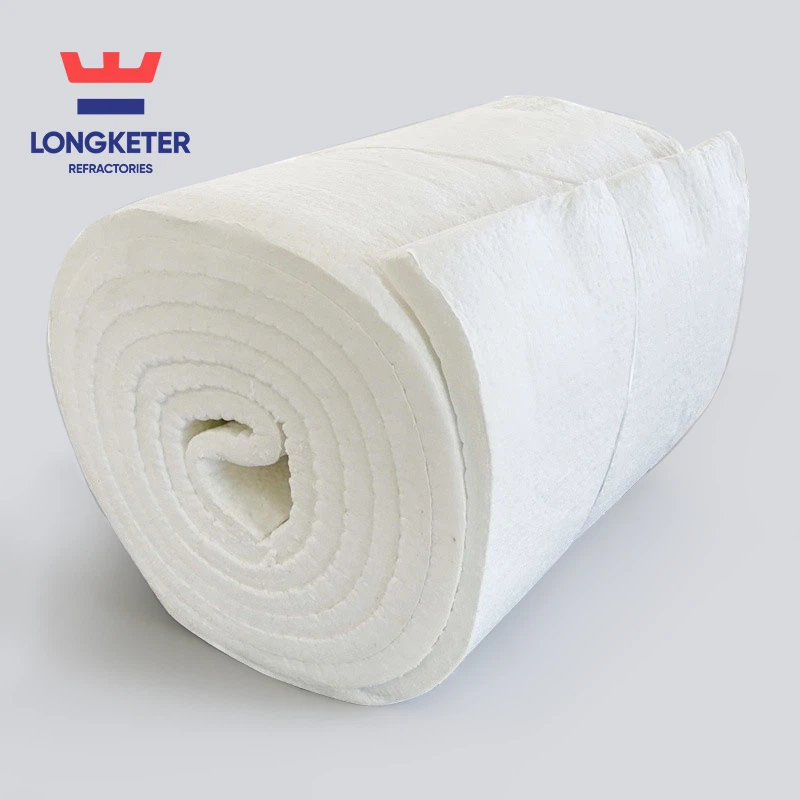
Industrial refractory producer LONGKETER Refractories has updated its flagship refractory ceramic fiber blanket series, launching standard white rolls and aluminum foil backed versions rated for sustained 1260°C working temperature to serve global furnace and kiln manufacturers. Facility thermal engineers have recorded obvious energy expenditure cuts after replacing bulky firebrick linings with this lightweight fiber insulation roll, which covers mainstream application scenarios including hot-face kiln linings, furnace expansion joint filling, flexible kiln door and roof sealing.
Global manufacturing sectors face stricter carbon reduction and energy efficiency standards in 2026, pushing up market demand for stable high-temperature refractory insulation materials. Our technical team, with 17 years of specialized alumina silicate fiber research and production experience, analyzes core performance advantages, real workshop application cases and flexible custom supply solutions of refractory ceramic fiber blanket, helping plant managers complete low-cost thermal system renovation.

Key Technical Advantages of 1260°C Refractory Ceramic Fiber Blanket
Made of high-purity alumina-silica raw materials melted and spun into interlocking fiber structures, this refractory ceramic fiber blanket solves multiple defects existing in traditional rigid refractory bricks. We sort its core performance strengths for maintenance staff and purchasing managers to reference directly.
Ultra-Low Thermal Conductivity Reduces Furnace Fuel Consumption
Excessive heat loss through furnace shells creates huge unnecessary energy waste for high-temperature production lines. Internal lab test data shows the standard blanket reaches thermal conductivity as low as 0.12 W/(m·K) at 800°C operating temperature, far better than dense clay refractory bricks.
A cement rotary kiln customer based in Southeast Asia shared on-site running data after laying 50mm thick fiber blanket on their kiln roof last quarter. The surface temperature of the furnace outer shell dropped 62°C, monthly diesel consumption decreased by 11%, and annual carbon emission was cut over 90 tons. Such visible return on investment makes the fiber blanket the top choice for reconstruction of old kilns that need to comply with local green manufacturing policies.
Flexible Material Fits Irregular Furnace Components
Hard refractory bricks crack easily after repeated temperature rise and cooling cycles, while the soft, compressible weave of fiber blanket fits curved furnace walls, uneven expansion joint gaps and contoured kiln door frames perfectly. Our factory supplies fully custom cut refractory ceramic fiber blanket for furnace expansion joints, with customized width, thickness and pre-cut shapes to cut field construction waste and shorten installation time by nearly 40%.
Many heat treatment furnace maintenance teams refuse rigid insulation for expansion joint areas. Long-term thermal cycles crack solid lining materials and lead to persistent heat leakage. The refractory ceramic fiber blanket owns outstanding thermal shock resistance; thousands of rapid temperature fluctuations will not cause fiber pulverization or structural damage.
Two Product Versions for Different Working Scenarios
We run two independent production lines to produce two types of blanket to match different factory environment requirements:
1.Uncoated white refractory ceramic fiber blanket: Suitable for internal hot-face kiln lining, furnace roof permanent insulation and flue pipeline lining. Optional densities of 64kg/m³, 96kg/m³ and 128kg/m³ balance cost and heat preservation performance.
2.1260°C aluminum foil backed ceramic fiber blanket for kiln door sealing: The reflective aluminum foil layer blocks radiant heat transfer, ideal for external furnace doors, boiler outer wrapping and high-temperature pipeline insulation. The foil coating also improves moisture resistance, extending service life in humid workshops or outdoor furnace equipment.
Complete Industrial Application Scope of Refractory Ceramic Fiber Blanket
This high-temperature insulation material applies to multiple manufacturing verticals. Our technical sales team sorts mainstream usage scenarios to help buyers match material specifications with production equipment quickly.
Metallurgy & Steel Heating Furnace Insulation
Steel billet heating furnaces run stably between 1000°C to 1250°C, demanding durable lining materials that lower furnace self-weight. High density industrial ceramic fiber insulation blanket for steel heating furnaces with 128kg/m³ grade replaces heavy cast refractory linings, lightens furnace framework load and cuts long-period structural maintenance cost. It is widely used for side wall lining, access door gaskets and expansion joint filling in hot rolling production lines.
Cement, Ceramic and Pottery Rotary Kilns
Cement rotary kilns and ceramic firing kilns work in dusty environments with frequent temperature changes. The blanket resists corrosion from most industrial acid and alkali gas, avoiding early material aging. Factory operators usually lay 25mm to 50mm thick blanket as both hot-face working lining and backup insulation to stabilize internal kiln temperature. Stable firing temperature improves finished product qualification rate and reduces defective ceramic products.
Petrochemical and Thermal Power Boiler Equipment
Industrial boilers, cracking furnaces and high-temperature steam pipelines mostly adopt aluminum foil backed refractory ceramic fiber blanket. The reflective foil barrier stops radiant heat loss, lowers ambient workshop temperature and protects surrounding metal structures from thermal fatigue. Power station maintenance workers also cut blanket strips to seal boiler manholes and flue expansion gaps, reducing energy consumption of auxiliary exhaust fans.
General Industrial Fireproof Sealing
Apart from permanent furnace lining, thin pre-cut blanket strips act as flexible fire seals for furnace doors, annealing oven observation windows and heat treatment trolley gaps. As an asbestos-free substitute, it meets global workplace safety standards that ban toxic fibrous insulation materials, a critical compliance advantage for manufacturers exporting goods to EU, North America and Southeast Asia.
LONGKETER Refractories' Stable Supply and Customization Service
As an ISO 9001 and CE certified refractory fiber manufacturer with full automated production lines, we solve two core worries of global clients: stable mass supply and personalized size customization.
Sufficient Production Capacity for Global Bulk Orders
Our Zibo factory operates two full-automatic fiber blanket production lines with annual output reaching 3,200 tons, avoiding supply shortage during industrial equipment renovation peak seasons. We stock large amounts of high-purity alumina-silica ore raw materials to prevent delivery delays caused by mineral supply chain instability, a problem many small refractory factories cannot resolve.
Bulk orders adopt waterproof cartons and steel pallet packaging optimized for sea freight containers, minimizing damage during long-distance international transportation. We also support small trial orders starting from single rolls for factory performance testing.
All-Round Customization for Special Insulation Projects
Every industrial furnace owns unique lining dimensions, so our engineering team provides free CAD drawing customization for clients with special thermal insulation project demands:
·Adjustable roll width: 610mm, 1220mm or personalized custom width
·Thickness options: 10mm to 60mm, designed according to target heat loss value
·Optional extra processing: aluminum foil coating, anti-liquid permeation layer, pre-punched installation holes
·Custom fixed-length cutting to eliminate on-site cutting waste during lining construction
Our technical team shares free installation guides and operation videos for field construction crews, including layered paving skills for combined hot-face and backup insulation systems and safe cutting methods for refractory ceramic fiber blanket.
Professional Guide: How to Select Matching Refractory Ceramic Fiber Blanket Grade
Our senior refractory engineer with 14 years of on-site consulting experience summarizes three simple selection standards that factory managers can follow without professional thermal engineering knowledge.
First, confirm the maximum continuous working temperature of your equipment. The standard 1260°C blanket fits all furnaces running under 1200°C sustained heat; choose zirconia enhanced fiber blanket rated 1430°C for production processes exceeding 1260°C.
Second, match blanket density with insulation layer position. Low density 64kg/m³ and 96kg/m³ versions suit cold-side backup lining; high density 128kg/m³ material is for direct hot-face contact and high abrasion areas like kiln doors.
Third, decide whether to choose foil backing based on installation position. Uncoated white rolls are for internal kiln lining; aluminum foil coated blanket fits external wrapping, pipeline insulation and door sealing exposed to air and moisture.
Many buyers cut initial cost by purchasing ultra-thin blanket rolls, which leads to hidden loss. Thin sheets cannot reach heat insulation targets and need full re-lining within 1 to 2 production years, raising total long-term expenditure. Our engineers offer free heat loss simulation calculation to balance upfront procurement cost and long-term energy saving benefit for every client.
Conclusion
Against the background of worldwide manufacturing energy-saving and decarbonization upgrades in 2026, versatile, durable thermal insulation materials such as 1260°C refractory ceramic fiber blanket remain essential equipment accessories for all high-temperature production workshops. Whether factory operators need high-density rolls for steel furnaces, foil-backed custom strips for kiln door sealing, or personalized sized segments for furnace expansion joints, LONGKETER Refractories provides consistent product quality, stable mass supply and full customization support for global industrial buyers.
Our internal R&D lab will keep developing low-shrinkage advanced fiber blanket grades for ultra-high temperature kilns in the next stage, bringing better energy-saving performance for manufacturers around the world. Maintenance and purchasing teams that need sample testing or customized insulation project quotations can send inquiries through the contact page of our official independent website to obtain one-on-one support from professional thermal engineers.