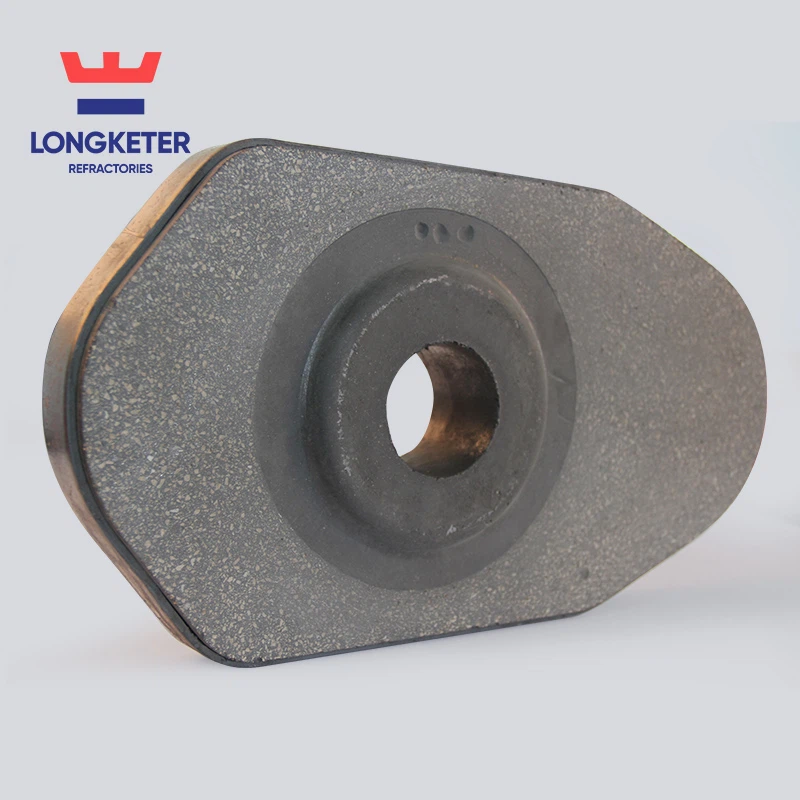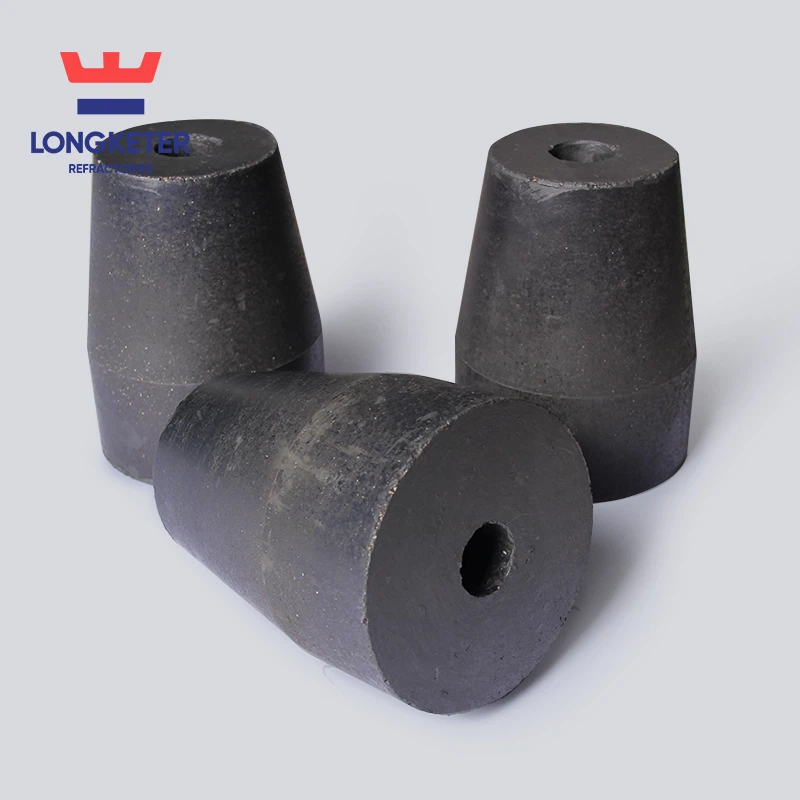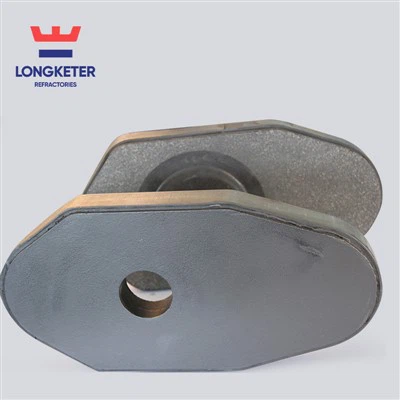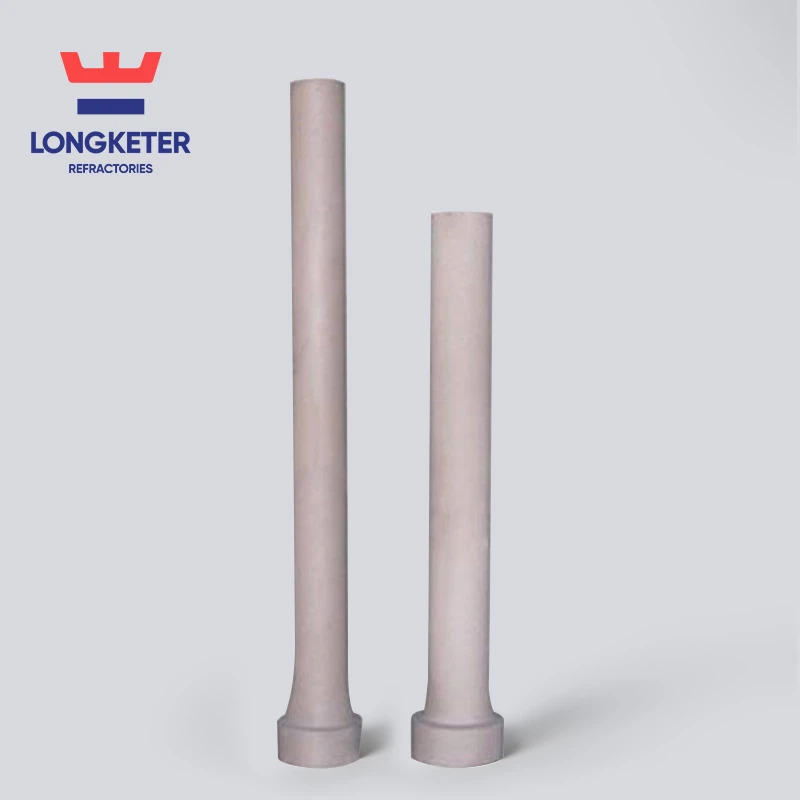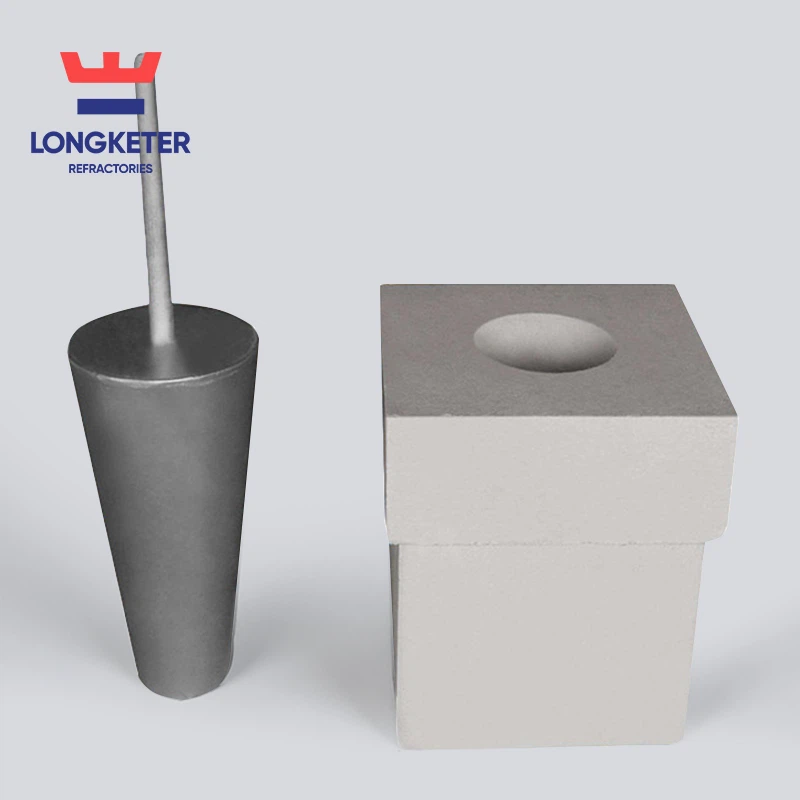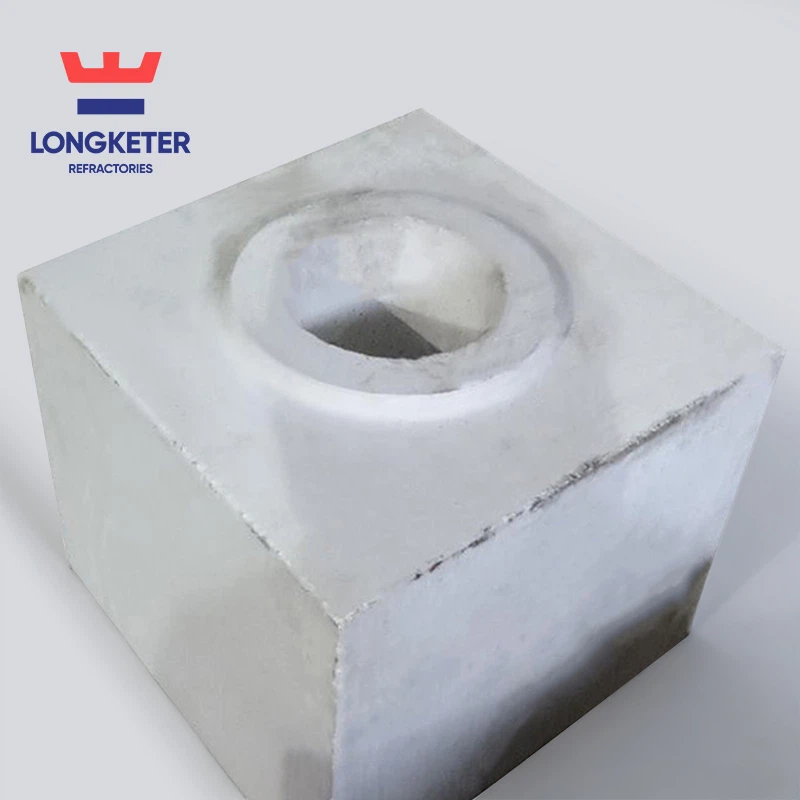
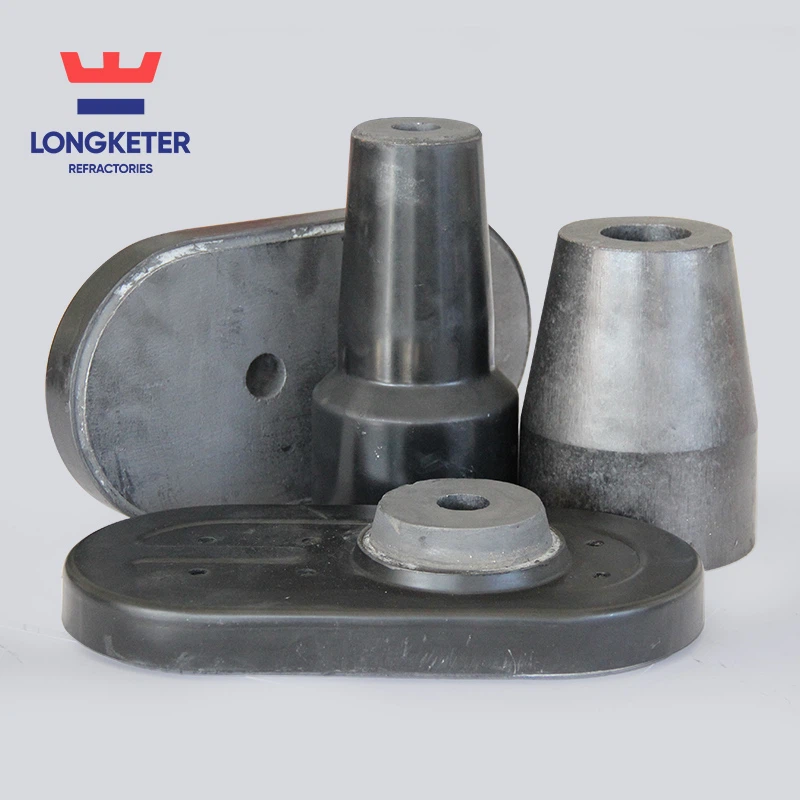

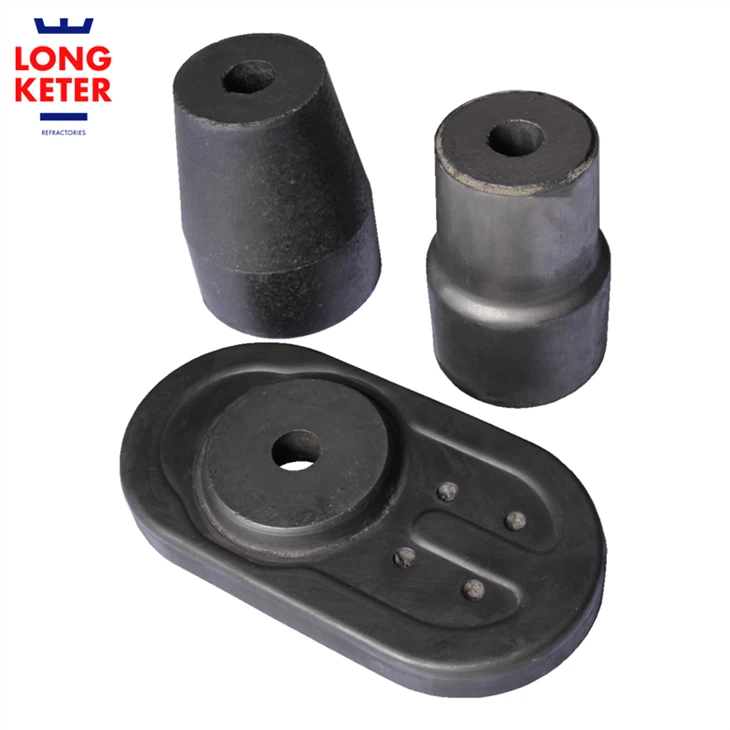
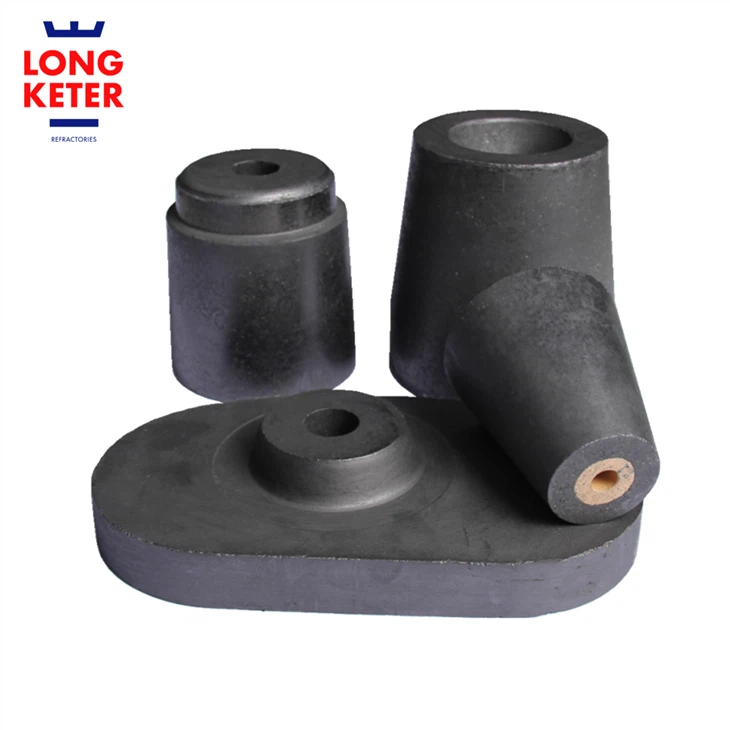
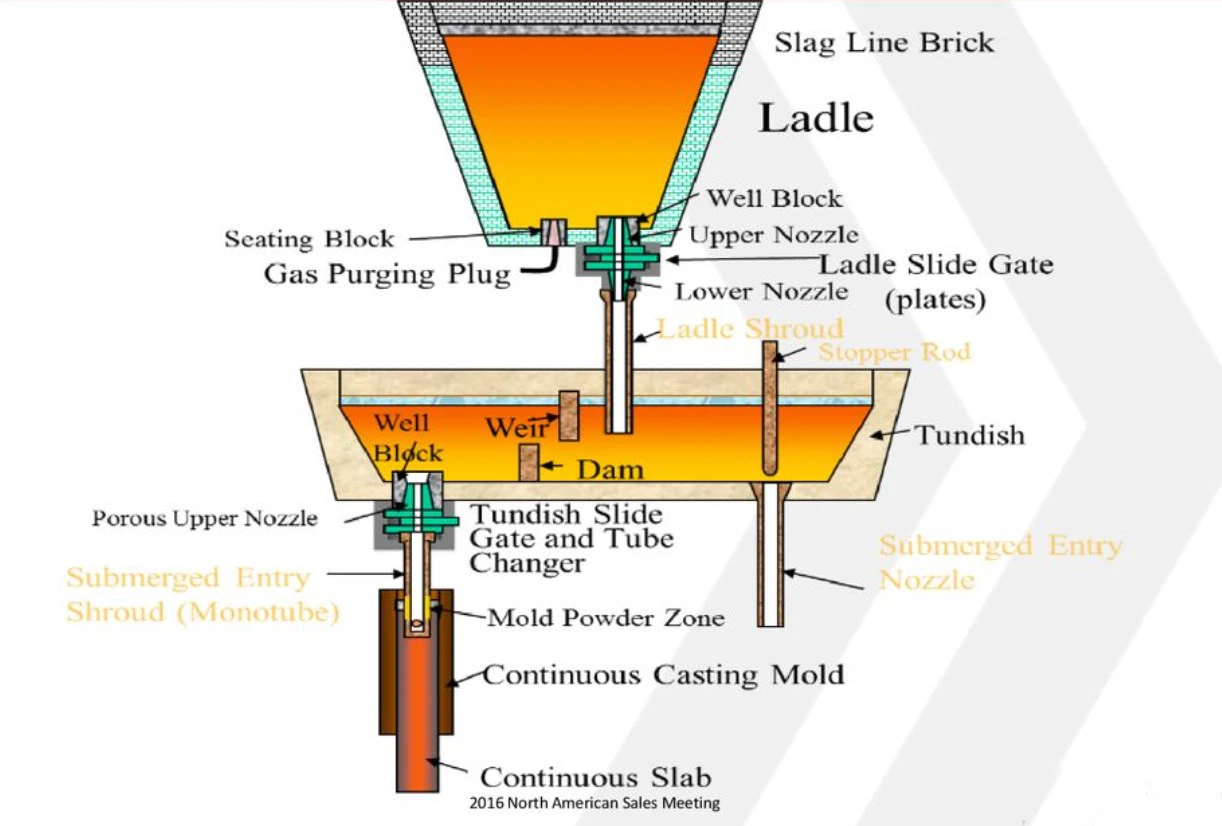
The sliding nozzle is a control device for molten steel during the casting process of the continuous casting machine. It can accurately adjust the water flow from the ladle to the continuous casting tundish to balance the inflow and outflow of molten steel, thereby making the continuous casting operation easier to control. During smelting Indispensable part. The sliding nozzle is generally composed of a driving device, a mechanical part and a refractory material part (i.e. upper and lower slide plates, and a nozzle).
With the development of fast and efficient continuous casting and secondary refining technology and processes, the sliding nozzle (SN) system has become more and more important in the modern steel smelting process and has become an indispensable part of smelting. It is a control device for molten steel during the casting process of the continuous casting machine. It can accurately adjust the water flow from the ladle to the continuous casting tundish to balance the inflow and outflow of molten steel, thereby making the continuous casting operation easier to control. The sliding nozzle system has developed rapidly because of its good controllability and its ability to improve steelmaking production efficiency. Nowadays, the sliding nozzle system is commonly used in ladles and tundishes at home and abroad.
In order to obtain a long service life and stable operating conditions, the sliding plate, as a refractory material and mechanical component of the sliding nozzle system, is required to have excellent performance. Currently, in order to make the performance of the sliding nozzle system more stable and reliable, many improvements and studies have been carried out on the shape and fixation method of the skateboard. The main purpose is to suppress the generation and expansion of cracks on the working surface during the use of the skateboard.
The sliding plate (SP for short) is one of the main components of the sliding nozzle system. According to the number of slide blocks that make up the sliding nozzle system, it can be divided into two-layer type and three-layer type. The ladle slide is generally a two-layer type. The upper slide is fixed during operation, and the lower slide is used to intercept and throttle the flow. The sliding plate for the tundish is generally a three-layer type. During operation, the upper sliding plate is fixed to the upper nozzle, and the lower sliding plate is fixed to the lower nozzle. The middle sliding plate is used to intercept and throttle the flow.
Taxonomy
(1) The sliding nozzle can be divided into two-layer skateboards and three-layer skateboards according to the number of skateboards. The two-layer skateboard means that the upper skateboard does not move and the lower skateboard slides following the mechanism. The two-layer skateboard is mostly used on the ladle mechanism. The three-layer sliding plate is that the upper and lower sliding plates do not move, and the middle sliding plate slides with the mechanism to control and adjust the flow of molten steel; the three-layer sliding plate is mostly used on the tundish mechanism. The characteristic of the three-layer skateboard is that the sliding plate in the middle does not use fire clay, but is fixed with metal strip panels, which plays a good role in controlling cracks. At the same time, the parallelism of the skateboard must be strictly controlled. In the early stages of pouring, in order to prevent molten steel from condensing in the steel channel of the sliding nozzle, a stopper rod is installed to prevent the molten steel from flowing into the nozzle channel, maintain the molten steel forming a necessary liquid level in the tundish, and strictly prevent condensation of molten steel or non-metallic inclusions when replacing the immersed nozzle. Block the channel.
(2) There are two types of sliding nozzles according to their movement modes: linear type and rotary type. At present, most steel plants at home and abroad use linear mechanisms, and rotary mechanisms are rarely used.
(3) In addition to classifying skateboards according to their structure and movement method, they can also be classified according to their material, firing method and molding method. According to the material process, it is divided into aluminum zirconium carbon skateboard, zirconium skateboard, aluminum carbon skateboard, magnesium skateboard, metal bonded skateboard and high aluminum skateboard; according to the firing method, it is divided into high temperature fired skateboard, medium temperature fired skateboard and unfired skateboard. . According to the molding method, it is divided into all-material skateboards and composite material skateboards. At present, steel mills in China use all-material skateboards for ladles above 150t, ladles with multiple continuous castings or special steelmaking process requirements. There are many steel mills that use composite skateboards for ladles below 150t. Most steel mills abroad use all-material skateboards.
High aluminum skateboard. After molding, they are impregnated with asphalt and then lightly fired to obtain higher strength and a dense and uniform structure. Phosphate is added to the ingredients to lower the firing temperature, which stabilizes the dimensions of the slide and reduces scrap and grinding.
Zirconium skateboard. Good resistance to chemical erosion and good resistance to mechanical erosion. However, zirconia is expensive and is usually made into inlaid rings or inlays.
Aluminum carbon skateboard. Aluminum carbon skateboard is a product developed in the late 1970s. It uses sintered alumina and synthetic mullite as the main raw materials, and adds carbon components and antioxidants (such as metal aluminum, metal silicon, SiC, B4C, Mg) to the matrix part. -B, etc.), add coal pitch or phenolic resin as a binder to mix and form; burn in a reducing atmosphere to form a carbon-bonded refractory material. The skateboard made of this material has good corrosion resistance due to its dense structure, fine pores and a certain amount of residual carbon, which is difficult to be impregnated with liquid steel and slag. However, its disadvantage is that the thermal shock resistance is reduced due to the dense structure. , cannot be used continuously for many times. In addition, during use, the carbon is easily oxidized, resulting in a loose structure and reduced corrosion resistance.
Aluminum carbon skateboards are developed on the basis of fired aluminum carbon skateboards. This kind of material skateboard uses low expansion rate Al2O3 -SiO2 -ZrO2 series raw materials to make refractory materials with baddeleyite, mullite, corundum, etc. as the main crystal phases and characterized by carbon bonding. Zirconium mullite is introduced as aggregate, and the zirconium oxide in zirconium mullite is used to undergo crystalline transformation at about 1000°C, accompanied by volume shrinkage and microscopic cracks in the grains, which greatly improves the material's durability. Thermal shock performance. 2r02 has excellent corrosion resistance, and its corrosion resistance is significantly higher than that of aluminum carbon skateboards. It has become the mainstream of skateboards used by large steel companies today.
Aluminum (zirconium) carbonaceous raw materials. Corundum, zirconium corundum, zirconium mullite, graphite, zirconia, resin binder, metal Al powder, Mg-Al alloy, etc.
Hot Tags: sliding nozzle, China sliding nozzle manufacturers, suppliers, factory, Argon Purge Plugs, Refractories Slide Gate Plate, Slide Gate Plate Refractories, Slide Gate Refractory, Sliding Nozzle, Upper Nozzle