Advanced Tabular Alumina Solutions Support Steel, Casting and Ceramic Industries
Release Date: September 2026
With the continuous development of high-temperature industries, the demand for reliable refractory raw materials is increasing rapidly. Tabular Alumina, known for its high purity, excellent thermal stability, and superior mechanical strength, has become an important material for manufacturing advanced refractory products used in steel, casting, and ceramic applications.
As industries continue to improve furnace efficiency and extend service life, high-quality refractory materials play a critical role in reducing maintenance costs and improving operational stability. Longketer Refractories provides high-performance tabular alumina solutions designed to meet the demanding requirements of modern industrial furnaces.
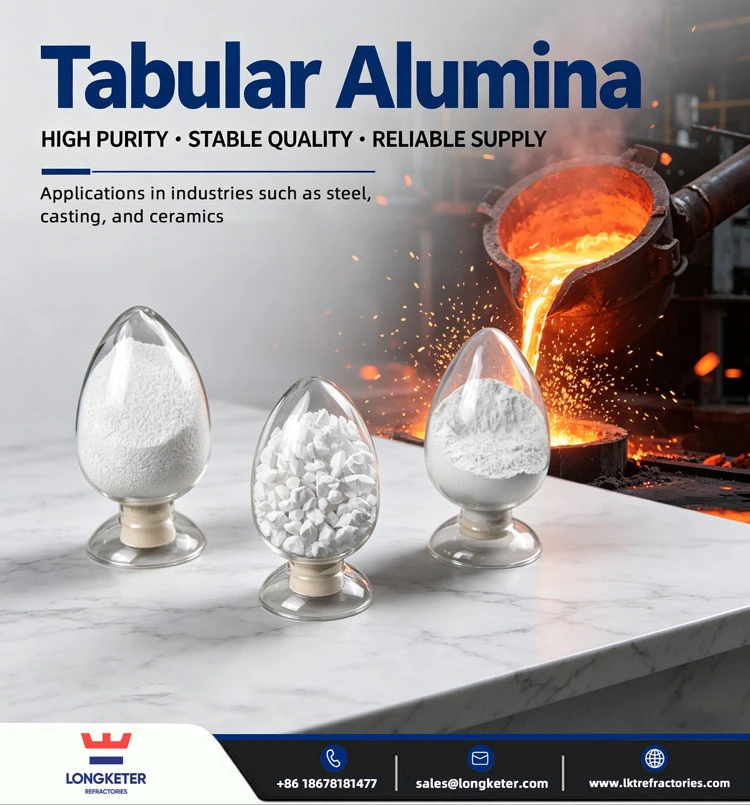
Growing Demand for High Performance Refractory Raw Materials
The steel and metallurgical industries operate under extremely harsh conditions, including high temperatures, thermal cycling, chemical corrosion, and mechanical impact. Traditional refractory materials often face challenges such as structural degradation, volume instability, and reduced service life.
To address these challenges, manufacturers are increasingly selecting high purity tabular alumina for refractory materials due to its unique physical properties.
Compared with conventional alumina aggregates, tabular alumina features a fully recrystallized alpha-alumina structure formed through a high-temperature sintering process. This manufacturing process creates a dense crystal structure with low porosity and excellent resistance to thermal shock.
These characteristics make tabular alumina an ideal raw material for:
Steel ladle refractories
Casting materials
Furnace linings
Ceramic components
High-performance monolithic refractories
The increasing adoption of advanced refractory solutions reflects the industry's focus on improving furnace efficiency, reducing downtime, and achieving longer operating cycles.
What Makes Tabular Alumina Different?
Tabular alumina is produced by rapid heating and controlled sintering of high-purity alumina powder at temperatures close to its melting point. Unlike fused alumina, it maintains a unique tabular crystal structure with interconnected pores and excellent dimensional stability.
Several key properties make tabular alumina valuable for demanding applications.
1. High Purity and Chemical Stability
High-quality tabular alumina contains extremely high levels of Al₂O₃, providing excellent chemical resistance against slag, molten metals, and aggressive furnace environments.
In steelmaking applications, this stability helps refractory linings maintain performance during continuous exposure to high temperatures.
2. Excellent Thermal Shock Resistance
Industrial furnaces experience frequent temperature changes during heating, cooling, and production cycles.
The low open porosity and strong crystal structure of tabular alumina help reduce crack formation caused by thermal stress, improving the durability of refractory products.
3. High Mechanical Strength
The dense structure of tabular alumina provides excellent wear resistance and mechanical strength.
This is particularly important in areas exposed to:
Molten steel impact
Material erosion
Abrasion from charging operations
For this reason, tabular alumina is widely used in advanced refractory formulations where reliability is essential.
Applications of Tabular Alumina in Modern Industries
The versatility of tabular alumina allows it to be used across multiple high-temperature industries.
Steel Industry Applications
Steel production requires refractory materials capable of handling extreme temperatures and chemical environments.
Tabular alumina is commonly used in:
Ladle linings
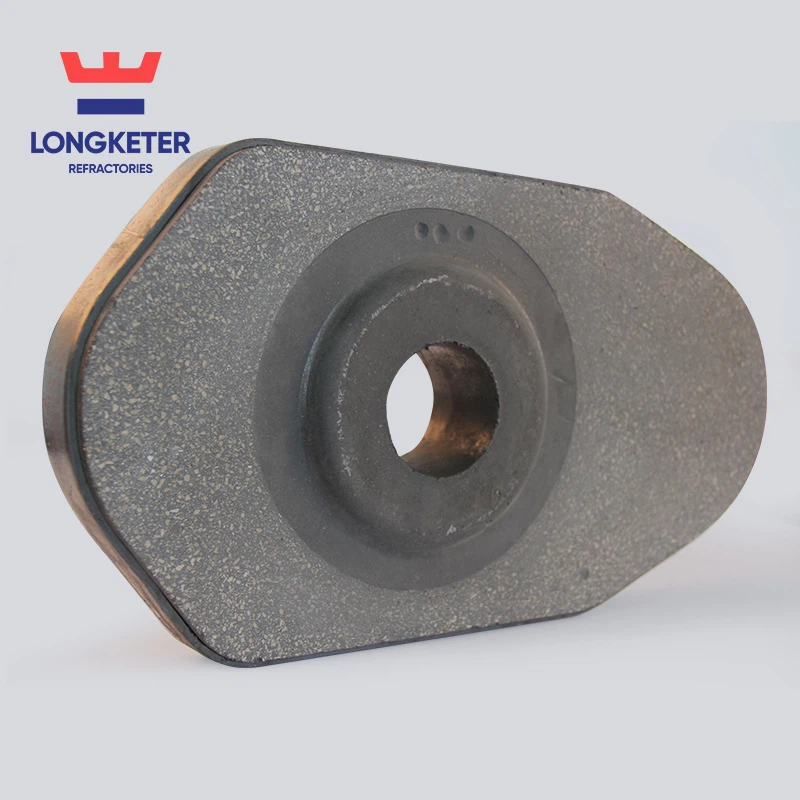
Slide gate materials
Casting refractories
Continuous casting applications
Its stability helps improve refractory performance during steel processing and supports longer campaign life.
Casting Industry Applications
Casting operations require materials with strong resistance to molten metal penetration and thermal stress.
Using tabular alumina aggregate for advanced refractories can enhance:
Wear resistance
Thermal stability
Structural integrity
This makes it suitable for demanding casting environments where conventional materials may fail prematurely.
Ceramic Industry Applications
In advanced ceramics, tabular alumina provides excellent hardness, purity, and temperature resistance.
It is used in the production of:
Technical ceramics
Kiln furniture
High-temperature ceramic components
Longketer Refractories Provides Reliable Tabular Alumina Supply
Stable raw material supply is essential for refractory manufacturers. Fluctuations in quality can directly affect final product performance.
Longketer Refractories focuses on supplying consistent and reliable refractory raw materials for global customers.
The company provides tabular alumina products featuring:
High purity composition
Stable physical properties
Reliable batch consistency
Professional technical support
Through strict quality control procedures, Longketer ensures that each batch meets industrial application requirements.
For customers searching for a tabular alumina supplier for steel and casting industry, stable quality and dependable delivery are key factors when selecting a long-term partner.
How to Choose the Right Tabular Alumina Material?
Different refractory applications require different particle sizes, purity levels, and performance characteristics.
When selecting tabular alumina, manufacturers should consider:
Chemical Composition
Higher Al₂O₃ content generally provides better resistance in high-temperature applications.
Particle Size Distribution
Proper grading improves packing density and helps optimize refractory performance.
Application Environment
Factors including furnace temperature, slag composition, and mechanical stress should be evaluated before selecting raw materials.
A professional refractory supplier can provide technical recommendations based on actual working conditions.
Future Development Trends of Tabular Alumina
With increasing demand for energy efficiency and longer-lasting industrial equipment, refractory materials are becoming more performance-oriented.
Future trends include:
Higher purity refractory aggregates
Improved thermal shock resistance
Longer furnace service life
More customized refractory solutions
Tabular alumina will continue to play an important role in supporting advanced refractory technologies for steelmaking, casting, and ceramic industries.
Conclusion
As industrial processes become more demanding, reliable refractory raw materials are essential for maintaining safe and efficient operations.
Tabular Alumina offers excellent purity, thermal stability, corrosion resistance, and mechanical strength, making it a preferred choice for high-performance refractory applications.
With professional manufacturing experience and stable supply capability, Longketer Refractories continues to provide dependable refractory material solutions for customers worldwide.
For industries seeking high-quality refractory raw materials, choosing the right tabular alumina supplier can significantly improve product performance and operational reliability.