Magnesia bricks play an important role in industrial refractory systems, where high temperatures, chemical exposure, and mechanical stress place demanding requirements on furnace linings. For steelmaking and other high-temperature industries, selecting the right refractory material begins with understanding the operating environment, product specifications, and manufacturing quality.
At LONGKETER REFRACTORIES, refractory production and supply are supported by attention to product dimensions, application requirements, and order coordination. The factory image shows refractory bricks arranged on a kiln car inside an industrial production facility, illustrating one part of the manufacturing environment in which consistency and process control matter.
For buyers sourcing magnesia bricks for industrial kilns, the purchasing decision should go beyond appearance or unit price. Material composition, firing conditions, physical properties, dimensional accuracy, and suitability for the intended furnace zone all deserve careful consideration.

Why Magnesia Bricks Matter in High-Temperature Applications
Magnesia bricks are basic refractory products made primarily from magnesium oxide, commonly known as magnesia or MgO. Depending on their composition and manufacturing route, different grades are designed for different operating conditions.
Their suitability for a particular installation depends on more than the material's main chemical component. Raw-material quality, grain structure, bonding characteristics, porosity, and manufacturing control can all influence how a finished brick behaves in service.
In industrial furnaces, refractory linings separate the hot working environment from the surrounding structure. They must withstand thermal exposure and, depending on the application, contact with slag, process materials, gases, or mechanical loads.
A suitable refractory lining helps support stable furnace operation. An unsuitable grade, however, may experience accelerated wear, cracking, or chemical attack, resulting in additional maintenance and unplanned downtime.
That is why material selection should start with the actual working conditions rather than a general claim that one refractory is suitable for every high-temperature application.
Inside the Manufacturing Process
The production of magnesia bricks involves several stages. The precise process varies by product grade and manufacturer, but controlling each stage is important to achieving consistent quality.
Raw-Material Selection and Preparation
Raw materials establish the foundation for the finished product. Their chemical composition, particle characteristics, and consistency can affect the properties of the brick.
Before production, manufacturers need to ensure that the materials meet the requirements of the intended formulation. Appropriate preparation and particle-size control help establish the conditions needed for subsequent mixing and forming.
For buyers, a useful starting point is to request the product's chemical composition and relevant technical data. These documents help distinguish between grades that may look similar but have different intended uses.
Mixing and Forming
After preparation, the raw materials are combined according to the product formulation. The mixture is then formed into the required brick shapes and dimensions.
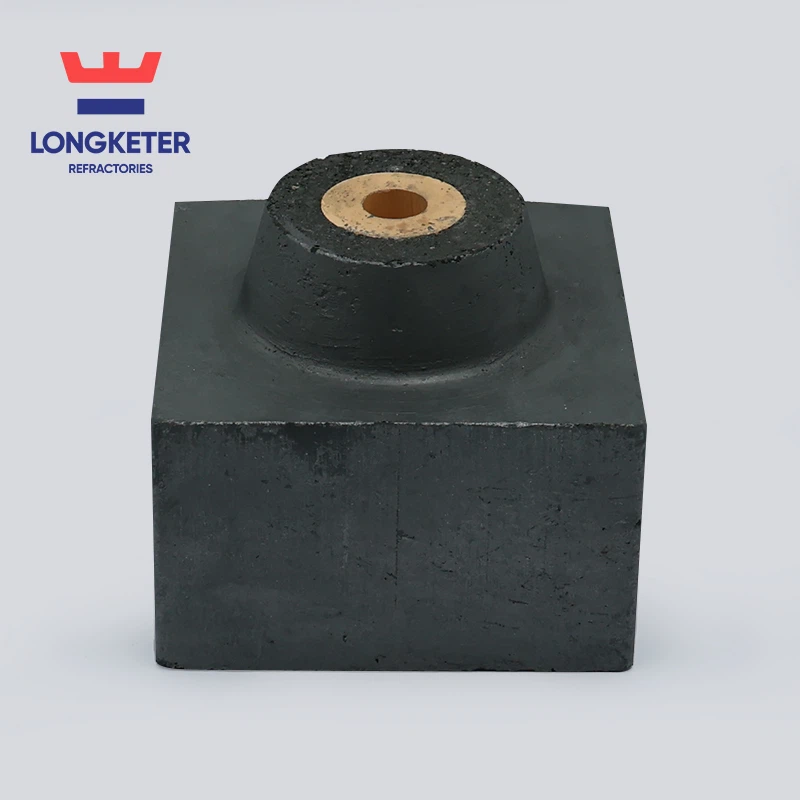
Industrial refractory projects do not always use standard rectangular bricks. Certain furnace designs require special shapes, tapered components, or precisely dimensioned blocks to fit a particular lining layout.
Dimensional consistency is especially important when many bricks must be installed together. Significant variations can complicate installation and affect joint uniformity.
Customers ordering customized products should therefore confirm the drawings, tolerances, quantities, and shape requirements before production begins.
Firing and Process Control
For fired magnesia bricks, the firing stage helps develop the structure and bonding characteristics required by the product. The appropriate production conditions depend on the material formulation and manufacturing process.
The factory photograph shows bricks arranged on a kiln car inside an industrial facility. This arrangement illustrates the importance of organized production and handling, although the photograph alone does not establish the exact firing temperature, cycle, or process parameters used for the displayed products.
Reliable manufacturing requires controlled procedures rather than assumptions based on the finished brick's appearance. Process records and appropriate inspection help manufacturers identify variations and maintain consistency between batches.
Inspection and Finished-Product Handling
After manufacturing, finished bricks should be checked against the applicable specifications. Depending on the product and order requirements, inspection may include dimensions, appearance, identification, and physical-property testing.
The relevant tests depend on the intended application. A brick's visual condition alone cannot confirm its chemical resistance, high-temperature behavior, or expected service life.
Proper handling and packaging are also important. Refractory products may be heavy and can be damaged by impact, unsuitable stacking, or rough transportation. Clear identification and secure packaging help reduce the risk of damage and confusion during shipment and installation.
Selecting Magnesia Bricks for Industrial Kilns
A refractory grade should be selected according to the conditions in the furnace zone where it will be installed. The following factors can help engineers and purchasing teams define their requirements.
Operating Temperature and Thermal Cycling
The temperature range is one of the first details to establish. Buyers should distinguish between refractoriness, refractoriness under load, and recommended service conditions, since these are not interchangeable measures.
Temperature changes matter as well. Frequent starts and stops, uneven heating, and rapid cooling can generate thermal stresses within a lining.
Where thermal cycling is a known problem, buyers should review relevant thermal-shock data and discuss the operating pattern with the supplier. A laboratory result should be interpreted in the context of the actual test method and furnace conditions.
Slag Chemistry and Chemical Exposure
Slag and process materials can react with refractory components, causing penetration, dissolution, or structural changes. The severity of this attack depends on the chemistry of the contacting materials, operating temperature, exposure time, and other process conditions.
Magnesia-based refractories are often considered for applications involving basic environments, but this does not mean that every magnesia brick will resist every slag composition.
Where possible, provide the supplier with available slag analysis, process information, and details about the location of previous lining wear. This information supports a more meaningful product recommendation.
Mechanical Loading and Abrasion
Some refractory zones experience substantial loading, friction, impact, or movement of process materials. Others are exposed primarily to thermal and chemical stress.
Cold crushing strength can help characterize a brick's resistance to compressive force under specified test conditions. It does not, by itself, predict hot strength, abrasion resistance, corrosion resistance, or the service life of the installed lining.
For demanding applications, compare the complete technical specification rather than selecting a product based on a single strength figure.
Dimensions and Installation Design
The geometry of a refractory lining affects how individual bricks fit together. Standard shapes may be sufficient for straightforward sections, while complex furnace areas may require specially manufactured components.
Before placing an order, confirm the drawings and the intended installation location. It is also useful to verify the quantity of each shape, dimensional tolerances, and any requirements for machining or marking.
Providing accurate information early can help reduce discrepancies between the product supplied and the lining design.
What Should Buyers Check in a Technical Datasheet?
A technical datasheet provides a basis for comparing products and confirming whether a proposed grade meets project requirements.
Depending on the product, relevant information may include:
Chemical composition: including MgO content and other specified constituents.
Bulk density and apparent porosity: indicators of the material's physical structure.
Cold crushing strength: resistance to compressive force under defined test conditions.
Refractoriness under load: behavior under specified high-temperature loading conditions.
Permanent linear change: dimensional change after reheating under defined conditions.
Thermal-shock performance: results obtained under a stated testing procedure.
Dimensions and tolerances: confirmation that the product matches the approved design.
Not every property is equally important for every installation. The specification should reflect the main wear mechanisms and operating requirements of the intended furnace zone.
Buyers should also distinguish between typical values and guaranteed limits. When comparing suppliers, check whether the reported figures use comparable test methods and conditions.
If a product is intended for a critical application, it may be appropriate to request supporting inspection records or relevant test reports before approving the order.
Why Manufacturing Consistency Matters
A refractory lining is assembled from many individual components. Variations in dimensions, material properties, or product identification can complicate installation and make quality control more difficult.
Consistency is therefore important at several levels.
First, raw materials and production procedures should be controlled according to the product specification. Second, finished products should be inspected using appropriate criteria. Finally, the products need to be identified and packaged so that the correct shapes and grades reach the intended installation area.
For projects involving several refractory grades or custom shapes, clear order documentation can help prevent mix-ups. Drawings, product codes, quantity lists, and agreed inspection requirements should be confirmed before dispatch.
These practices do not eliminate every installation risk, but they provide a more dependable basis for procurement and project coordination.
Balancing Refractory Cost and Service Requirements
Purchase price is only one part of the total cost of a refractory lining. Installation labor, maintenance requirements, shutdown duration, replacement frequency, and production interruptions can also affect the economics of a project.
A lower-priced product may not be the most economical option if it is poorly matched to the furnace environment. Conversely, selecting a more expensive grade without evidence that its properties address the actual wear mechanism may not provide additional value.
A practical comparison should consider the product's technical suitability, the expected operating conditions, installation requirements, delivery arrangements, and available performance records from comparable applications.
Where previous lining failures have occurred, reviewing the damaged area can be particularly useful. Cracking, joint deterioration, chemical penetration, and surface erosion may point to different underlying problems. Understanding the cause helps engineers decide whether a material change, design adjustment, or installation improvement is needed.
LONGKETER REFRACTORIES: Product Supply and Project Coordination
LONGKETER REFRACTORIES supplies refractory products for industrial applications and works with customers to clarify product requirements before orders are finalized.
For magnesia brick inquiries, useful information includes the furnace or kiln type, installation zone, operating temperature, process chemistry, required dimensions, quantities, and available technical drawings.
This information helps establish the basis for evaluating the appropriate product grade and manufacturing requirements. Customized shapes and dimensions should be confirmed against approved drawings, while production schedules and availability should be agreed upon for each order.
For international buyers, procurement planning should also cover product identification, inspection requirements, packaging, and transportation arrangements. Clear communication at the quotation stage can help reduce uncertainty before production and shipment.
The factory image provides a view of refractory bricks arranged for industrial production. It is a reminder that finished-product quality depends not just on the raw materials, but also on manufacturing control, inspection, handling, and correct application.
Conclusion
Magnesia bricks are important components in selected high-temperature refractory systems, but their performance depends on choosing a grade that matches the actual service environment.
For industrial buyers, the most reliable approach is to review the furnace conditions, identify the dominant wear mechanisms, compare verified technical data, and confirm dimensions and inspection requirements before ordering. Manufacturing consistency and careful shipment preparation are equally important parts of the supply process.
LONGKETER REFRACTORIES welcomes inquiries from industrial operators, contractors, and refractory distributors seeking product information and supply options for their projects.