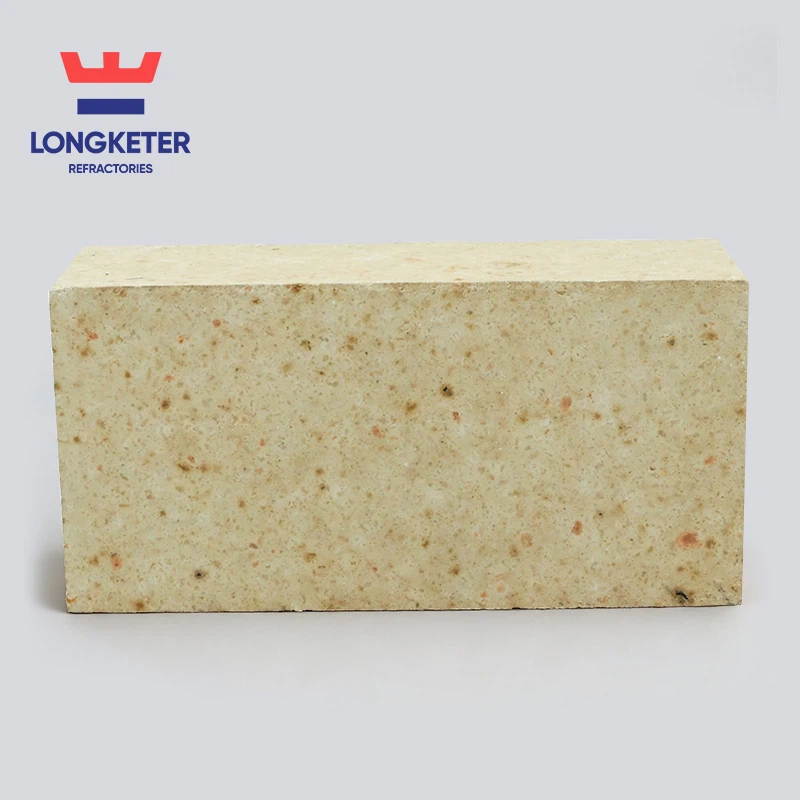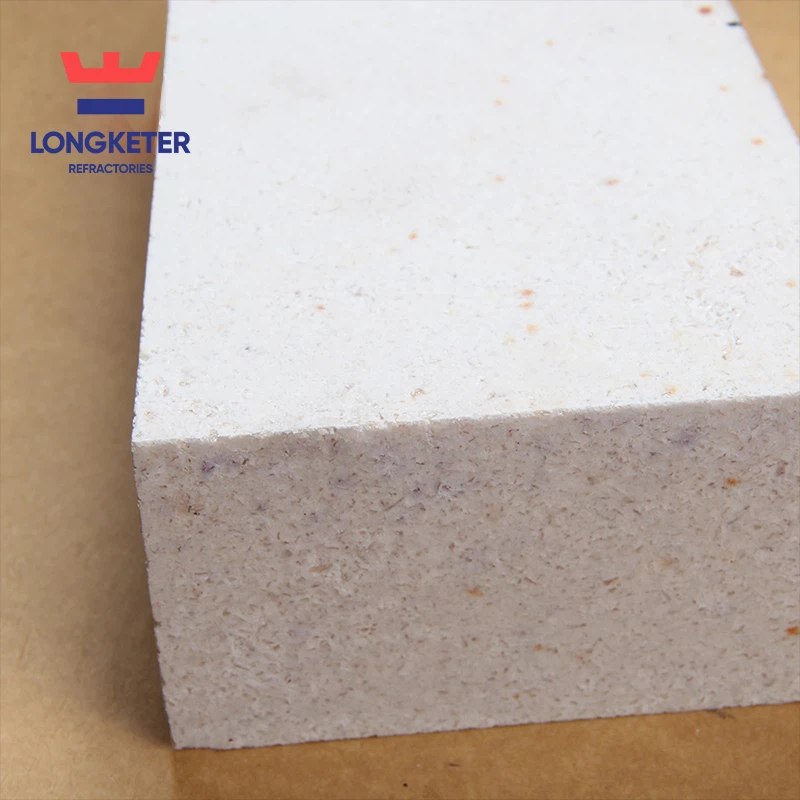


There are many types ofrefractory fire clay bricks, which are basically divided into alumina bricks, siliceous bricks, volcanic rock bricks, ceramic bricks, etc. Among them, alumina brick performs well in high temperature environment with its high melting point, extremely low coefficient of thermal expansion and good chemical stability. Siliceous bricks have the characteristics of erosion resistance and good heat resistance. Volcanic rock bricks are lightweight and are often used for heat insulation, sound absorption and isolation. Ceramic bricks, such as fire-resistant keel bricks, have good corrosion resistance and strong high temperature resistance, and can be widely used in chemical, metallurgy, building materials and other industries.
The application field of refractory fire clay bricks is very wide. It is commonly used in high-temperature reactors, furnaces, kilns, bell kilns, steel industry furnaces, metallurgy, glass industry, ceramic industry and other high-temperature equipment, and is widely used in various fields of construction. Refractory clay bricks can also be used in coal gas chemical, air separation, industrial furnace and other industries.
The material used to manufacture refractory fire clay bricks is very important for their quality. Spain is rich in natural alumina deposits with low cost and good quality. The alumina bricks produced by this material have very high quality and stable performance, and are favored by the industrial and construction fields. Similarly, siliceous bricks generally use high bauxite, volcanic rock bricks use red volcanic basalt rich in iron oxide, in short, good raw materials are the key to the high performance of refractory clay bricks.
Fireclay bricks, also known as refractory bricks, are an essential material in the production of high-temperature furnaces and kilns. These bricks are made from clay that has been fired at high temperatures to impart excellent heat resistance. Here's how to make a firebrick.
Step 1: Preparation of Raw Materials
The first step in making fireclay bricks is preparing the raw materials. The primary components include high-grade clay, sand, and additives like sawdust or rice husk. These raw materials are mixed in the correct proportion to form a homogenous mixture.
Step 2: Molding
The mixed raw material is then transferred into a molding machine. The molding machine compresses the mixture under high pressure, creating a flat surface that is cut and shaped into bricks of the desired size.
Step 3: Drying
The molded bricks are then left to dry. This process is critical because any residual moisture can cause the bricks to crack or break when they are fired. The drying process can take up to 2-4 weeks depending on the temperature and humidity. Bricks are dried in the sun or in a specialized drying chamber.
Step 4: Firing
The dried bricks are then fired in a kiln at high temperatures ranging from 1200 to 1800°C. This is a critical step in the production process because it gives the bricks their strength and thermal resistance. During firing, the molecules in the clay mixture bond together to produce a dense and solid structure. This process can take up to 48 hours.
Step 5: Quality Control
After firing, the bricks are inspected for quality control. The bricks are checked for any cracks, deformities, or other defects that may impact their performance. Only the bricks that pass the quality control test are packaged and shipped to customers.
CLAY FIREBRICKS Product Data
|
Material |
Common |
Special |
|||||||||
|
Blast furnace |
Hot blast stove |
Glass Furnace |
|||||||||
|
Item |
SK32 |
SK34 |
ZGN-42 |
GN-42 |
RN-42 |
RN-40 |
RN-36 |
BN-40a |
BN-40b |
||
|
Pyrometric Cone Equivalent Orton cone |
31-32 |
33-34 |
– |
– |
– |
– |
– |
– |
– |
||
|
Refractoriness (℃) |
1715 |
1760 |
176 |
176 |
176 |
174 |
170 |
– |
– |
||
|
Bulk Density (kg/m3) |
2100-2200 |
2200-2250 |
2200 |
2200 |
2200 |
2200 |
2150 |
2250 |
2250 |
||
|
Apparent Porosity (%) |
22-24 |
18-20 |
≤15 |
≤16 |
≤24 |
≤24 |
≤25 |
≤18 |
≤18 |
||
|
Cold Crushing Strength (MPa) |
22-32 |
30-35 |
≥58.8 |
≥49.0 |
≥29.4 |
≥24.5 |
≥19.6 |
≥49.0 |
≥34.3 |
||
|
Modulus of Rupture (kg/cm2) |
55-70 |
60-80 |
– |
– |
– |
– |
– |
– |
– |
||
|
Reheat test,permanent linearchange after heating at |
(1350℃%,3h) |
– |
– |
– |
– |
– |
0~-3 |
0~-0.5 |
|
|
|
|
(1400℃%,2h) |
– |
– |
– |
– |
– |
– |
– |
0~-0.4 |
0~-0.4 |
||
|
(1450℃%,3h) |
– |
– |
0~-2 |
0~-3 |
0~-0.4 |
– |
– |
– |
– |
||
|
(1400℃%) |
0.0-0.2 |
-0.18 |
– |
– |
– |
– |
– |
– |
– |
||
|
0.2 MPa soft under load (%) |
– |
– |
≥1450 |
≥1430 |
≥1400 |
≥1350 |
≥1300 |
≥1450 |
≥1400 |
||
|
SiO2 (%) |
57.8 |
52.4 |
– |
– |
– |
– |
– |
– |
– |
||
|
Al2O3 (%) |
36.2 |
42.1 |
≥42 |
≥42 |
≥42 |
≥40 |
≥36 |
≥40 |
≥40 |
||
|
Fe2O3 (%) |
2 |
1.4 |
≤1.7 |
≤1.7 |
– |
– |
– |
≤1.5 |
≤1.5 |
||
|
Cao (%) |
0.5 |
0.4 |
– |
– |
– |
– |
– |
– |
– |
||
|
Na2O+K2O+Li2O (%) |
0.5 |
0.5 |
– |
– |
– |
– |
– |
– |
– |
||


Hot Tags: refractory fire clay bricks, China refractory fire clay bricks manufacturers, suppliers, factory, Clay Bricks Refractory, Properties Of Refractory Clay Bricks, Refractory Fire Clay Bricks, Refractory High Alumina Bricks, silica bricks price, Zirconia Refractory Brick