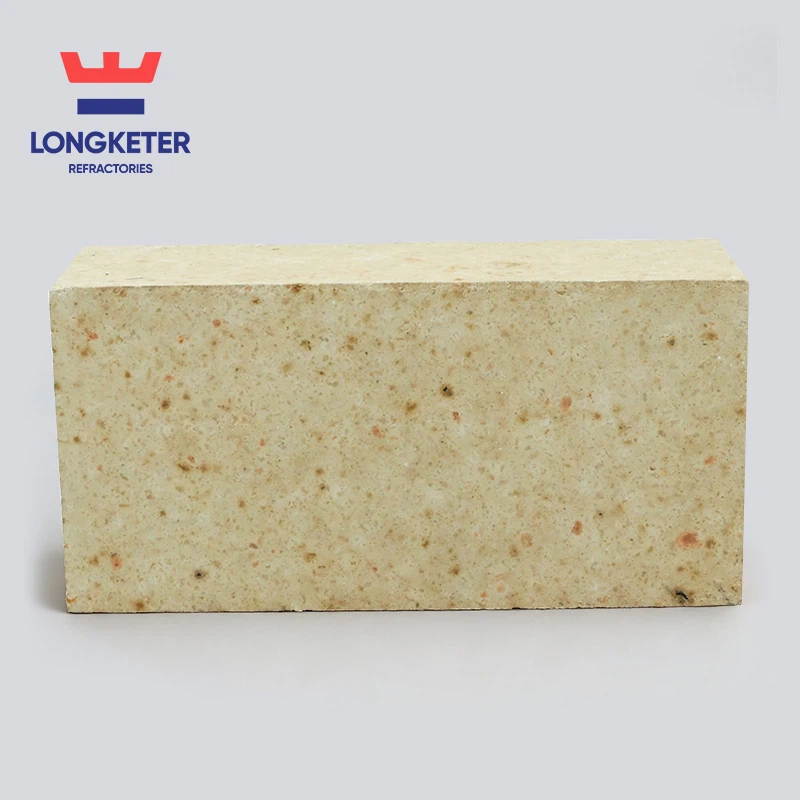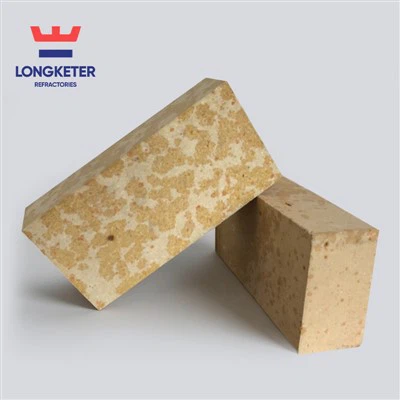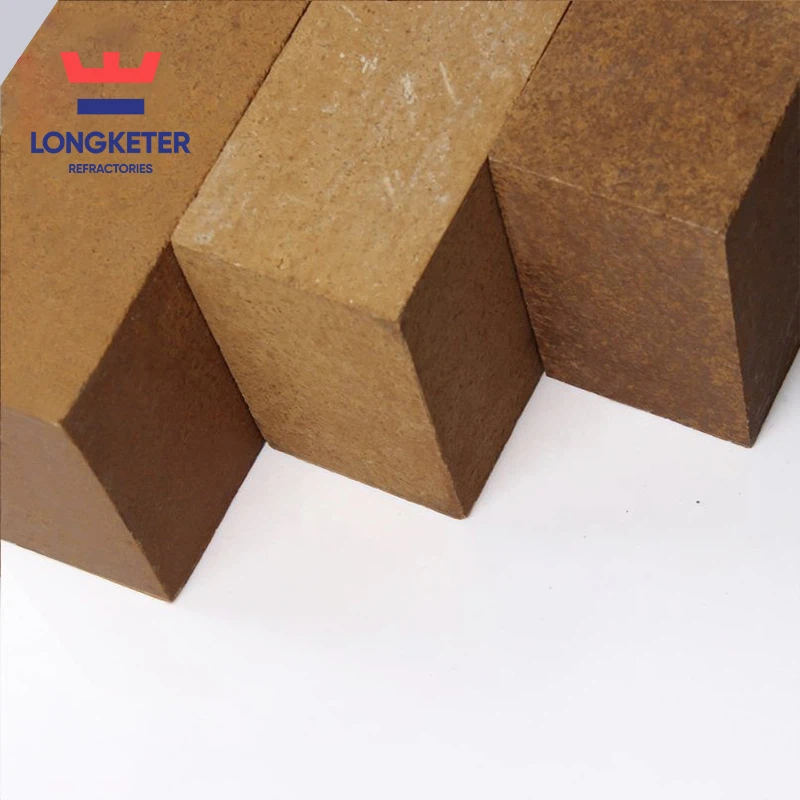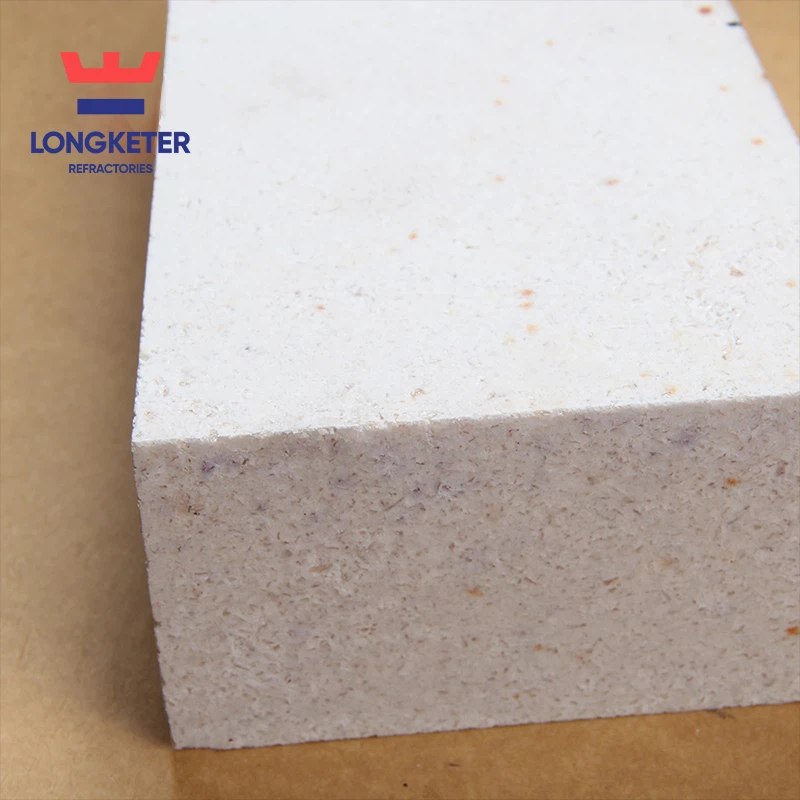


Fire clay bricks generally refer to fire bricks with Al2O3 content over 40%, Fe2O3 2-2.5%. Raw materials is generally 65% -85% calcined fire clay, 35%-15% binding clay. Producing process is generally: Grinding- batching-mixing-shaping under high press- fired under temperature 1400℃- inspection- package. The thermal performance is great. Fire clay bricks are weak acid bricks, so alkali resistance is a little weak, but they are with high acid resistance, high thermal shock resistance etc. For high quality fire clay bricks, the thermal shock resistance is better than that of basic bricks, silica bricks, corundum bricks etc.
Material inside fire clay bricks are mainly Kaolin, there are also 6%-7% impurities including Sodium oxide,Potassium oxide, Ferric oxide etc. Sintering process for fire clay bricks is mainly generating process of Mullite phase. During this process, impurities generate into glass phase around the mullite phase, result to lower thermal performance. So the less impurities, the better.
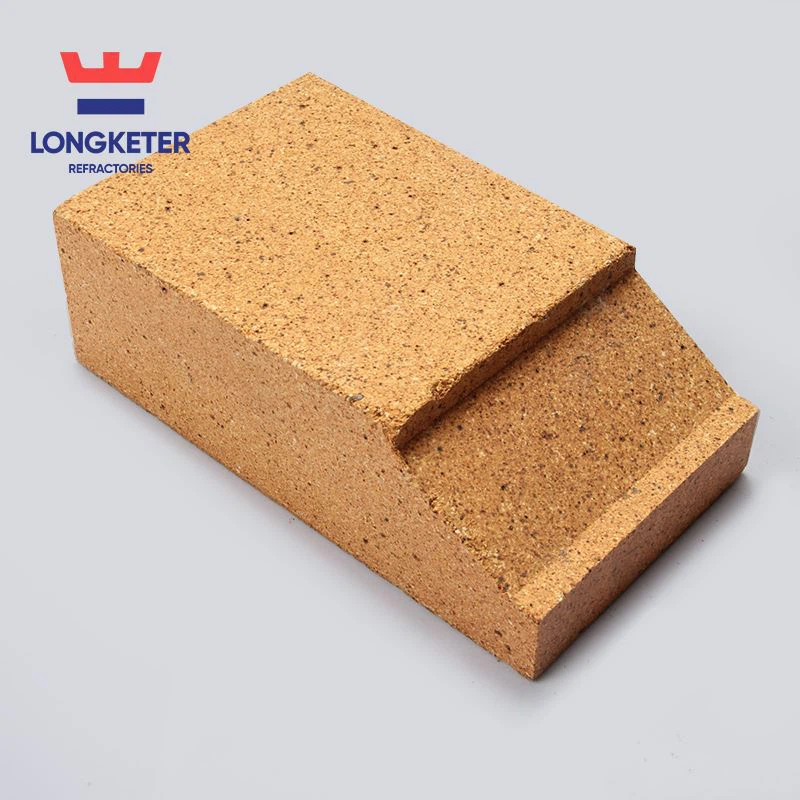
Fire clay bricks is also known as refractory bricks, they could be distributed to fired bricks, non-fired bricks, fused casting bricks, thermal insulation bricks etc. according to producing process; According to shape and size, they could be distributed to standard size bricks, common straight bricks, side wedge bricks, end wedge bricks, special shaped bricks etc. Refractory fire bricks are widely used as construction materials for high temperature industrial furnaces, kilns, and other high temperature equipment, and could withstand corrosion and erosion under high temperature.
Due to the low refractoriness and it's shrinkage at high temperatures, the thermal conductivity for fire clay bricks is 15%~20% lower than that of silica bricks, and the mechanical strength is also weaker than that of silica bricks. Therefore, fire clay bricks are generally used in the secondary parts of coke ovens. Such as regenerator sealing wall, small flue lining bricks and regenerator checker bricks, furnace door lining bricks, furnace roof and lifting pipe lining bricks, etc.
Fire Clay Brick Product Data
|
Material |
Common |
Special |
|||||||||
|
Blast furnace |
Hot blast stove |
Glass Furnace |
|||||||||
|
Item |
SK32 |
SK34 |
ZGN-42 |
GN-42 |
RN-42 |
RN-40 |
RN-36 |
BN-40a |
BN-40b |
||
|
Pyrometric Cone Equivalent Orton cone |
31-32 |
33-34 |
– |
– |
– |
– |
– |
– |
– |
||
|
Refractoriness (℃) |
1715 |
1760 |
176 |
176 |
176 |
174 |
170 |
– |
– |
||
|
Bulk Density (kg/m3) |
2100-2200 |
2200-2250 |
2200 |
2200 |
2200 |
2200 |
2150 |
2250 |
2250 |
||
|
Apparent Porosity (%) |
22-24 |
18-20 |
≤15 |
≤16 |
≤24 |
≤24 |
≤25 |
≤18 |
≤18 |
||
|
Cold Crushing Strength (MPa) |
22-32 |
30-35 |
≥58.8 |
≥49.0 |
≥29.4 |
≥24.5 |
≥19.6 |
≥49.0 |
≥34.3 |
||
|
Modulus of Rupture (kg/cm2) |
55-70 |
60-80 |
– |
– |
– |
– |
– |
– |
– |
||
|
Reheat test,permanent linearchange after heating at |
(1350℃%,3h) |
– |
– |
– |
– |
– |
0~-3 |
0~-0.5 |
|
|
|
|
(1400℃%,2h) |
– |
– |
– |
– |
– |
– |
– |
0~-0.4 |
0~-0.4 |
||
|
(1450℃%,3h) |
– |
– |
0~-2 |
0~-3 |
0~-0.4 |
– |
– |
– |
– |
||
|
(1400℃%) |
0.0-0.2 |
-0.18 |
– |
– |
– |
– |
– |
– |
– |
||
|
0.2 MPa soft under load (%) |
– |
– |
≥1450 |
≥1430 |
≥1400 |
≥1350 |
≥1300 |
≥1450 |
≥1400 |
||
|
SiO2 (%) |
57.8 |
52.4 |
– |
– |
– |
– |
– |
– |
– |
||
|
Al2O3 (%) |
36.2 |
42.1 |
≥42 |
≥42 |
≥42 |
≥40 |
≥36 |
≥40 |
≥40 |
||
|
Fe2O3 (%) |
2 |
1.4 |
≤1.7 |
≤1.7 |
– |
– |
– |
≤1.5 |
≤1.5 |
||
|
Cao (%) |
0.5 |
0.4 |
– |
– |
– |
– |
– |
– |
– |
||
|
Na2O+K2O+Li2O (%) |
0.5 |
0.5 |
– |
– |
– |
– |
– |
– |
– |
||


Hot Tags: fire clay brick, China fire clay brick manufacturers, suppliers, factory, Clay Bricks Refractory, fire clay brick, High Alumina Bricks, High Alumina Refractory Bricks, Refractory Clay Bricks, silica refractory bricks