

Products Description
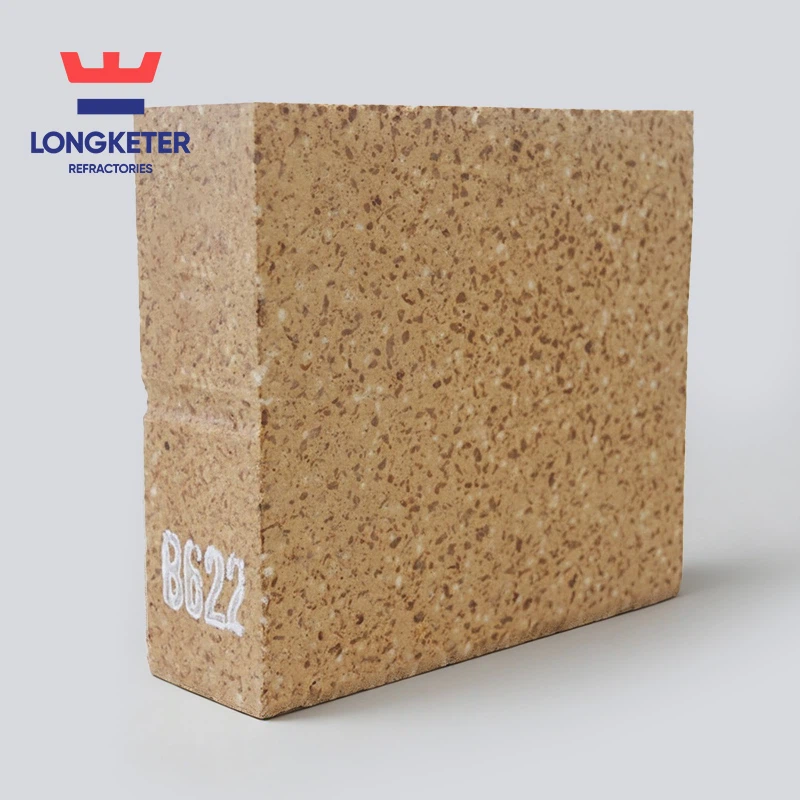
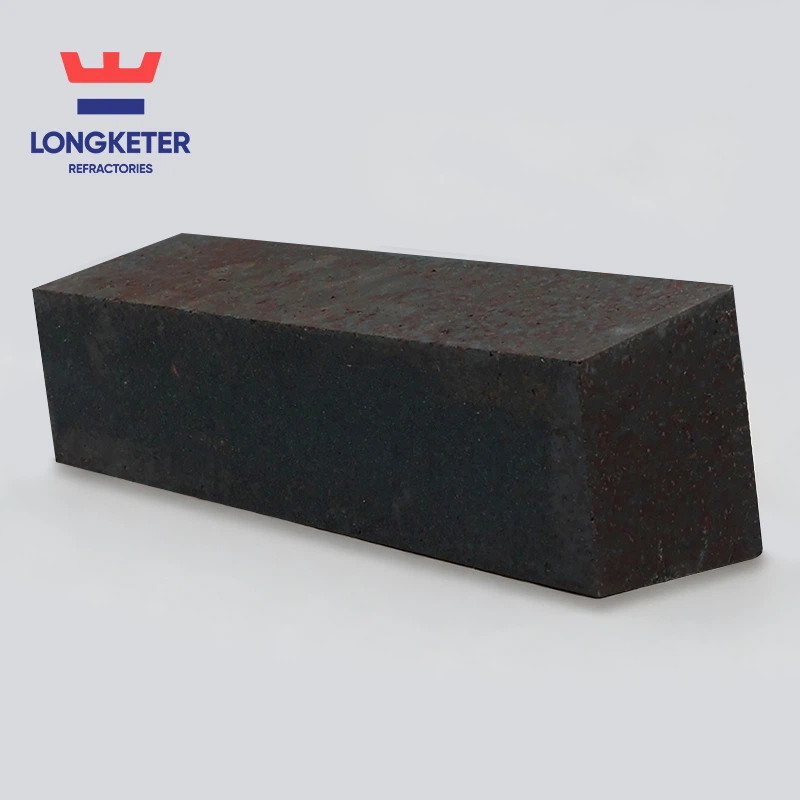
Magnesia calcium bricks are made of magnesia dolomite sand or dolomite sand and high-purity and dense magnesia as raw materials. The CaO/MgO ratio is designed according to different use environments, using anhydrous binders, molded at a suitable temperature, and fired at high temperatures. . The products have strong resistance to corrosion by refining slag outside the furnace, good high temperature resistance, and have the functions of dephosphorizing, desulfurizing, and removing non-metallic inclusions to clean molten steel. Products are widely used in AOD, VOD, GOR, CLU and other smelting equipment for smelting stainless steel.

Products Advantages
Features are as follows:
1. By controlling the mixing time of magnesia calcium brick raw materials, optimize the formula to control product quality;
2. The product is formed by a hydraulic press to ensure that the bricks are evenly pressed;
3. Using advanced tunnel kiln firing technology can ensure product quality;
4. Magnesia-calcium bricks are easy to hydrate and must be waterproofed;
5. Some magnesia-calcium bricks have undergone finishing processing and have strict size control.
Products Production Process
Preparation of raw materials for magnesia calcium brick process:
1. Light-burned dolomite Mg0-Ca0 and light-burned magnesia powder Mg0--mix and ball-mill magnesium calcium sand;
2. First-in, first-served principle;
3. Take waterproofing measures;
4. Clean up all debris in the raw materials (such as cinders, stones, sack wire and other low-melting materials and raw materials, clay bricks, spinel bricks and other materials) and recycle the magnesia-calcium bricks.
Crushing of raw materials:
1. The particle ratio should consider the density and hydration resistance of the product, as well as the ease of molding. Large particles have a small specific surface area and relatively strong hydration resistance. Although the fine powder is easy to hydrate, it can fill the gaps between particles, which is beneficial to improving the density of the brick body, facilitating sintering, and ensuring neat edges and corners of the brick shape.
2. Particle level: 7-5mm, 5-3mm, 3-1mm, 1-0mm, fine powder (<, <, <, etc.); particle requirements: such as 3-1mm material: >3mm, 3-1mm, <1mm
Mix:
1. Proportion principle: Generally, there are more coarse particles and fine powders, and fewer intermediate particles, which facilitates filling of gaps and achieving densification.
2. The binding agent (paraffin) is melted and dehydrated (add paraffin and mix, then add fine powder);
3. Weigh the materials according to the production formula.
4. Preheat the mixer;
5. Adding sequence and mixing time.
Forming: After sintering, the magnesia calcium bricks will shrink severely, and the dimensions will be adjusted according to %; brick body density requirements; forming process card requirements; first inspection; forming method; semi-finished product inspection, mud temperature has a great impact on the forming process and product quality. The temperature of the mud is high, and the strength of the bricks is low when the bricks are produced, and they are prone to distortion, cracks, heavy bricks, or edge warping. If the temperature is too low, the plasticity will be poor and molding will be difficult. It will not only reduce the density of the bricks, but also cause a large number of large particles to be destroyed due to excessive pressure and too many times. The damaged particles will be easily hydrated because they are not covered by paraffin.
Products use
Installing the kiln: Check the kiln car; use 5-3mm waste magnesium calcium sand to pave the surface of the trolley; the surface bricks of the trolley should be at a low temperature, and the magnesia calcium bricks should be put into the kiln immediately after being loaded to prevent paraffin from melting and brick deformation;
Kiln installation methods: flat installation, side installation, vertical installation;
Kiln installation requirements: smooth and straight. Firing: kiln head temperature control; control of the length of the preheating belt: the shorter the preheating belt, the better; control of the firing holding time; control of the atmosphere in the kiln; monitoring and control of the temperature in the kiln; Cooling of bricks; in order to reduce the cooling speed, the cooling air is relatively reduced. Extend the cooling zone to prevent magnesia calcium bricks from breaking. Out of the kiln, grinding bricks, and dipping in wax: Curved and oversized bricks need to be polished; polishing requirements; polishing process; inspection of paraffin grade, paraffin temperature, brick temperature, and wax dipping time. Packaging: packaging materials include paper sheets and heat shrink bags , kraft paper, cartons, plastic bags (aluminum bags); how to use packaging materials; precautions when packing
Packaging And Shipping

Hot Tags: Magnesia Calcium Bricks, China Magnesia Calcium Bricks manufacturers, suppliers, factory, MAG CHROM BRICK, MAG SPINEL BRICKS, Magnesia Bricks, Magnesia Calcium Brick, Magnesia spinel brick, Refractory Magnesia Calcium Brick