
CERAMIC FIBER BOARDS
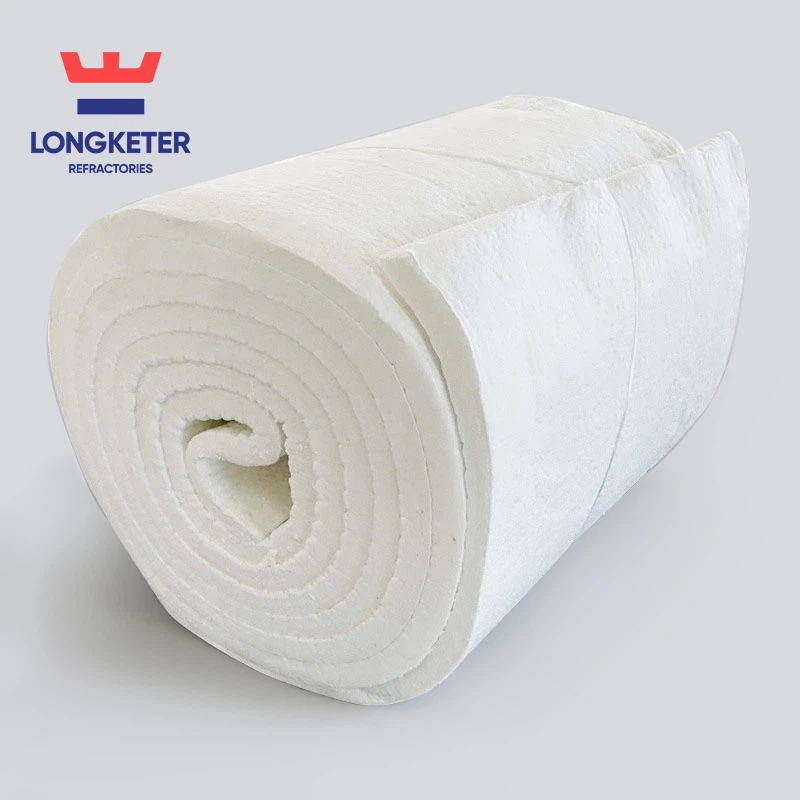
Ceramic fiber boards as a kind of high-performance refractory material, are mainly made of materials such as short aluminosilicate ceramic fibers, zirconia ceramic fibers, and alumina ceramic fibers. These materials, with their unique properties of low density, high strength, high temperature resistance, oxidation resistance, and resistance to mechanical vibration, play important roles in many fields, including aerospace, nuclear power generation, chemical engineering, and metallurgy.
The main material of ceramic fiber boards is ceramic fiber, which is a new type of fibrous lightweight refractory material. TIn the production process of ceramic fiber boards, blown fibers are used as raw materials, and a certain proportion of binders, fillers, and additives are added. They are fully dispersed into slurries in a pulping tank by a beater. Then, based on the principle of vacuum extraction, the fiber slurries are adsorbed onto the mold, and the final products are made through steps such as dehydration, demolding, and drying.

Product Parameters

Product standard size (size can be customized)

Product Advantages
Low thermal conductivity: The thermal conductivity of ceramic fiber boards is extremely low, only 0.03 W/(m·K) at room temperature, and it is 1/5 of that of clay bricks at 1000 °C, which makes it an ideal high-temperature thermal insulation material.
Lightweight: The product has a low density, generally ranging from 64 to 500 kg/m³, making ceramic fiber boards more convenient during installation and use.
Low heat capacity: The heat capacity of ceramic fiber boards is only 1/72 of that of refractory bricks and 1/42 of that of lightweight bricks, which facilitates the rapid heating and cooling processes.
Good processability: The fibers are soft, easy to cut, highly continuous, and convenient for winding and further processing.
Good sound absorption performance: It can be used as a high-temperature sound-absorbing material.
Good chemical stability: It is hardly eroded by chemicals except for strong alkalis, fluorine, and phosphates.
Good thermal shock resistance: Ceramic fiber boards can maintain good mechanical strength and structural integrity under rapid temperature changes.
Environment-friendly product: Ceramic fiber is an environmentally friendly product. It has very low thermal inertia and is easy to control instantaneously during heating.
Long service life: Ceramic fiber boards have very high compressive strength and a long service life.
Convenient construction: They do not expand when heated, are lightweight, and are convenient for construction. They can be cut and bent arbitrarily.
Products Applications
Ceramic fiber boards are common thermal insulation materials in industrial furnaces and heating equipment. They can effectively reduce heat loss inside the furnace, maintain stable temperatures, and cut down on energy consumption. For example, high-temperature smelting furnaces in the metallurgical industry, boilers in the power industry, and steam boilers in the petrochemical industry all use ceramic fiber boards as furnace linings and insulation layers.
In the petrochemical industry, ceramic fiber boards are widely utilized for high-temperature insulation of pipelines and equipment. They can effectively reduce energy consumption and boost the operational efficiency of equipment. At the same time, they possess strong resistance to chemical corrosion and can withstand some harsh chemical environments.
The thermal protection systems of spacecraft and aircraft have extremely stringent requirements for thermal insulation materials. With its high-temperature resistance, low thermal conductivity, and lightweight characteristics, ceramic fiber boards have become important materials in this field, especially for the thermal protection shields of spacecraft and the insulation layers of engines.
Ceramic fiber boards are widely applied in the production processes of ceramics and glass, particularly in the thermal insulation of melting kilns, annealing furnaces, and drying equipment. They can provide excellent thermal protection, ensure temperature stability during production, and effectively reduce energy waste.
In addition, ceramic fiber boards are also used in fields such as iron and steel smelting, power generation, and the nuclear industry to provide efficient thermal isolation and heat preservation protection.
Packaging And Shipping

Company Advantage


Zibo Longketer New Material Co., Ltd. Is a comprehensive company specializing in producing and trading refractory products
Long Keter has 200 employees, professional technical supporting team including 15 engineers, 3 senior engineers, the annual producing capacity is more than 200,000 tons.
The company adopts advanced production management system, and has passed ISO 9001 quality management system certification 14001 environmental management system certification, 45001 Occupational health and safety management system certification andother certificates.
Hot Tags: ceramic fiber boards, China ceramic fiber boards manufacturers, suppliers, factory, ceramic fiber board thermal conductivity, ceramic fiber paper insulation, cutting ceramic fiber board, high temp fiberboard, nutec ceramic fiber, unitherm ceramic fiber insulation blanket roll